A COMPANION can come in a variety of guises This volume, addressing the doctrine at the epicentre of Christianity, adopts several. The introduction announces that the principal purpose of the book is to be forward-facing, teeing up new research questions. Yet, the nature of such advances is to be piecemeal, idiosyncratic, and in some cases quickly discarded. So, any but the most learned readers will want such a book to offer a survey of topics with which they are not so familiar, and an expanded vision of themes about which they have only hitherto grasped the most striking or controversial features.
Indeed, the most rewarding chapters in this 20-author work are compelling overviews that order and explain complex issues. Donald Fairbairn offers an exemplary narration of the journey from the apostolic era to the Council of Chalcedon in 451, not getting lost in names and heresies, but explicating and clarifying at every turn. Andrew Gertner Belfield provides an outstanding account of the notoriously intricate hinterland of the medieval debates.
Perhaps the most helpful chapter of all is Jane Barter’s, which deftly navigates both modern and post-modern territory, neither skating over with generalisations and simplifications nor losing herself in distinctions and definitions. In the chapter on the atonement, Oliver Crisp likewise succeeds in covering the familiar territory of the various models while adding depth, texture, and analysis that achieve all the purposes of the book. And there is a terrific and studious evaluation by Thomas McCall of four ways to interpret Jesus’s cry of dereliction from the cross.
There may not be many readers who would themselves have taken on the awesome project of reviewing contextualised receptions setting out in detail Indigenous global theologies. There is much to enjoy in Wayne Te Kaawa and Victor Ezigbo’s chapter, in particular a brief but searing analysis of white Australian accounts of christ the reconciler — spelled, accusingly, with a small “c” — which Indigenous theologians call “justice by facsimile”, because it is “distant enough to spare white people’s direct guilt yet close enough to allow symbolic correspondence”.
The same chapter illuminatingly explains how, in a culture such as that of southern Nigeria, doing theology with an African soul means exploring the idea of Jesus as a guest who must be protected and cared for, but, in turn, must learn the host’s culture and way of life. This is a way of overcoming the problematic legacy of Christ as a stranger associated with an alien colonial culture. Noting the general absence of the hypostatic union from this literature, the authors observe that hunger, homelessness, and incarceration demand rather more urgent attention.
I cannot pretend that I found all the contributions quite as lucid and salutary. Some seriously daunting chapters constitute a challenge to even the sharpest doctoral student. The scripture chapters evidently have to be there, but are inevitably written in a different style from the others and don’t get the book off to the most engaging start. The philosophical section, with the exception of a rewarding chapter on political theology by Michelle Sanchez, is not for the fainthearted. One or two essays take the invitation to be forward-facing in an esoteric direction. Almost every reader will learn a new word in every chapter; but in some chapters there is a new dictionary.
It is customary, if a little churlish in such an extensive volume, to lament what is missing. But, given that one of the signature Christological questions of the late 20th century was “Can a male saviour save women?”, for there to be only a single reference to feminist Christology in the whole book, let alone an appropriate chapter, seems an inexplicable omission.
From my own point of view, while Oliver Crisp touches on uniting created humanity with the creator God as an alternative reason for the incarnation to the notion that Jesus rescues us from the fall, I would have been glad to see a chapter devoted to exploring accounts of the incarnation which do not depend on a mistake and which recognise God’s original and unwavering purpose to be with us in Christ. As an advocate of incarnational discipleship, ministry, and mission, I would also have welcomed a chapter that drew such embodiments back from the frequently patronised land of “practical” theology and considered them as part of what this book calls “receptions” of Christology.
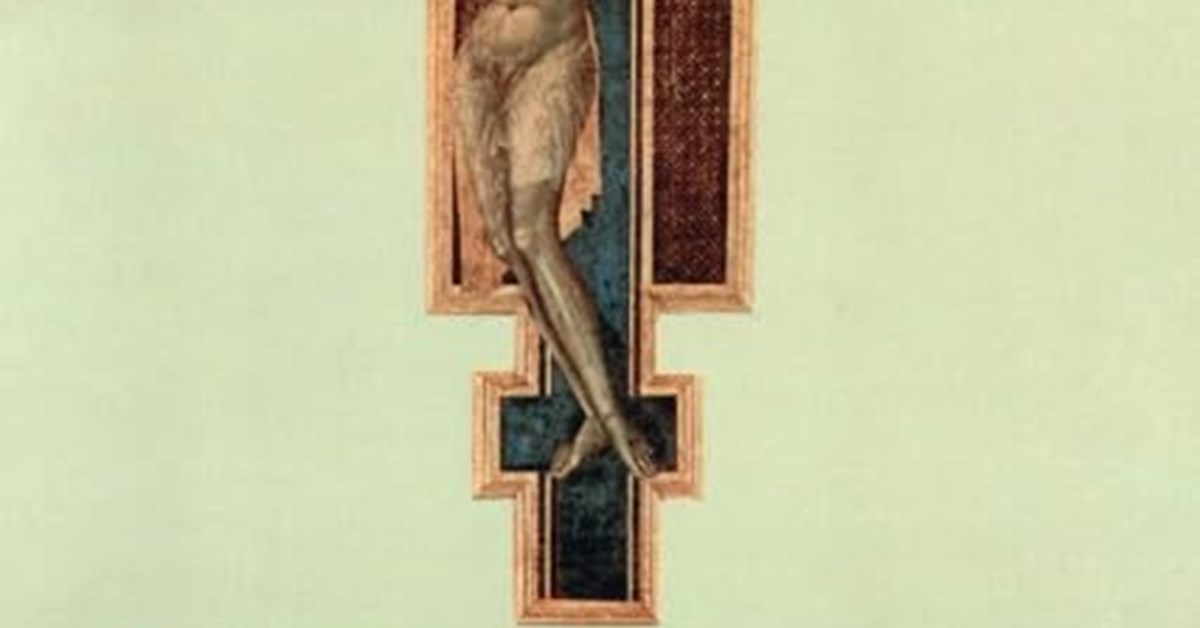
The question to Peter, “Who do people say that I am?”, is as central to theology today as it is to the New Testament. As an attempt to cover the range of possible answers, their ramifications, advantages, and drawbacks, this volume provides an impressive contribution to, and distillation of, existing literature.
The Revd Dr Sam Wells is the Vicar of St Martin-in-the-Fields, in London.
The Cambridge Companion to Christology
Timothy J. Pawl and Michael L. Peterson, editors
Cambridge University Press £26.99
(978-1-009-30797-0)
Church Times Bookshop £24.29