ALTHOUGH it did not reach print until the end of the 17th century (Charles Perrault published it in Mother Goose in 1697), the myth of Duke Bluebeard was widely known in Central Europe. Béla Balázs (1884-1948) wrote his version, known widely from the 1911 opera by Béla Bartók, in the age of Freud and Jung. Bluebeard is no longer a wife-killer. More terrifyingly, he collects his former wives, imprisoning them as so many exhibits because he cannot let go.
The British historian James Delbourgo has previously written of Hans Sloane and the origins of the British Museum. Here, in a compendious and, at times, unpleasant chronicle of obsessive collecting from the Roman world of Verres and Tiberius to the present, he surveys the lives of those who love things more than people. For anyone living in a benefice house that is part library and part wine cellar, it makes for salutary reading.
Professor Delbourgo draws on later psychological insights to suggest why collectors are often thought to have a sinister side to their character. Beginning with Norman Bates in Alfred Hitchcock’s Psycho (1980), he charts how we often see the collector as a troubled soul, but points out that it was not until the 19th century that we equated the collection with the self, beginning to ask what the collection told us about the personality of the owner.
He obviously has his heroes and heroines, but he writes evenly of Rudolph II of Prague and Charles I; of Cardinal Albrecht von Brandenburg at Halle and of William Beckford at Fonthill, who was obsessed with Marie Antoinette. He considers the world post-George Floyd and the alleged identity theft of indigenous peoples and decries the Warholisation of art, turning commerce into art.
Was Warhol a collector or a hoarder, a shopper or an investor? He collected, among other things, Old Master paintings, air-sickness bags, and Kermit-the-frog telephones, buying something each day, packing it up, and squirrelling it away.
Delbourgo shows a post-industrial society in which many, with little social aspiration or the wherewithal to have real estate, hoard. Since 2013, the American Psychiatric Association has recognised hoarding disorder. Some of those interviewed are in long-term counselling or have restraining orders to assist them. Alcoholics Anonymous was formed for those who drank the content of too many bottles. No doubt it is possible to get help for collecting the empties.
Delbourgo uses fictional characters, as well as real-life people, in his case studies. Should I worry that the first novel by Balzac which I was given, for my 12th Christmas, was Cousin Pons? Wilde’s Dorian Gray and Bruce Chatwin’s Utz are here, as are the literary creations of Huysmans and D’Annunzio.
The writing is tight and well-paced, the gallery of characters is a constant surprise, and the author’s ability to hold up a mirror to his likely readers is undoubted. His judgement is even-handed; you do not need to be mad to collect, but it may help to explain some of the compulsion.
Canon Nicholas Cranfield is the Vicar of All Saints’, Blackheath, in south London.
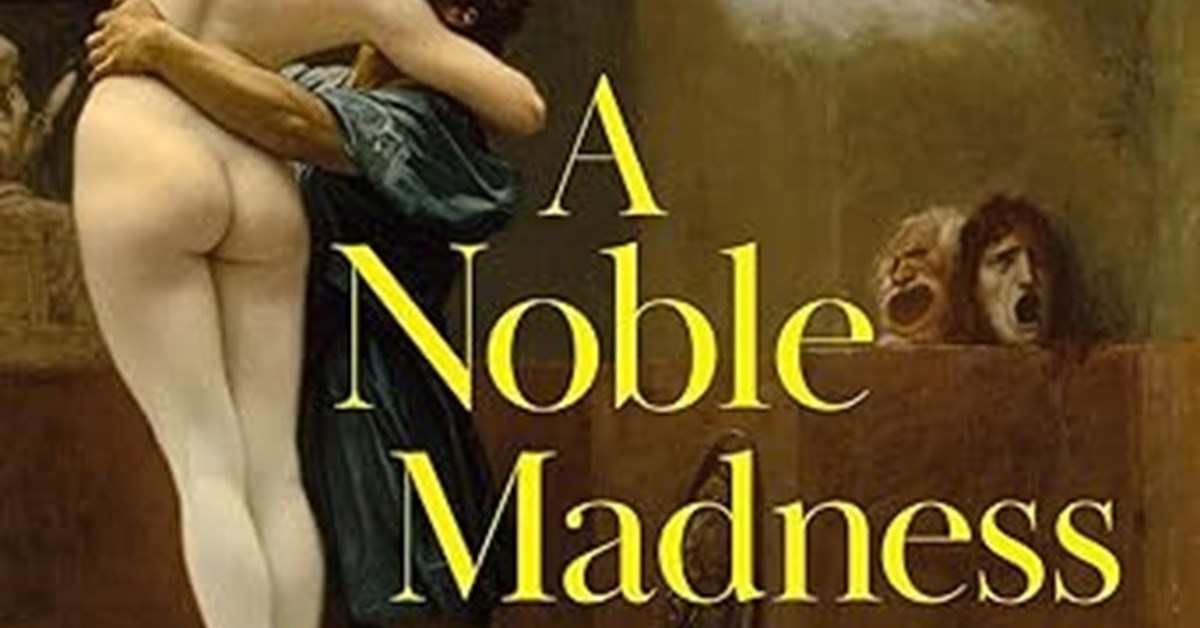
A Noble Madness: The dark side of collecting from antiquity to now
James Delbourgo
Riverrun £25
(978-1-5294-2401-0)
Church Times Bookshop £22.50