When the European Union adopted the Digital Services Act (DSA), officials insisted that the sweeping regulation was necessary to tackle “illegal content,” “disinformation,” and other harmful online activity. The message was that responsible regulation would make the internet a safer place. The reality, however, is that the DSA grants the EU enormous censorship powers that endanger free speech in the digital public square, in Europe and across the world.
Now, for anyone wondering what kind of speech these powers might ultimately be used to suppress, the answer is becoming clearer. On March 5, the European Commission adopted its new Gender Equality Strategy. The document leaves no doubt about the EU’s highly ideological direction, which has positioned it to become the world’s online censor through the DSA.
In the strategy, the European Commission states plainly that the DSA “recognises gender-based violence as a systemic risk, which providers of very large online platforms… have to assess and mitigate”. But what exactly is “gender-based violence”?
According to the Commission, “online violence” includes acts that cause “psychological” harm or “suffering to women”. What this means is that if the ideological NGOs tasked with patrolling online content under the DSA object to a social media post on the grounds that it is “likely” to cause “harm” to women, major online platforms like X and Meta would be pressured to remove it as “violence”.
The nebulous definition of “online violence” put forward by the new Gender Equality Strategy makes it little more than a vehicle for digital censorship. The strategy presents itself as a roadmap for advancing equality across Europe. Yet what it reveals is a metastatic, habitual tendency on the part of EU institutions to embed contested ideological positions into policy and then frame any dissent as a threat.
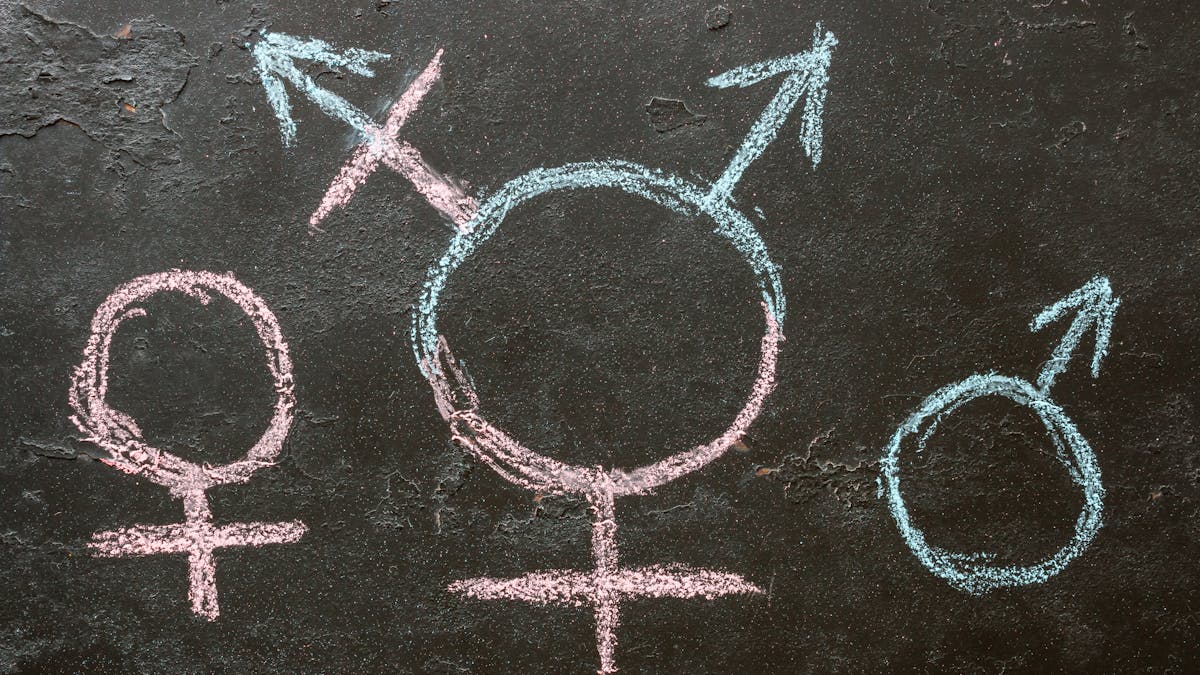
One notable passage in the strategy frames opposition to gender ideology as dangerous, warning that “anti-gender narratives … threaten the EU’s democratic space”. The strategy explicitly identifies “LBTIQ+ women” as a protected group and links gender equality efforts with other EU initiatives focused on sexual orientation. It also adopts an “intersectional approach,” asserting that sex and gender intersect with multiple forms of discrimination and should therefore be addressed through overlapping identity-based policies.
The strategy explicitly supports so-called “sexual and reproductive health and rights,” referencing a recent pro-abortion European Citizens Initiative. This signals continued normalization and support for abortion access on the part of the EU, which it has no authority to promote.
In the strategy, the European Commission refers to the Neil Datta report “The Next Wave” as a trustworthy study identifying “well-resourced global movements, and increasingly exploited through foreign information manipulation and interference”. But what this “report” does is identify pro-life NGOs and research centers promoting biological reality as radical, anti-gender, conservative, and religious extremists.
It does not take much imagination to see how this framework could be deployed in the world of online censorship.
In place since February 2024, the DSA gives the European Commission unprecedented power over the world’s largest online platforms, requiring them to remove certain content and manage “systemic risks” on their services. When authorities view legitimate criticism of gender ideology as part of “anti-gender narratives” threatening democracy, the next evident step is censorship in the name of “content moderation”.
Consider the prosecution of Finnish Member of Parliament Päivi Räsänen under Finland’s national “hate speech” law. With the legal support of ADF International, Räsänen, a medical doctor, grandmother, and parliamentarian since 1995, has spent more than six years defending herself against criminal charges for posting a Bible verse on Twitter in 2019. She posted the verse to support her Christian beliefs about marriage and sexuality. Despite being acquitted twice by Finnish courts, the state prosecution has relentlessly pursued the case, which now awaits a decision from Finland’s Supreme Court. Under the DSA, we should expect to see more aggressive censorship for the simple expression of traditional Christian views like Räsänen’s.
Of course, the EU can, and should, advance authentic policies to promote equality between the sexes. But this is not that. There is no doubt that the Gender Equality Strategy strengthens the censorship regime created by the DSA. Democratic societies depend on open debate to promote true equality, not the suppression of views that challenge elite orthodoxy.
Platforms that fail to comply with DSA censorship directives face enormous fines, as evidenced by the €120 million fine levied against X, an American platform, last December. Although the penalty was formally tied to procedural violations, the platform was targeted for its pro-free speech stance, which it is now appealing before the Court of Justice of the EU.
Both in Europe and across the world, including in the United States, the DSA creates powerful incentives for platforms to remove lawful content subjectively deemed problematic or suffer the consequences, which can range from crippling fines to suspension of services.
Europe has long presented itself as a defender of fundamental rights and democratic values. Yet the trajectory of its speech policies increasingly points in the opposite direction. Make no mistake about it: the EU is coming for your free speech, regardless of where you live, and it’s taking no pains to hide the kind of speech it’s after.
* * *
Dr. Adina Portaru is senior counsel, Europe, for legal advocacy organization ADF International, which is supporting X’s legal challenge before the General Court of the EU.
The views expressed in this piece are those of the author and do not necessarily represent those of The Daily Wire.