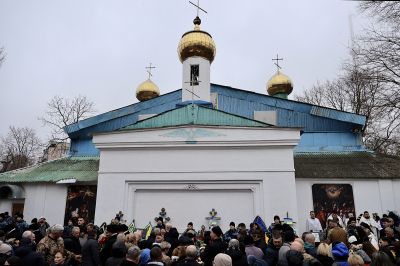
The world is once again turning its eyes to the suffering and resilience of Ukraine. The war has devastated lives and landscapes, yet amid calls for peace from world leaders, another story is unfolding. Amid devastation, the church in Eastern Europe is proof that there is Gospel hope rising from the remnants of conflict and repression.
The rise and fall of the Soviet Union left lasting scars that continue to shape Eastern Europe. During Stalin’s reign of terror, known as the Great Terror from 1936 to 1938, believers of every faith faced execution, imprisonment, relentless violence and exile to the Gulags. Even for decades afterward, Christians were routinely discriminated against, harassed, denied education or employment and forbidden to gather publicly. State loyalty was presented as the new religion, and those who worshipped God met secretly in the shadows, becoming lifelines to the small pockets of believers. Others formed covert organizations, hidden from the eyes of neighbors and the secret police, keeping the Church alive.
Generations of religious repression reshaped entire nations across Eastern Europe, as governments enforced atheism and sought to eliminate any trace of organized religion. For millions, the wounds and stories from that destructive period remain fresh, even decades later.
When the Iron Curtain finally fell, freedom of religion, at least in theory, was restored. But by the late 1980s, religious identity in much of Eastern Europe had been drastically eroded. East Germany, once described as the ‘most godless place on earth,’ still reports that 60% of people in eastern Germany report that they do not believe in God and never have. The 21 countries that formed the Warsaw Pact entered a new political and cultural landscape. Yet the transition was far from smooth. Former communist states scrambled to establish democracies or dictatorships, leaving fragile societies where faith had little public space.
But over time, underground churches came into the open. Communities that were once silent about their faith began worshipping openly. Over time, Christianity in parts of Eastern Europe has overtaken growth in the West, as more and more believers step out with boldness and courage to share their faith.
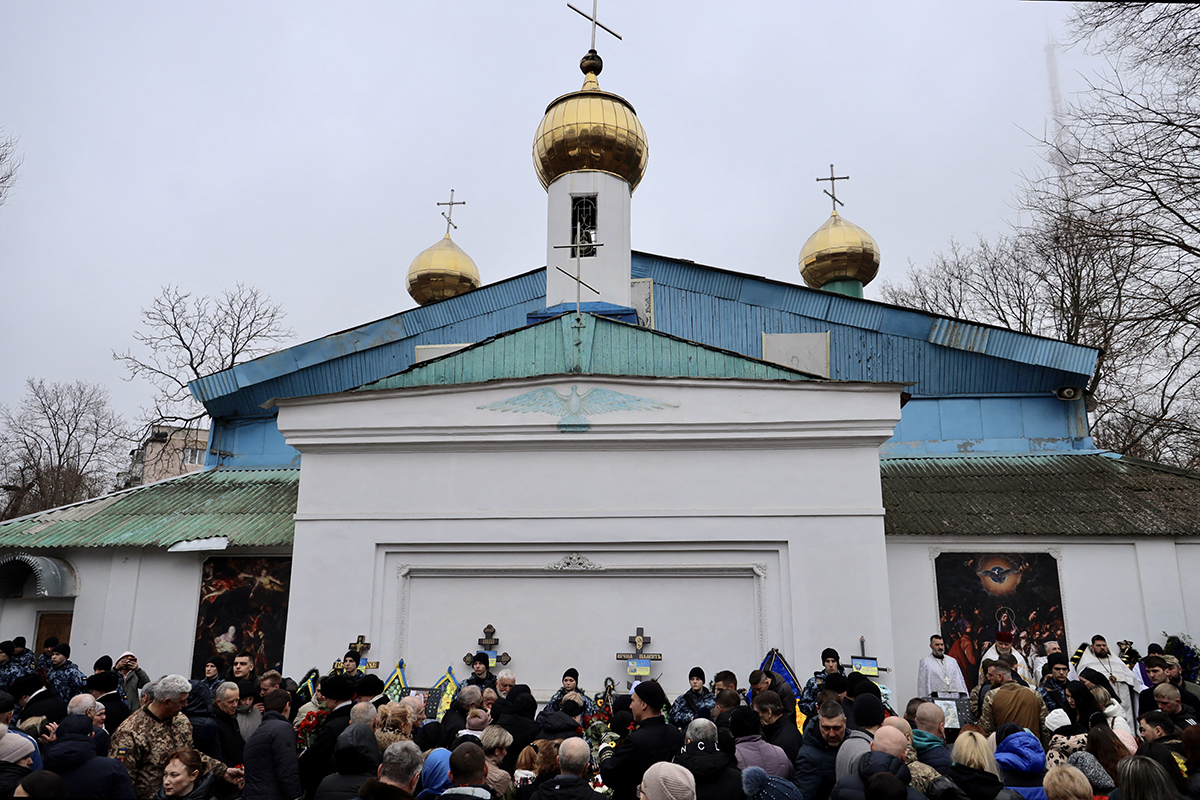
More than 600 religious sites have been destroyed since the outbreak of war in Ukraine over three years ago, and in Belarus, restrictions on religious gatherings remain severe. Though families have been displaced, leaders conscripted and congregations scattered, hope is rising through the power of the local, healthy church.
After losing his home and livelihood, knowing he was soon to be drafted, Roman Aksamentov, a 43-year-old refugee from Ukraine, found sanctuary in a local church. There, believers listened to him, prayed for him and supported him as he prepared to head for the frontlines. Even after being wounded, he testifies that those prayers sustained him in the midst of war. His church also hosts ‘agape feasts’, where locals gather to eat, pray and support one another, a small act of community, a testament to living for a greater hope.
Another Ukrainian church felt led to start a ministry for military families, believing that this was what was most needed in their community. But God took them in a different direction to begin a women’s ministry, Called To Inspire. Through this, they serve women outside of the church, meeting women who carry the unseen burdens of war. Even through the darkest days, the local church is a quiet resistance, choosing to be salt and light in a time of chaos.
Each church, even in Belarus or Tajikistan, where believers still face discrimination and exclusion, is strategically positioned to be a space where faith takes root in its own cultural soil. These are not Western missionary exports but indigenous-led churches, built through by and for their own communities. In 2026, ICM hopes to help communities build an additional 8 churches in the region, as faith once had no voice, but the Church is on the rise, enabling individuals and communities to be forever transformed. Continuing to equip these indigenous run churches through things like investing in training hubs and discipleship tools in Kazakhstan, Russia and Ukraine creates a long-term infrastructure that can sustain ministry in the region.
Even with the hope of a ceasefire on the horizon, we can hold onto the truth that while politics can impact the outcome of this war, it cannot replicate the transformation that can only come from spiritual revival. For that, the Church is indispensable. The history of Eastern Europe reminds us that even under decades of repression, and even now still covered by the shadow of war, the Church is on the rise.
Our lesson, as Christians who merely watch and pray from afar, is to recognize these talks are not just a political end to a crisis, but an opportunity to support the hope of a local, healthy church within walking distance of everyone in Eastern Europe from the sidelines. The Church in Eastern Europe is not fragile, and faith is not finished. Hope will withstand longer than any ceasefire.
Janice Rosser Allen has served as International Cooperating Ministries‘ CEO and Executive Chair since 2008 and on the Board of Directors since 1986. In 2020, Janice took on the added responsibilities as ICM’s President in addition to her role as CEO. A graduate of the Universityof Virginia and Duke University, she worked in clinical and academic oncology nursing before transitioning into the nonprofit world. An ordained elder, Janice has three married sons andten grandchildren. She has published a book about ICM highlighting amazing stories fromaround the world entitled God in the Crossroads: Signs of Hope.