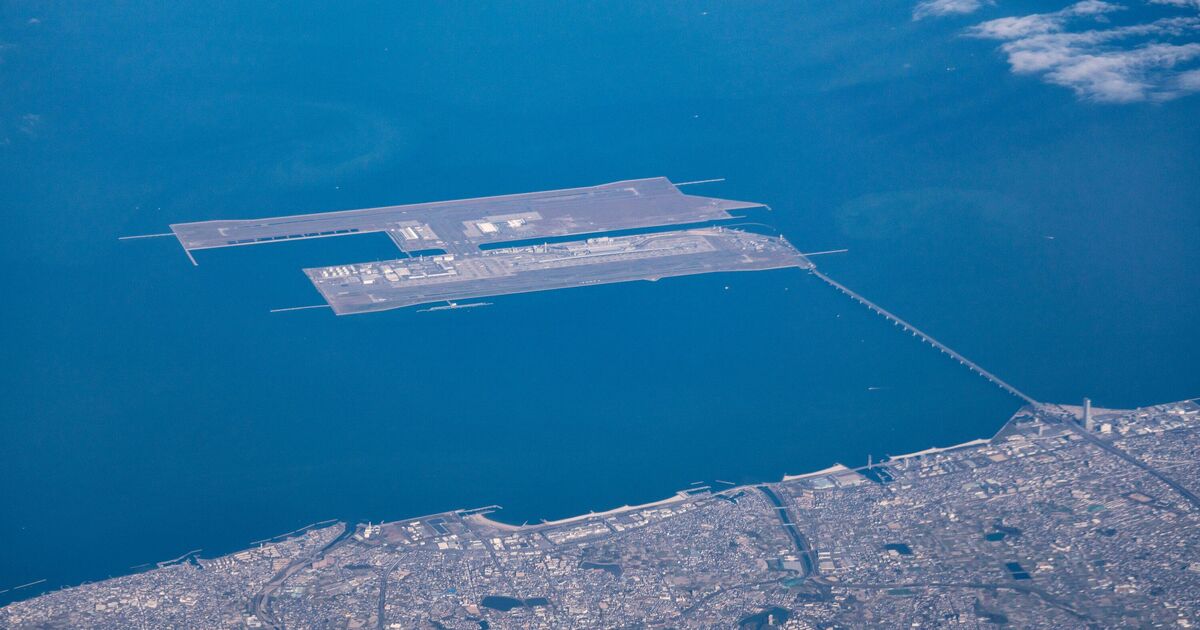
An airport considered one of the most ambitious infrastructure projects of its kind is facing a significant challenge. Built entirely on two artificial islands, the airport was praised as a landmark achievement in engineering but is now sinking into the sea.
Kansai International Airport (KIX), in Japan, was completed on reclaimed land in Osaka Bay in 1994. It is connected to the mainland by a 1.9-mile bridge and boasts the longest terminal in the world. Despite still serving as a hub for all Japan Airlines and Nippon Airways flights, the airport has sunk around 12 metres over the last 31 years.
The engineers believed the airport, which covers a whopping 2,600 acres with two runways spanning 3,500m and 4,000m, would sink to four metres before stabilising. However, parts of the two artificial islands reached this threshold within just six years and around £117 million was needed to raise the seawall.
Engineers ensured the airport could support the huge weight of buildings and aircraft by laying sand five and a half metres deep. They also used a large amount of soil to compress the ground layers and create a firmer floor.
Plates were inserted under the hydraulic jacks of the passenger terminal to help raise the columns and help save the airport from plunging into the sea. However, some experts believe the effort was too little too late, with some particularly concerned that the airport is not sinking evenly.
There were further upgrades to the airport after Osaka Bay was hit by Typhoon Jebi in 2018. The seawall was raised by an additional 2.7 metres to protect against further flooding.
However, Kansai remains one of the busiest airports in the world. In 2024, the airport handled around 30 million travellers from across the world.
It is famous for reportedly never losing luggage since it opened over 30 years ago, despite processing millions of bags annually. Kansai is currently undergoing major renovations at Terminal 1, including larger lounges, self-bag drop facilities, AI security, and e-gates, to boost capacity and efficiency.