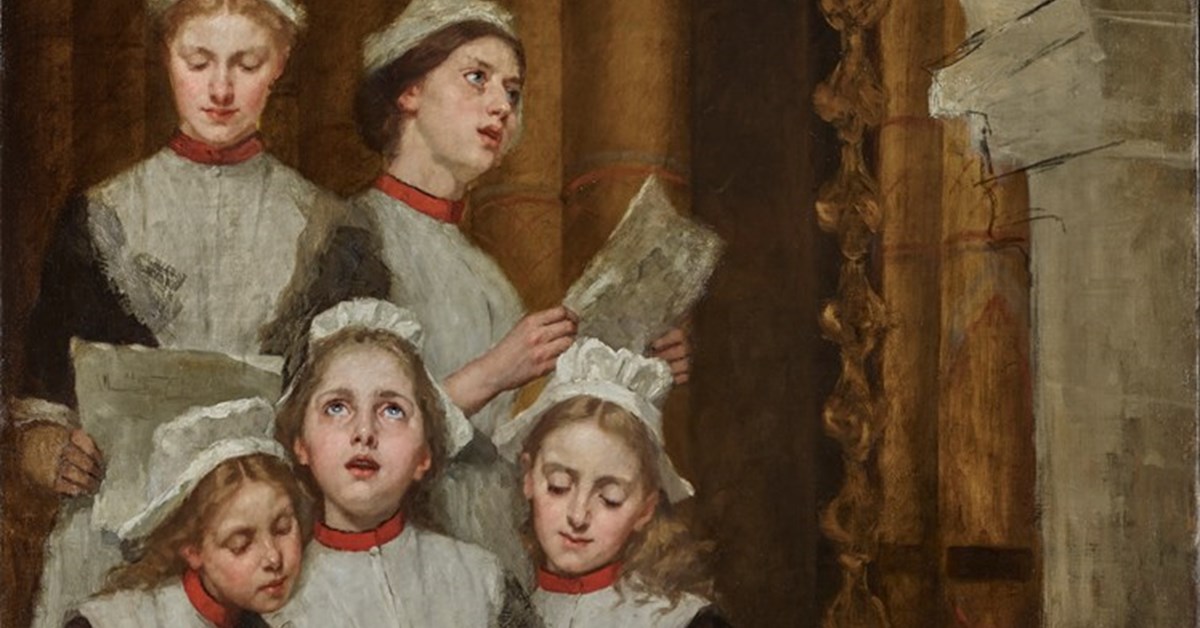
WHEN people sing in chorus, their hearts beat in unison. This remarkable fact arises from shared breathing patterns, but is a wonderful metaphor for the unifying effect of music created in community.
As a result, in the words of Emma Ridgway, the Deborah Loeb Brice Director at the Foundling Museum: “Music sparks profound emotional connections between friends, strangers, and across historical eras. Experiencing music brings people together and can generate a sense of belonging that is both intimate and collective. Music serves as a universal form of communication beyond cultural and language differences, created to intentionally stir emotions, create shared experiences, and even influence social change.”
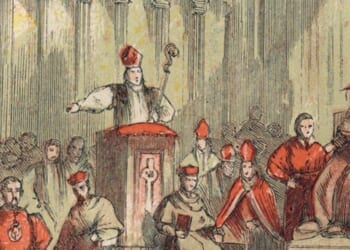
This reality is explored through the lens of George Frederick Handel’s oratorio Messiah, with its stirring “Hallelujah Chorus”. More than 275 years after its first performance, the “Hallelujah Chorus”, for which audiences have traditionally risen to their feet, remains a beacon of optimism, celebration, and unity which continues to delight and enthral performers and audiences alike.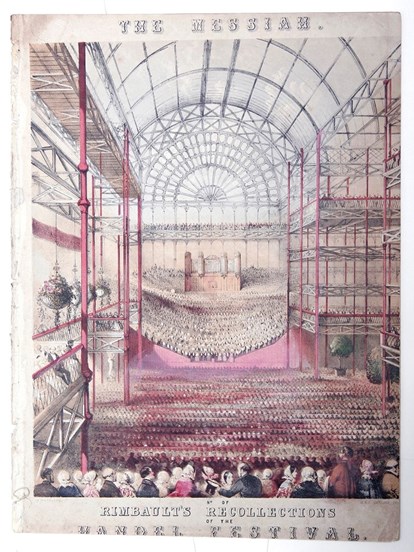 Handel’s Messiah at Crystal Palace (1857)
Taking as a starting point Handel’s own engagement with the Foundling Hospital — he incorporated the “Hallelujah Chorus” into an anthem created especially to raise money for the charity — this exhibition traces the piece’s remarkable journey through diverse musical traditions, from traditional choral arrangements to gospel, folk, and even trance arrangements.
The exhibition also includes a sound and video installation by Mikhail Karikis, We are Together Because . . . Acting as a contemporary counterpart to the “Hallelujah Chorus”, this is being shown in the UK for the first time. Created with a group of young people in Lisbon, the work explores the potential of singing and the collective voice to empower individuals and communities, providing a positive force with the capacity to inspire hope, courage, compassion, and unity in polarised times. Karikis has also been commissioned to develop a related live performance of collective singing with young participants from London which will be presented at the Foundling Museum later this year.
Highlight objects in the exhibition include Handel’s original handwritten score for the Foundling Hospital Anthem, an early shellac sound recording of the “Hallelujah Chorus”, a 19th-century musical box featuring the chorus, a lithograph showing the 19th-century fad for large-scale performances of it, and footage from one of the world’s largest virtual performances of the chorus, which took place during lockdown in 2020 with 3600 voices from around the world, as well as four professional soloists and a nine-member Baroque orchestra, who all recorded their parts in isolation.
Spread across all four floors of the Museum, the exhibition allows visitors to explore its themes in the context of this museum’s special history as a place to celebrate people with lived experience of children’s social care, and all those who care for them. The Museum collaborates with contemporary artists, musicians, writers, and researchers to shape compassionate narratives about care, within the unique setting of the UK’s first public art gallery from 1750. Through their involvement with the Foundling Hospital, creatives such as Handel and William Hogarth were pioneers in creating links between the arts and charity.
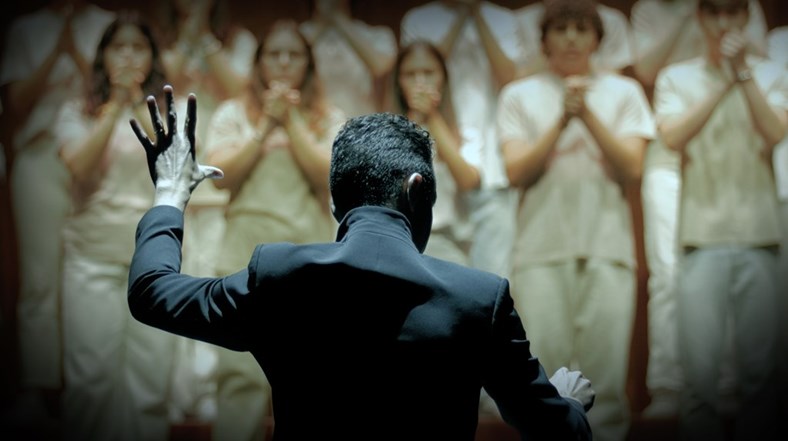 © Mikhail Karikis Mikhail Karikis, Still from We are Together Because . . . (2025), commissioned by the Calouste Gulbenkian Foundation. The work is part of the CAM Gulbenkian Collection
The Foundling Hospital played a significant part in the treasured place that Messiah holds among choral societies in the UK. Handel conducted performances annually in the chapel of the Foundling Hospital from 1750 onwards and, as a result, Messiah’s reputation as a work linked to charitable causes spread, and it began to feature regularly, and as a finale, in the music festivals that began springing up regularly across England in this period.
This exhibition is not only engaging and interesting in its own right, but also marks the beginning of a new three-year programme focusing on music and care, which will investigate the impact music has on us as individuals and as a society.
“A Grand Chorus: The Power of Music” is at the Foundling Museum, 40 Brunswick Square, London WC1, until 29 March (closed on 14 February). Phone 020 7841 3600. foundlingmuseum.org.uk