Why is every other service that we use in our day-to-day lives, almost without exception, suddenly suffering from some kind of dysfunction?
Why are the transportation industry, the clothing industry, the entertainment industry, the appliance industry, the construction industry, and others all lowering their standards in ways that are very easy to observe? And why are they all doing it at the same time?
Why is everything getting worse now?
We have all noticed this, and we all wonder if it’s just our imagination. Are we looking back on the past with rose-colored glasses?
The answer is no. It’s not in our imagination. It’s real. It’s happening, and you aren’t crazy.
This is a difficult topic to discuss because it’s so broad, and every industry is different. But it’s worth examining if only to see if we can identify some common threads that might be causing the broader slide. And that will allow us, later on, to drill down on the specific industries with more in-depth investigations.
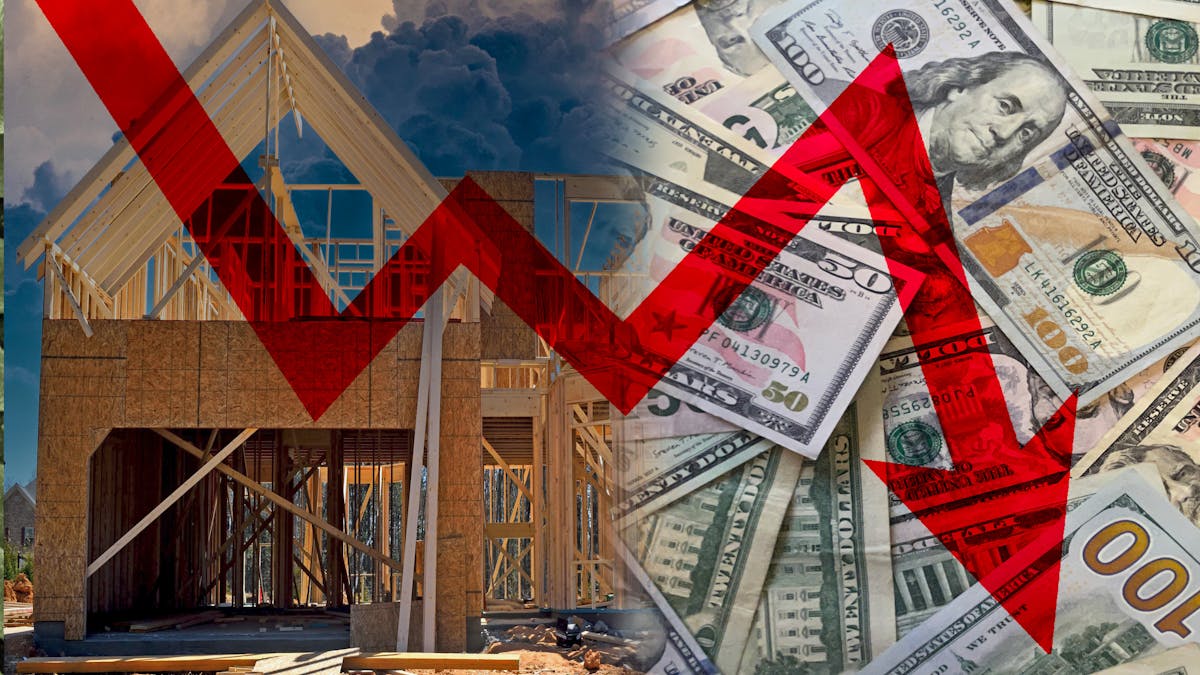
Let’s start with housing. Everyone knows that housing isn’t affordable, in part because of foreign migration, and also because large institutions are buying up a lot of homes and converting them into rentals. But what’s not widely discussed, at least to my knowledge, is why houses themselves have become cheaper-looking and less desirable over the years. The architecture is worse. The buildings are uglier. The materials are of lower quality.
But if you dig into data from the Bureau of Labor Statistics, you begin to get a sense of what’s going on. From 2020 to 2024, the cost of building materials has increased by 38%. For comparison, from 2016 to 2020, the price of building materials increased by only 10%. So this is a massive jump, relatively speaking. Overall, since 1980, Census data suggests that new homes cost five times as much to build. And that’s putting a lot of pressure on builders to find compromises.
As Business Insider reported:
Builders and architects have almost no choice but to streamline or opt for cheaper design elements. Homes built 50 or 100 years ago were primarily brick or wood — high-quality stuff that offers a comforting, timeless appeal. Those materials are used more sparingly nowadays. Just 25% of new-home exteriors last year were made of wood or brick, compared with 70% of homes in 1980…Inside the home, nice touches like ceramic tile, built-in shelving, and other quality finishes have pretty much disappeared from modest homes.
There are several reasons why materials have become more expensive, including trade wars, the fact that too many young people are going to college instead of learning the trades, and so on. At the same time, the cost of building materials doesn’t necessarily explain why so many homes are uninspired and cookie-cutter. You drive through so many neighborhoods today, and every house is ugly — and ugly in the same way. So what explains that development?

It turns out that, in recent years, homes have been built by an increasingly small number of home builders. (If you watched our episode on fast-food last week, where we talked about how virtually all cheese comes from the same supplier, it’s basically the same phenomenon). In 2022, the biggest 100 home builders in the country sold half — yes, 50% — of all new single-family homes.
Twenty years ago, the top 100 home builders only sold one-third of all new single-family homes. What’s happened is that, in the past decade or so, two homebuilders in particular — called D.R. Horton and Lennar — have become dominant. And when you have two dominant home builders, everything’s going to start to look the same.

Credit: DR Horton
It’s basically one house repeated dozens of times, as they all popped out of a 3-D printer. It’s also efficient. And it’s a style of construction that’s now more common than it’s ever been in the history of this country. Your dad might like to say, “They just don’t make them like they used to,” and when it comes to homes — and basically everything else — he’s absolutely right.
The same principle applies to clothing.
Foreign low-cost fashion retailers — including H&M, Zara, and Shein — have increased their market share in the United States by more than three times in just the past four years. And they’ve done so by sourcing cheaper fabric, which accounts for more than 60% of the cost of most items of clothing (with labor making up the rest). And when you source cheaper fabric, very often, you’re turning to countries that have even worse quality control than China.
This is from a report by NBC:
Twenty-seven percent of textile and apparel professionals reported that ensuring consistent quality was difficult or very difficult over the past year, up from 23% in 2024. … China is already the largest exporter of apparel to the United States, and factory inspections found the failure rate, or share of textile and apparel products with too many defects for market, rose to 13.7% last year from 12.7% in 2023. As many apparel brands move more production out of China to reduce their labor costs and exposure to tariffs, they’re gravitating toward countries with even higher failure rates: India’s is 21.2%, Cambodia’s is 16.6%, and Indonesia’s is 14.2%.
Again, it’s the same trend, where everything is getting noticeably and measurably worse, piece by piece. Clothing is uglier, cheaper, and lower quality than it used to be. Try to find denim jeans that are actually denim jeans these days. It’s not easy to do, because most jeans are made with synthetic material like spandex.
The same kind of thing is happening with air travel. Yesterday, we talked about how air traffic controllers are becoming more unhinged and dangerous. But pretty much every aspect of the aviation industry is suffering as well. William McGee, a Senior Fellow at the American Economic Liberties Project, spoke to a magazine called Popular Science about the problem of legroom on most commercial airplanes.
McGee has kept tabs on shifting seat sizes over the past two decades and says they are indeed getting more cramped. According to his analysis, American, Delta, Southwest, and United have each lost between 2 and 5 inches of legroom and around 2 inches of seat width since the 1980s. The average legroom on those carriers today is 31 inches, down from 35 inches in the late 20th century. There’s even less room—just 28 inches—on budget airlines like Spirit, McGee notes. This shrinking has occurred gradually over the years, a process he compares to the metaphor of a frog slowly boiling in water. … As of 2022, less than half of U.S. airline passengers can reasonably fit in economy seats.
I’ll say that again: Less than half of U.S. airline passengers can reasonably fit in economy seats, which have lost about 2 inches of seat width and 5 inches of legroom since the 1980s. Now, you might point out that more airline passengers are overweight these days, and they bear a lot of responsibility here. And you’d be correct in that assumption. Airline seats are getting smaller as airline passengers get larger, which makes for an unfortunate combination. But even if you’re not overweight, this data point is still a big problem, because it means you’re probably going to be jammed next to someone who’s spilling out of their seat and onto yours. You can either spend double for a better seat, or you can just grin and bear it. Those are your options.
Granted, if you ask most Americans to make this choice — between paying more, and spending the flight seated next to a fat guy, with his fat rolls resting on your shoulder — they’ll voluntarily choose the cheaper fare. It’s the same reason people fly on planes at 6:00 AM. They want to cut their transportation costs as much as possible. But air travel has decayed in many other ways as well, which no one can avoid — no matter how much money they’re able to spend.
The Boston Globe just reported that airline fees reached an all-time high in 2024, for everything from baggage fees to priority boarding and seat selection.
Meanwhile, according to a researcher at Harvard, flight delays lasting three hours (or longer) are now four times more common than they were 30 years ago. And on top of that, airlines are going out of their way to hide data on flight delays:
Airlines are trying to hide the delays by ‘padding’ the flight times—adding, on average, 20 extra minutes to schedules so a flight that hasn’t gotten any faster still counts as ‘on time.’ Thus, on paper, the on-time performance metrics have improved since 1987, even as actual travel times have gotten longer.
Realizing all of this, many people have decided to drive instead of flying to their destination, if at all possible. But the problem is that driving has become much more of a hassle as well. It’s also become much more dangerous. You’re far more likely to be killed by a truck driver than ever before, thanks to the enormous number of foreigners who now hold commercial driver’s licenses. The number of people who died in crashes involving large trucks was fully 38% higher in 2023 than it was in 2009. That’s according to data from the Department of Transportation.
But even if you’re not killed by a foreign trucker on the road, you’re going to have to contend with much worse drivers and much worse traffic conditions than ever before.
This is from a recent report in Axios, citing research from Texas A&M University.
The average U.S. car commuter is spending a record 63 hours annually stuck in traffic amid changes in when and why we drive. That’s the most since 1982, when the dataset begins. … Among metros with at least 500,000 residents, the ‘yearly delay per auto commuter’ grew notably between 2019 and 2024 in cities like San Francisco (+31 hours), San Diego (+24) and Miami (+19).
Because of more remote-work jobs and gig workers, roads are more congested during midday than they’ve ever been. Thursday is now the worst day of the week for driving, in terms of congestion-related delays. (It used to be Friday). The average length of a one-way commute is now 27 minutes, which is the longest it’s ever been in the history of the United States.
And if you want to minimize the stress by calling an Uber or a Lyft, that’s going to cost you more than ever, as well. The median price for a ride on those apps increased by more than 7% in 2024 alone, to $16. So half of the rides on these platforms now cost $16 or more. And in return, you’ll get a ride in a janky car with very few legal protections if you’re in an accident. For the most part, it’s extremely difficult to actually sue Uber or Lyft if something goes wrong on your ride, because they can just blame the driver. They’ll use the middle-man defense. And unless they were negligent in hiring the driver — by failing to determine whether he had a criminal record, for example — they probably won’t have to pay you anything. And in turn, that means you won’t get anything, since the driver is virtually guaranteed to be broke. And all of this is to say nothing of the condition of the roads themselves, many of which are in a confusingly constant state of both disrepair and being repaired. Construction crews will work on the same stretch of highway indefinitely, it seems, while the roads are never actually fixed.
Oh, and for good measure, if you decide to walk instead of taking an Uber, you should know that pedestrian deaths in auto accidents are up by 48% compared to a decade ago.
And in case that wasn’t enough, the number of fatal dog attacks in this country has more than doubled in the past decade. 100 people were mauled to death in 2022 alone, compared to 48 in 2019. Violent attacks by dogs, in general, have also increased exponentially. And in part, although no one wants to say it, that’s due to the large number of foreign nationals who now live in this country. They come from countries (like Mexico) where it’s common to adopt dangerous dogs and let them roam on the street or the rooftops. And people die, or get mauled, as a result.
In fact, perhaps the number one most reliable indicator that you live in a third-world country is if you have to actually worry about getting mauled to death by an animal. One of the many advantages of living in a first-world country is that such a thing basically never happens. The fact that it’s happening more and more often in our first-world countries should be a major concern.
At this point, I’m genuinely curious if anyone listening to this podcast can name any area of day-to-day life — any area at all — where things have actually improved in recent years. Politics is now a clown show, in terms of both the quality of our politicians (like Jasmine Crockett, as just one example) and the quality of some of the most prominent commentators. Streaming services are promoting slop at a higher rate than ever, even as their prices increase. Disney Plus, by itself, is something like $200 a year now, unless you’re fine with constant ads. In most cases, the prices have gone up along with the number of ads you’re forced to watch.
HBO Max is up to $220 a year or so — a high price by any measure — and in return, you’ll get scenes like this.
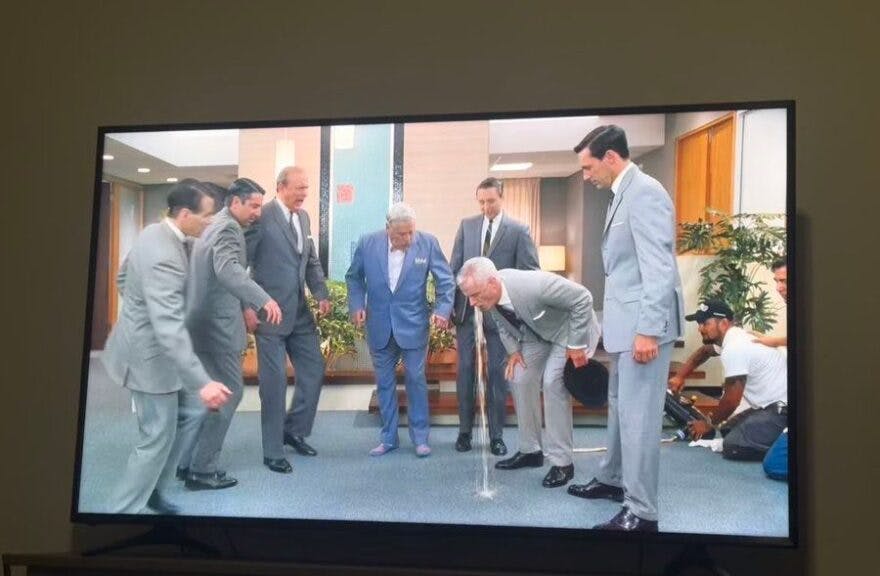
Screenshot: Mad Men/HBO/X
That’s a screengrab you may have seen, from the new “4K release” of “Mad Men” on HBO. The production crew is clearly visible in the corner, as they hold a vomit hose. They apparently forgot to edit them out. And the bloopers don’t end there. In the next season, HBO forgot to edit out various signs in the background, which were removed in post-production in the original version of the show.

Screenshot: Mad Men/HBO
For example, as you can see here, there’s a sign advertising the “best tacos in Los Angeles,” which is odd, since Mad Men is set in Manhattan.
And then there’s this one:
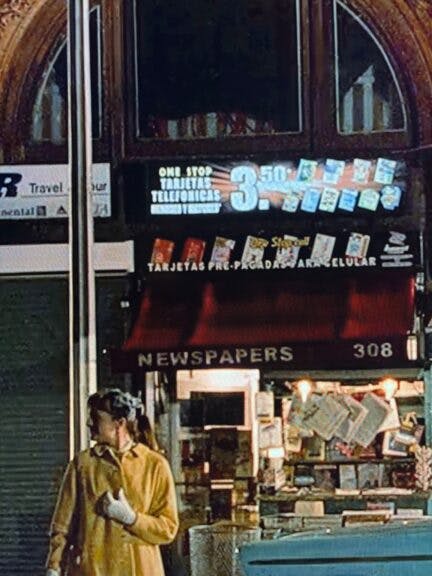
Screenshot: Mad Men/HBO
It’s some kind of advertisement for SIM cards, which, of course, were all the rage in the 1960s.
All this is to say, quality control is out the window. To the extent you get any worthwhile new programming on streaming services at the moment, a lot of it will be low-budget “true crime” documentaries, along with the endless stream of generic fantasy shows with blatant DEI casting. Streaming services feed the algorithm with slop. It’s harder and harder to find anything worth watching. And somehow even the CGI and special effects — one thing you’d think would improve — have gotten worse. Go back and watch the first Jurassic Park film. Compare it to the most recent. The one that came out 30 years ago looks better than the one that came out last year. How is that even possible?
I’ve heard the same is true of video games, by the way, although I can’t personally attest to that.
It’s certainly true of the music industry and the film industry, as I’ve discussed previously, in the context of the fall of the monoculture. Fifteen years ago, before every movie and video game studio had a legal obligation to hire so-called “diverse talent,” and before everyone had a smartphone, there were far more classics than we’re seeing today. There were high-quality games, movies, and albums that pretty much everyone experienced. They were shared cultural experiences. But that doesn’t happen anymore, for the most part. The entertainment industry peaked well over a decade ago. Probably more like two decades ago.
Put simply, you don’t have to be an old man yelling at clouds (like me) to claim that everything is worse now. It’s an empirical reality. We all see it and experience it every day. We’re too reliant on foreign goods, too distracted by a constant barrage of frivolous online content, and too overrun with foreign nationals to maintain our previous standard of living.
And yet, for the most part, no one’s doing anything about it. There are now entire generations of Americans who don’t have enough of a stake in our country and its future to care as much as they should about its decline. And while there’s no one explanation for what’s happening, I also suspect that the decline of religiosity among Americans has made us generally more easily appeased with cheap slop. Only cultures that believe in the eternal build buildings that will last a thousand years. What’s the point, if we’re all going to dissolve into nothingness in a few decades anyway?
Over the next few weeks and months, I intend to dive much more deeply into the root causes of the decline in key areas of our day-to-day life. It’s not just food that’s become garbage. Everything has. I’m not talking about abstract foreign policy debates or online drama. I’m talking about the ways that you’ve personally been affected by the declining standards of living in this country. So if you have any examples of that, send us an email or leave a comment. Here’s one of those comments I received in response to my monologue last week. It’s from someone who drives a Sysco truck, delivering frozen food to restaurants.
“The chain restaurants are the tip of the Sysco iceberg. You have a better chance of getting a scratch made pizza at Papa Murphy’s than your local bar & grill. Those dinner rolls at the expensive Italian restaurant? Frozen. The pie at the apple orchard? Frozen and repackaged. There’s even been a butcher shop that ordered shredded pork. Small town bakeries ordering pre baked and frozen donuts and croissants. In fact, there’s a cafe that serves treats like cheesecakes and lemon bread for over $10 a slice and they don’t even have an oven in the back. It’s the same brand cheesecake you’d get at Starbucks. … If we demanded better from our schools and daycares, they could be feeding children made from scratch nutritious meals while still ordering from the same supplier – instead 2 and 3 year olds have a steady diet of Del Monte and animal crackers. Oh, and of course the same goes for the schools, nursing homes, hospitals, and restaurants.”
Yes, he’s delivered frozen pork to a butcher shop. He’s delivered cheesecakes to fake bakeries that don’t even have an oven. This is someone who works at the single biggest supplier of food in the entire country, including a huge number of restaurants — nearly half of them, by some estimates.
This is the kind of widespread mediocrity and fraud that we’ve accepted as normal. The political commentariat and podcast hosts (speaking of things that are getting measurably worse) focus on anything and everything except this issue — the fact that our quality of life is declining, the fact that our lives are getting worse in real, practical ways. But this is real, and it matters. It’s our lives that we’re talking about here. These are things that may not threaten our lives physically, although in some cases they do. But they do make our lives less enjoyable, less rich, less vibrant, and whole. And that is all by design. Choices are being made, deliberate choices, to create a culture where people accept mediocrity and dreariness and ugliness and poor quality. It’s all being done on purpose. And the only way to reverse this trend is to expose it. Over the next few weeks and months, that’s exactly what I intend to do.