Canon Mark Oxbrow writes:
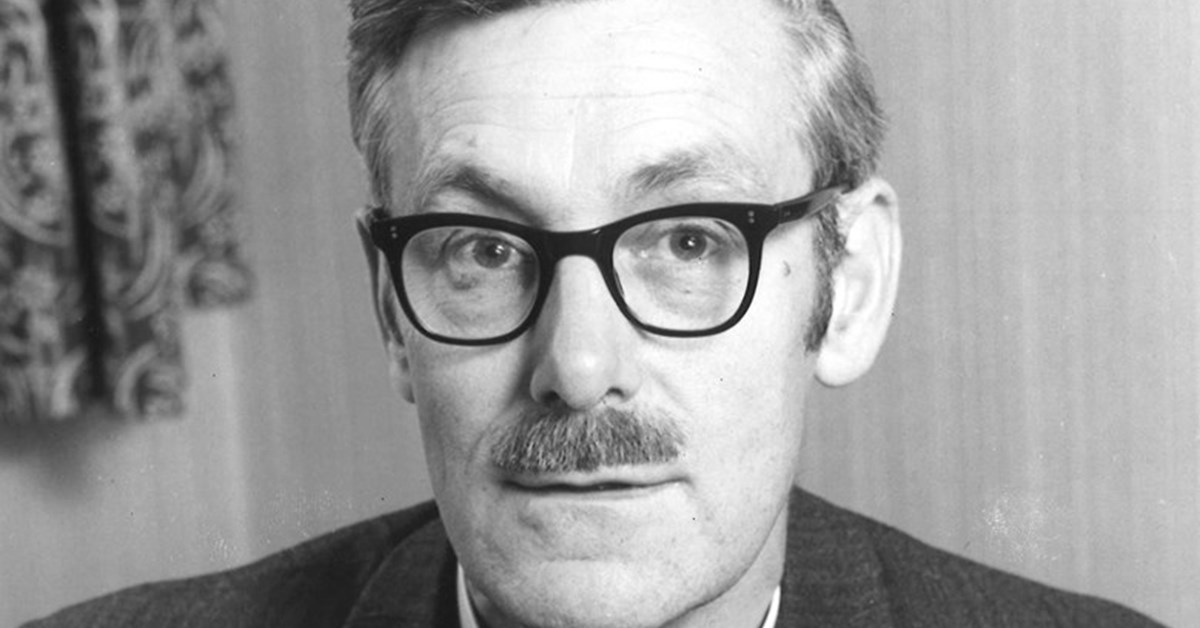
AFTER a long life of service to Christians around the world, Bishop Henry Wylie (known as Harry) Moore died at home on 16 December, aged 102. He will be remembered by many as a man of practical Christian faith and service, a down-to-earth northerner with a great store of spiritual wisdom, offered with relevant stories and illustrations and coupled with a dry sense of humour.
Harry, with his beloved wife, Betty, served the Church Missionary (now Mission) Society for 16 years. He brought to that ministry his training in commerce and organisational studies, tempered by an Evangelical faith broadened by the spiritual realities of life at war and on the railways.
Born in 1923, Harry left school unexpectedly at 15, when, at the outbreak of war in 1939, one morning he found his school closed. During the early years of the war, he worked for the LMS Railway company as a clerk, until he was called up to join the war effort in 1942. He served first with the King’s Regiment (Liverpool) and then with the Rajputana Rifles, the oldest rifle regiment of the Indian army, serving in Java, Indonesia, until 1946.
On his return from the Second World War, Harry went to Liverpool University, where he gained a degree in commerce. He then moved to Oxford to train for the ministry at Wycliffe Hall. He and Betty Basnett were married in 1951.
Harry’s first ecclesiastical appointment was as assistant curate of Farnworth, in Widnes. From here, he moved to St Leonard’s, Middleton, a parish to which he was to return some years later, and where his funeral service was held.
Harry and Betty offered their services to the CMS in 1956, and were sent to Masjed-Suleiman, the south-western Khuzestan province of Persia (pre-revolution Iran), where they worked with Bishop William Thompson, whose daughter Margaret was married to Thompson’s successor, Bishop Hasan Dehqani-Tafti. Bishop Hasan and Margaret became lifelong friends to Harry and Betty. This time in Iran was a formative experience for Harry; he was still speaking about lessons learnt there at his 101st birthday. These four years in Iran were to prove to be only the start of his many years of service with CMS.
On returning to Britain in 1960, Harry became Rector of St Margaret’s, Burnage, in Manchester diocese. Three years later, he returned, now as Rector, to St Leonard’s, Middleton, where he served for a further 14 years. It was during this time that he became convinced of the need for an active mission engagement with British society and saw how the almost 200 years of cross-cultural experience of the CMS could be used effectively within Britain itself.
When, in 1974, the CMS was in need of a new Home Secretary, to join Simon Barrington-Ward as the newly appointed General Secretary, Harry was wisely chosen as someone who understood how organisations function. Alongside his passion for mission in Britain and internationally, he had now completed an MA in organisational studies at Leeds University. He served in this position with responsibility for CMS’s extensive activities in Britain, and then as Executive Secretary, implementing a fundamental reorganisation of the Society’s headquarter structures, from 1974 until 1983.
In 1983, the first Bishop of the diocese of Cyprus & the Gulf, Bishop Leonard Ashton, retired. This was soon after the 1978 revolution in Iran, and increasing domestic insecurity throughout the Gulf States in the 1980s. Harry was invited to serve, which he did, until 1986, when a call came to return to the CMS. Although his tenure in the diocese was short, his interest in, and concern for the Anglican Church, in this region of the world was to continue for a further 39 years, alongside his more specific work for the church in Iran.
The call from CMS came from its President, David Bleakley, who needed to appoint a new General Secretary to follow John Taylor (later Bishop of Winchester) and Simon Barrington-Ward (later Bishop of Coventry). He saw the need for a successor who would not feel the need to stamp their own mark on the Society, but would be able to consolidate and build on the visionary but not totally secure foundations of others. Harry was just the man for this job.
During these final five years, serving the Society that he had known and loved already for almost 40 years, Harry brought much-needed financial and organisational stability. He consolidated the new vision for mission in Britain, appointed the Society’s first Region Secretary for Britain, to work alongside Secretaries for Africa, Asia, and the Middle East, and achieved a solid implementation of the vision for contemporary global mission laid down by his predecessors. Harry retired from CMS in 1990, leaving behind a healthy society ready to embrace the “everywhere-to-everywhere” agenda of its first Asian General Secretary, Bishop Michael Nazir-Ali of Pakistan.
In retirement, Harry served for four years as an assistant bishop in the diocese of Durham.
Betty died in 2018. Harry died on 16 December after a short illness, and leaves behind five children, Chris, Jan, Phil, Gill, and Paul, grandchildren, and great-grandchildren, who will miss his love for a good story and his amazing breadth of interest in world affairs and the personal lives of the people he met.
Bishop Harry Moore will be long remembered by those who worked with him in parishes, in Iran, and in the Diocese of Cyprus & the Gulf, and during his many years with CMS, for his steady hand, his organisational intelligence, his clarity of conviction about the truth and vivacity of the gospel, and his ability to ride out difficult moments with his dry sense of humour.