S. D. GOITEIN, the great scholar of the Cairo Geniza, famously characterised Jewish-Muslim relations in the Middle Ages by using the term “symbiosis”. In the social, economic, cultural, and intellectual spheres, Goitein proposed, Jews and Muslims enjoyed a mutually dependent relationship. “Never before”, he wrote, “has Judaism encountered such a close and fructuous symbiosis as that with the medieval civilization of Arab Islam.”
Implicit in this claim is the suggestion — which originated among European-Jewish historians of the 19th-century — that life was better for Jews living in Muslim-majority societies than it was for their co-religionists in Christian Europe. As the historian Mark Cohen has argued, the violent persecution of Jews was, indeed, less common in the medieval Islamic world than in Northern Europe, and yet Islam was more tolerant than Christendom “only in a qualified sense”.
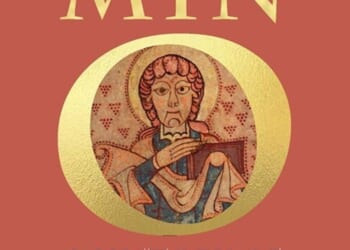
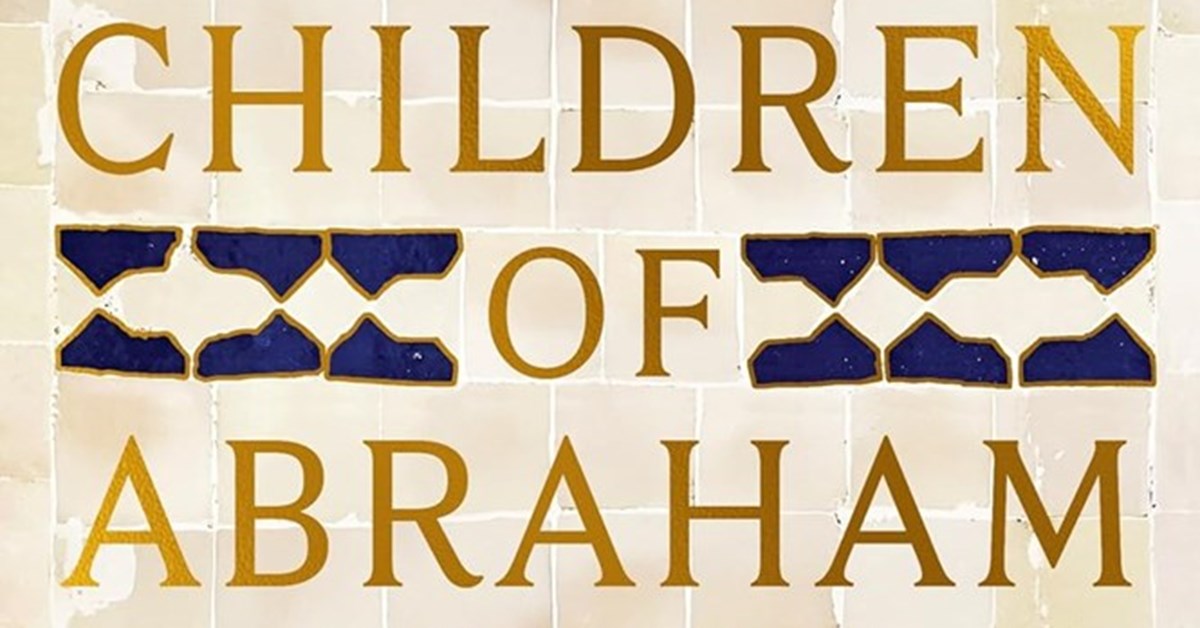
In Children of Abraham: The story of Muslim-Jewish relations, Marc David Baer, a professor of history at the LSE, adopts a similarly balanced view. Recognising that the history of Muslim-Jewish interaction has often been used and abused for ideological ends, he argues against “two dominant myths”: on the one hand, that ”the history of the Jewish-Muslim relationship is one of interfaith utopia”, on the other, “that it is one of Jewish-Muslim enmity”.
Certainly, the symbiosis was real. In medieval al-Andalus, North Africa, and Egypt, Jewish philosophers, poets, and mystics participated in a shared intellectual culture with their Muslim counterparts. Muslim dynasties, such as the Zirids of Granada in the 11th century, relied on Jewish officials, just as the Alawite kings of Morocco relied on Jewish merchants (known as “the sultan’s Jews”) in the 18th century. Yet, the legal status of Jews in the pre-modern Islamic world was second-class, and their existence was often precarious. While the Ottoman Empire did offer a safe haven for Jews fleeing persecution in Catholic Spain, the Ottoman chronicles, Baer observes, present Jewish figures as “symbols of moral corruption”, and “the myth of Turks as saviours of Jews . . . is propaganda.”
These competing narratives emerged and developed in the wake of the almost total breakdown of Muslim-Jewish symbiosis in modern times. Baer lays the blame for this breakdown at the door of European imperialism, secular education, Arab and Jewish nationalism, and the policies of the Israeli and Arab governments after 1948. His treatment of this tragedy is admirably even-handed.
Yet, while a focus on the modern period is understandable, it is regrettable that only a few pages are devoted to Maimonides and other exemplars of medieval symbiosis, while the lachrymose history of the 20th century gets four chapters. Reading this history, we can at least be grateful that, as Leopold von Ranke observed, “every epoch is immediate to God.”
Dr Fitzroy Morrissey is Associate Professor of Islamic Studies and Law at the University of Oxford, and a Fellow of Pembroke College.
Children of Abraham: The story of Jewish-Muslim relations
Marc David Baer
Profile £30
(978-1-80522-361-0)
Church Times Bookshop £27