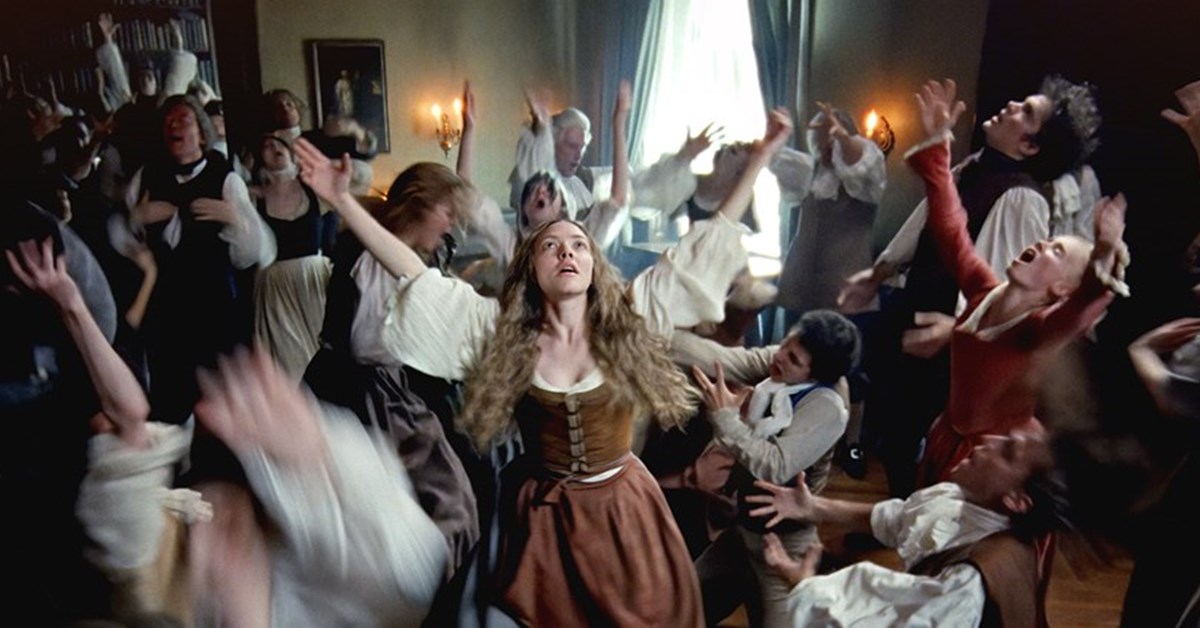
IT IS possibly better not to know much about a real-life character before watching any film based on their life. The Testament of Ann Lee (Cert. 15) has a whole lot of shaking going on. Three-quarters of the film involves dancing and music. It neatly depicts behaviour characteristic of worshippers in the Shaker movement. Enraptured with heavenly joy (and in accord with their song “’Tis the gift to be simple”), these Christian millenarians believed that “by turning, turning, we come round right”. They frequently formed their theology through movement, with its connotations of repentance, and through music: just as well for this film, which would be an awkward setting for doctrinal expositions.
Ann Lee (played by Amanda Seyfried, who is probably best known for the Mamma Mia films) became its leader. From humble beginnings in a Manchester cotton mill, she developed an interest in the Wardley Society’s branch of Quakerism, in which ranting and raving were means of glorifying God. Ann was especially drawn to believing that Jesus would appear, at his Second Coming, as a woman. Eventually, it became clear to her that she was that embodiment.
In 1772, Ann was coerced into marrying Abraham Standerin (Christopher Abbott), a fellow Quaker. Revolted by having seen her parents’ conjugal activity, she believed in celibacy and regarded copulation as Adam and Eve’s original sin. In the film, such feelings are exacerbated by the rough sex that her husband indulges in. For Ann, ecstasy is located elsewhere — in church and other gatherings — when religious frenzy leads to intoxicating states of transcendence. These worshippers’ out-of-body experiences are often rowdy, disruptive, and confrontational. Ann asserts that the Church of England is damned.
Hostile crowds make life so impossible for her coterie of followers that they set sail for America. After some rousing choruses of “All is summer” together with striking choreography, aboard ship, they eventually reach upstate New York. Under Mother Ann’s leadership, a utopian community is established.
Contemporary audiences will easily relate to its core values, which include pacifism and gender parity. There is a nod to challenging slavery and protecting domestic-abuse victims. We also see a community exercising godly enterprise in crafting furniture whose beauty owes much to its simplicity.
These aspects of Shaker life come a poor second in a film that is substantially a musical — not that this is to damn the movie with faint praise. Belonging, at least in part, to that particular genre is likely to assist The Testament of Ann Lee in being one of 2026’s more important films. The choreography alone makes it so: a film in which the camera and we vicariously join in dancing our way towards divine life. The film is filled with outstandingly beautiful chiaroscuro frames, meditations in themselves on the light and dark of human aspirations.
There’s nothing schmaltzy about any of this. As in The Brutalist (Arts, 23 May 2025), the Mona Fastvold-Brady Corbet partnership makes sure of that. Testament does lack, though, any genuine rapport of cast members. Amanda Seyfried soars above the rest. Ann Lee may not have been Christ incarnate, but she is unquestionably Lord of the Dance in this brave and imaginative take on a historical figure.