Kenneth Shenton writes:
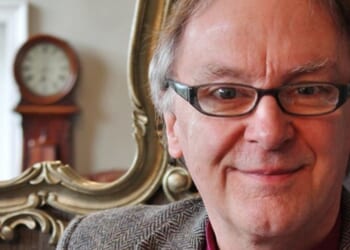
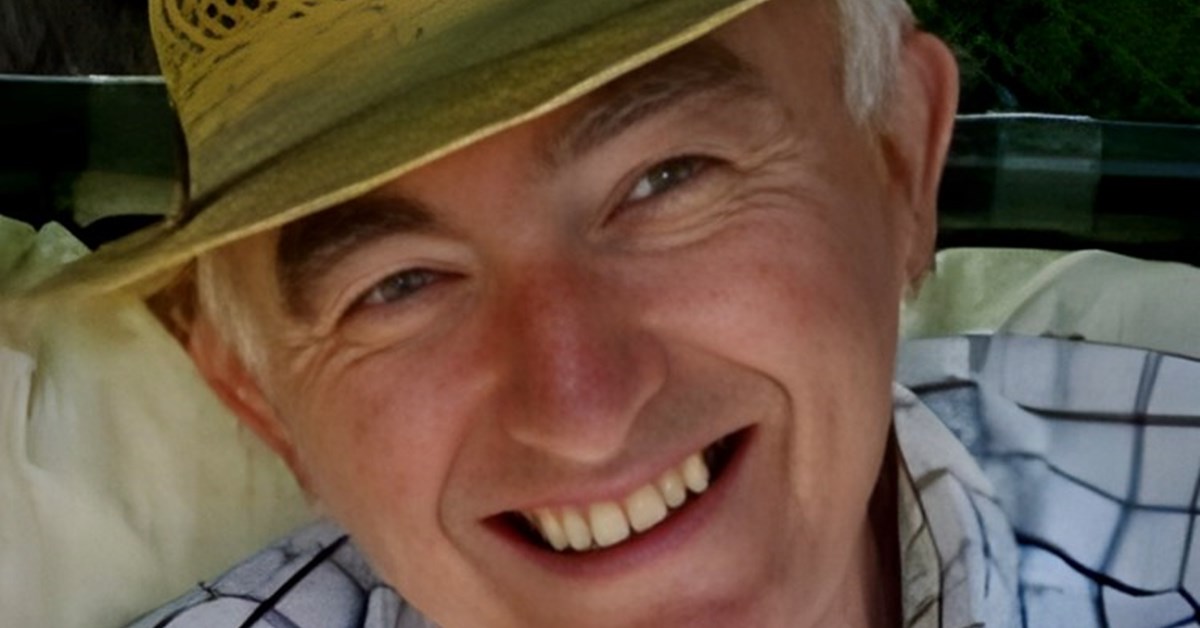
THE Very Revd Ken Riley was, perhaps, one of the last of those somewhat old-fashioned deans whose preferment to senior posts was based firmly on a proven strength of character together with a consistent track record of competence.
His ability to build firm relationships with a range of individuals and institutions defined his long and varied ministry. Significant events occurred during his time both as a Canon of Liverpool Cathedral and as Dean of Manchester: first, the Hillsborough disaster of 1989 and, then, the Manchester IRA bomb seven years later. On both occasions, he was not found wanting.
Born in Flint, in north-east Wales, in June 1940, Kenneth Joseph Riley was the only son of Arthur Riley, an electrician’s labourer, and his wife, Mary Josephine (née Birks). He excelled academically and artistically at Holywell Grammar School, and, in 1958, he was awarded the Robert Bryan Music Scholarship at the University College of Wales in Aberystwyth. There, he benefited greatly from the benevolent tutelage of both Charles Clements and Professor Ian Parrott. After graduating from Aberystwyth in 1961, he refined his studies at Linacre College, Oxford, subsequently moving to Wycliffe Hall to prepare for the priesthood.
Ordained deacon in Liverpool Cathedral in 1964, he served his title at Emmanuel Church, Fazackerley. Two years later, he moved to Kent to become Warden of Brasted Place College, in Westerham. The college had been founded by the Church of England to prepare candidates for ordination who lacked the necessary entry qualifications for universities or theological colleges.
He married Margaret Dennison in 1968, with whom he had two daughters. The next year, he began a five-year spell as Chaplain of Oundle School.
In 1974, he was appointed Chaplain to the University of Liverpool, a post that he retained on becoming Vicar of the impressive Gothic-style Church of St Matthew and St James, in Mossley Hill. He revelled in what was a lively parish with a strong musical tradition: regularly accompanying the introduction of the Series III Communion Service was Riley in F. He pared down the parish debt, and, while his wife successfully led the Women’s Fellowship, Riley began a popular luncheon club, in which all manner of interests could meet and shape ideas. He also served as Diocesan Warden of Readers and Rural Dean of Childwall.
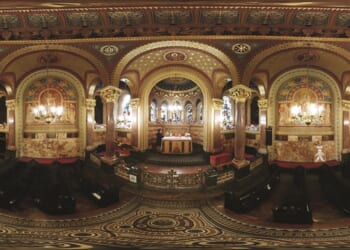
In 1983, Riley left one Gothic church on a hill for another, Giles Gilbert Scott’s even bigger Gothic space Liverpool Cathedral. Initially appointed Canon Treasurer, in 1987, he became Canon Precentor. The same year, his most informative monograph, A Walk Through Liverpool Cathedral, was published.
Riley was keen that, alongside its regular Offices, the cathedral should remain a diocesan resource. One week after the Hillsborough disaster, in June 1986, Riley preached at a moving televised memorial service for the 97 victims. Annual gatherings also took place to commemorate the Battle for the Atlantic and the Burma Star Association. In 1991, the venue hosted the world première of the Liverpool Oratorio by Paul McCartney and Carl Davies.
Between 1992 and 1994, Riley was one of the 17 members of the Archbishops’ Commission on Cathedrals. Chaired by Lady Howe, the commission was charged with examining all aspects of cathedrals and the ways in which they operated.
The backdrop was a series of scandals that had caused widespread concern. At Hereford, the Dean and Chapter had proposed selling its historic Mappa Mundi to meet financial problems. The Dean and Chapter at Lincoln were engaged in an internal war that brought widespread condemnation. At Exeter, financial misappropriation was found on an epic scale. The Commission’s findings entered the statute book courtesy of the Cathedrals Measure (2000).
In 1993, Riley moved down the East Lancashire Road to succeed Robert Waddington as Dean of Manchester. Here, at a medieval church in the heart of a Victorian city, and once again amid its strictly religious function, he was able to develop the cathedral as an important resource centre for both the city and its wider regions. After the devastating 1996 IRA bomb attack on the city, which also badly damaged the cathedral, Riley took the opportunity to repair and improve not only the building but also its more immediate environs. He was a passionate supporter of the traditional annual Whit Walks and was in much demand as a preacher.
He was active, too, in Manchester’s civic life, as Chaplain to the Greater Manchester Lieutenancy, a member of the Court at the University of Manchester, a Governor of both Manchester Grammar School and Chetham’s School of Music, a Trustee of Chetham’s Hospital and Library, and a Director of the Manchester Cathedral Development Trust and of the Booth Centre for the Homeless.
He was appointed OBE in 2003, and, 12 months later, returned to Liverpool Cathedral to preach the sermon at its centenary celebrations.
Initially retiring to that locality in 2005, he later settled in Alnwick. Sadly, his later years were clouded by Alzheimer’s.
The Very Revd Kenneth Riley died on 19 October, aged 85.