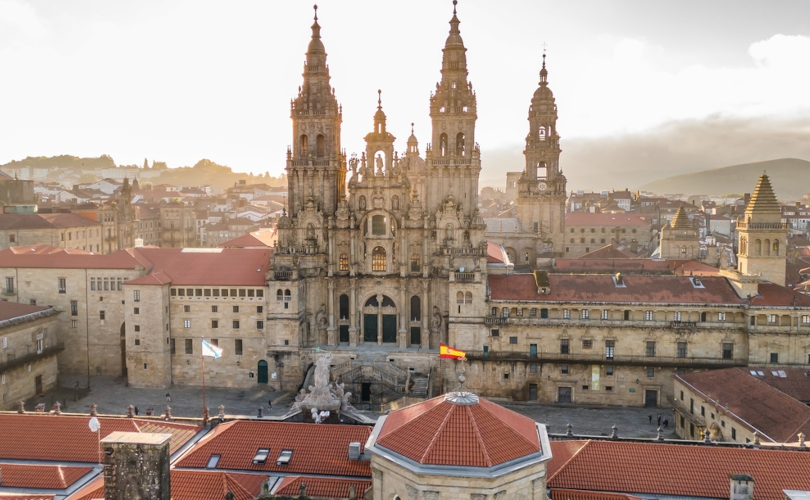
SANTIAGO, Spain (LifeSiteNews) — Catholic theologian Andrés Torres Queiruga, known for questioning the historical and miraculous nature of Jesus’ resurrection, is scheduled to deliver a lecture at the major seminary in Santiago de Compostela, Spain, this month.
On January 28, the Feast of St. Thomas Aquinas, the Theological Institute in Santiago will host a lecture entitled “Xesús de Nazaret como pioneiro e culminación da fe” (“Jesus of Nazareth as pioneer and fulfilment of faith”), delivered by Spanish theologian Andrés Torres Queiruga. Archbishop Francisco José Prieto Fernández will celebrate Mass immediately before the conference.
The event – advertised on the institute’s official homepage – was organized with the explicit support of the local diocese and, in particular, its archbishop. Spanish outlet Religión Digital indirectly confirmed the event in an editorial which came to the defense of the heterodox theologian.
Although the lecture was organized in connection with the Feast of St. Thomas Aquinas, the Prince of Theologians, the speaker is known for being one of the academics most critical of the dogmas professed by the Church.
In his book La risurrezione senza miracolo (“The Resurrection without Miracle”), Torres Queiruga writes: “The resurrection is not only not a miracle, but it is not even an empirical event. Faith in the resurrection does not depend on whether one accepts or rejects the historical reality of the empty tomb.”
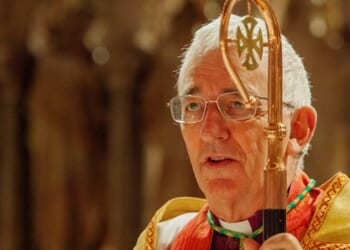
As InfoVaticana highlighted, the responsibility for hosting the event ultimately rests with Archbishop Francisco José Prieto Fernández, who governs the Archdiocese of Santiago de Compostela and is expected to celebrate the Mass immediately prior to the lecture. Torres Queiruga has proposed a theological understanding of redemption that dissents from classical Catholic formulations. In various writings, he has argued that the death of Jesus on the cross should not be interpreted primarily as an expiatory or sacrificial act that objectively reconciles humanity with God, but rather as a historical consequence of Jesus’ conflict with the religious and social context of his time.
READ: Pope Leo says different Christian faiths are ‘already one’
Drawing on philosophical and theological sources such as Immanuel Kant, Rudolf Bultmann, and Georg Hegel, Torres Queiruga maintains that faith involves an imaginative or symbolic mediation that does not necessarily correspond to empirically verifiable historical events. In this framework, he has argued that the resurrection of Christ should be understood as an experience of faith by the disciples rather than as a physical event involving the dead body of Jesus of Nazareth. Furthermore, many of his theological claims are linked to liberation theology.
Torres Queiruga writes that the hypothetical discovery of the corpse of Jesus would not be incompatible with Christian faith, but could prompt a re-examination of inherited theological interpretations.
On March 29, 2012, the Spanish Bishops’ Conference issued a note questioning the orthodoxy of several theses advanced by Torres Queiruga, urging him to “clarify his thought” and bring it “into full harmony with the Tradition of the faith as authoritatively taught by the Church’s Magisterium.” Although the note was later removed from the website, it remains accessible in the web archive at the link provided here.
Although expressed in very mild and cautious terms, the note speaks of “distorted elements” and explains that “the notion of a paradigm shift employed by Professor Torres Queiruga, and the conclusions that follow from it, are not always compatible with the authentic interpretation that the Church has given to the written and transmitted Word of God.”