WHEN you tell someone, usually on first introduction, that you are a practical theologian, there is a a fifty-fifty chance that they’ll ask: “Isn’t that a contradiction?” The joke relies on an assumption shared by many people — of all faiths and none — that theology is an airy and other-worldly subject.
It is true that theology is a discipline of mysteries, but, while theologians can be philosophers and storytellers, they are also investigators. Theologians of all kinds try to ask questions about God, creation, society, Church, self, and so on, and to communicate truthful answers in ways that are useful and interesting for how people think, live, and worship.
Whether or not we are practical theologians, people of faith make practical and empirical claims all the time, when we talk about what the world or the Church is like — or how it should be. Consequently, our claims and questions are already bound up with empirical data about the world which sciences of all kinds investigate. What kind of practice helps people to pray, and how effective are they? What might historical discoveries tell us about the meaning of scripture today? How should Christians respond to AI? Ultimately, what might such answers tell us about God?
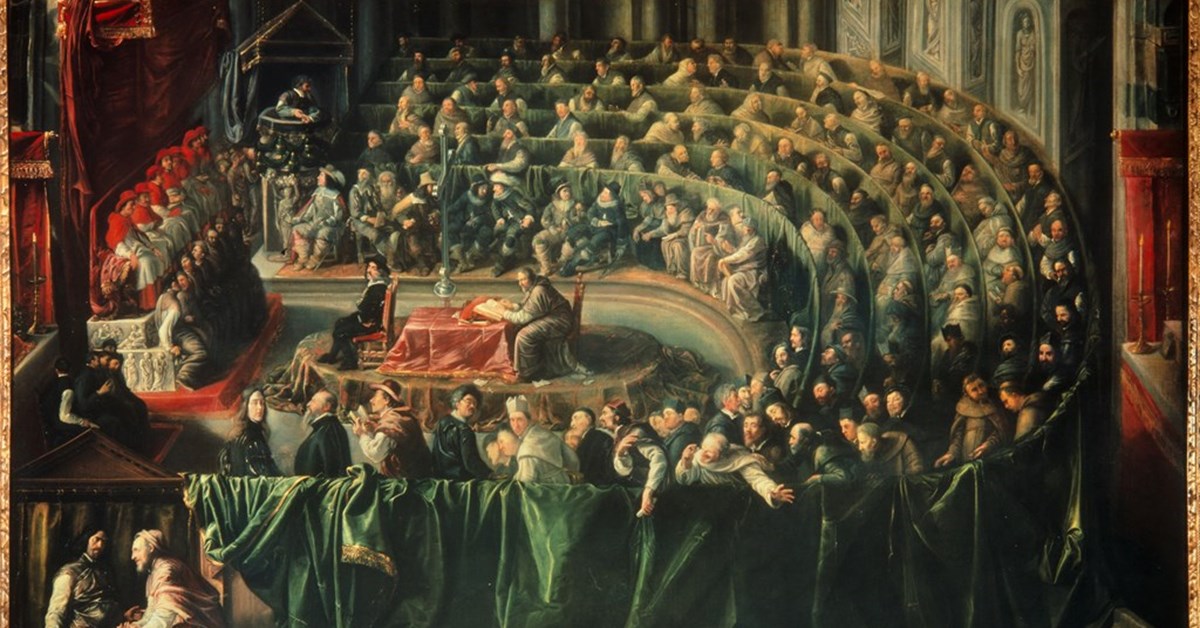
A GOOD investigator should be ready to use the right tools for the job. This is the position that is advocated as “science-engaged theology”. Of course, theology in dialogue with science has a long and winding history, and hostile encounters tend to loom large in the public imagination — like that of Galileo Galilei, when he was put on trial by the Inquisition in Rome in the 17th century for supporting heliocentrism: the idea that the solar system revolves around the sun.
Yet the history was always more nuanced than that. Over recent decades, more and more scholars have been nourishing positive public attention to the relationship between religion and science: thinkers such as Ian Barbour or Johannes van de Ven, for example, or projects such as “Christianity and Science in Conversation”.
The endeavour to name, explain, and advocate what specifically “science-engaged theology” involves has emerged even more recently. Two of the key drivers of that work are John Perry and Joanna Leidenhag, in conversation with a range of other theologians, including Sarah Lane Ritchie and Andrew Davison.
As Perry and Leidenhag observe in their book Science-Engaged Theology, “Christians have more or less always seen the science of the day as a source for theology.” It is the increasing polarising of science and religion in modern times which turned that into something surprising, as if “science” versus “religion” stood for rationality versus magic. Perry and Leidenhag draw on Peter Harrison’s Gifford Lectures, delivered in 2010 and 2011 and in which he argued that this tired binary was anachronistic, and misrepresented both science and religion with terms that were too broad and poorly defined.
Perry and Leidenhag’s project has not been to define “science” or “religion” more sharply, but, rather, to attend to the entanglement of scientific and theological questions which was already evident. Science is not being added to the four Wesleyan sources of scripture, tradition, reason, and experience; rather, they suggest that theologians should pay attention to the kind of claims and questions which we already form, and develop the habit of seeking out — and attending to — scientific studies, wherever they may shed light. Tackling what sciences can tell us about the world is integral to our theology. In many ways, the process of theological questioning is not dissimilar to scientific method.
HERE, at the University of Birmingham, we have taken this suggestion seriously by focusing on the resources of psychology more generally, and the psychology of religion more specifically. Over the past three years, we have embarked on a project to build and support a worldwide network of scholars, of all career stages, training them to take up psychological tools for theological questions. We called this programme the “Psychology Cross-Training for Theologians” project, funded by the John Templeton Foundation. Our goals were to develop researcher capacity in, and the wider field of, “psychology-engaged theology” in particular.
Led by Dr Carissa Sharp, Associate Professor in Psychology of Religion at the University, this project began with the intuition that theology and psychology occupied similar ground in their person-centred concern for the self, society, and how people understood and acted on their religious beliefs. We named two themes that could prove fruitful meeting points. The first was how people thought about and imagined divine realities; the second was the part played by religion in human flourishing in social relationships. What might such ideas, imaginings, and reflections on experience tell us about ourselves, communities, and God?
WE TOOK these questions to a global call for theologians to join us as Programme Fellows, to take part in an 18-month training programme. Thirty theologians gathered, arriving from six continents. Each Fellow who joined the programme trained in the frameworks and methods of psychology, as well as foundational research on their research theme, through a mix of residential and online learning. Working with a psychologist as a mentor, they designed 12-month, small-grant research projects to gain practical experience in psychology-engaged theology research.
Our work became more and more exciting in the wildly different directions that the Fellows took: from the problem of evil to mystical experiences; from racism in churches to hope in diaspora communities; from reading the Bible in the light of climate change to the ways in which perceptions of God’s character related to people’s personal aspirations; and from visual arts to martial arts, both as faith-inflected activities.
SUPPORTING these projects has been profoundly moving. Many of the Fellows have worked with groups that need particular support in spiritual and psychological ways: people with intellectual and developmental disability; people with various health concerns or needs; and people who have experienced spiritual abuse. The contexts are as varied as Chile, Kenya, and Hong Kong.
Projects have produced innovative output, including amazing art exhibitions, podcasts, new writing, and insights. Fellows have spoken about the way in which the programme has changed their careers and research; and about their experience of cross-disciplinary hospitality and friendships formed between members of our global network. The result has been a supportive community of psychology-engaged theologians who have now “left the nest” and are independently pursuing new research trajectories in this field.
LEAVING the best for last, we now hope to open up these ways of thinking and learning to a broader audience, by making some of the original training materials public. An online course is now available — structured so that it can be dipped into, at an individual’s own pace — free of charge to any and all who might be interested in learning more about the psychology of religion and psychology-engaged theology. We have also recorded a podcast series designed to provide evidence-based insights to religious practitioners such as priests, pastors, chaplains, spiritual directors, and community leaders.
Our hope is that these resources will help to alert researchers and practitioners to the opportunities to strengthen their work through psychology-engaged theology, and also to support teachers in theological colleges and school classrooms, and community members and leaders. Today, when concerns of psychology are so often entangled with theological ideas and practices, paying attention to these insights into our communities of faith is an urgent and exciting prospect. You, too, can be part of psychology-engaged theology.
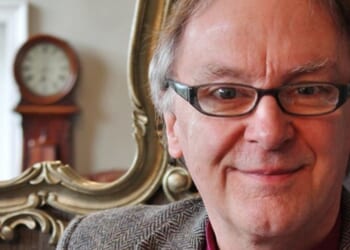
Dr Amy Daughton is Associate Professor in Practical Theology at the University of Birmingham.
crosstrainingpsychologyandtheology.com/for-researchers
crosstrainingpsychologyandtheology.com/for-practitioners