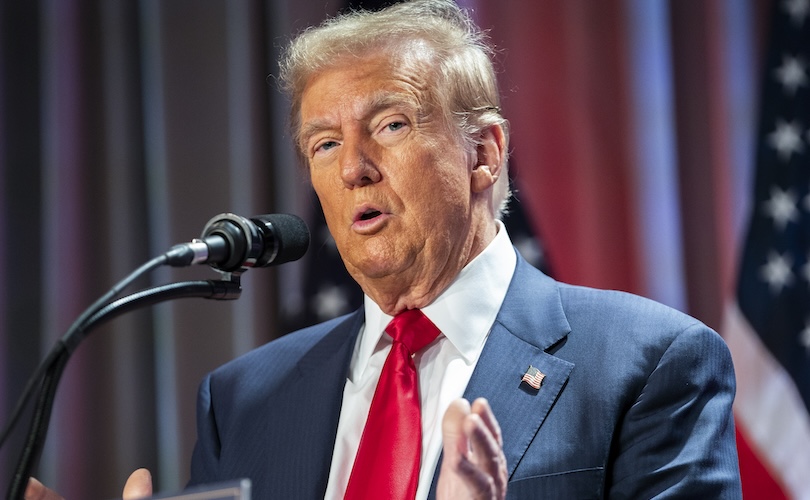
WASHINGTON, D.C. (LifeSiteNews) — President Donald Trump is expected to sign an executive order on Thursday directing federal agencies to reclassify marijuana from a Schedule I drug to Schedule III under the Controlled Substances Act. He has also suggested that he will allow it to be covered under Medicare.
The move — which has long been feared by social conservatives — would rubber stamp a plan set into motion by the Biden administration’s Department of Health and Human Services when it recommended changing the psychedelic drug’s classification last year. Marijuana is currently considered a Schedule I substance alongside heroin and other dangerous narcotics.
Trump told reporters on Monday that his administration is “very strongly” considering the change. “A lot of people want to see it – the reclassification – because it leads to tremendous amounts of research that can’t be done unless you reclassify,” he said.
But the move is opposed by dozens of Christian and pro-family groups.
Earlier this year, nearly 50 organizations, including CatholicVote and Family Research Council, urged Trump in a joint letter to resist the rescheduling, saying that it would prioritize industry profits over public safety.
“You have an opportunity to make a stand for the safety of children across America by opposing the flawed proposal,” the letter stated. “Schedule I drugs have no accepted, safe medical use and a high potential for abuse. Marijuana fits squarely within this definition.”
READ: Dozens of groups urge Trump not to reclassify marijuana as less dangerous
A September 2025 study published in Nature Communications by researchers at the University of Toronto’s CReATe Fertility Centre confirmed the dangers of marijuana. They found that tetrahydrocannabinol (THC), marijuana’s main psychoactive compound, can harm unborn babies and women.
“THC exposure seems to impact critical transcripts involved in key oocyte maturation processes, fertilization, early embryo development and implantation,” the report, which studied women undergoing in vitro fertilization, found.
Lead author Dr. Cyntia Duval told Medscape Medical News that her report should be seen as “a word of caution.”
A study released by the American College of Obstetricians & Gynecologists (ACOG) in September also advised medical professionals to encourage pregnant women to stop using marijuana due to its negative impact on preborn children.
“Cannabis exposure during pregnancy has been associated with low birth weight, small-for-gestational-age neonates, neonatal intensive care unit admission, and perinatal mortality,” the report said. “Obstetrician–gynecologists and other obstetric health care professionals should … counsel and screen all patients and use evidence-based strategies to reduce cannabis use.”
Also known as cannabis, marijuana is legal for “medical” use in 40 states and the District of Columbia, with nearly 90 percent of U.S. adults supporting doctor-prescribed use. The industry surpassed $38 billion in revenue in 2024 and is projected to exceed $70 billion by 2030.
Liberal activists and Democratic politicians claim that recreational use is essentially harmless and that “medical marijuana” can help those who suffer from crippling ailments. Libertarian-minded Republicans also argue that Americans should be able to use the drug so long as they aren’t harming anyone else. They also say it helps the economy.
But data continues to show that THC potency in marijuana, which has risen dramatically from about three percent in the 1980s to nearly 30 percent today in many products, carries dangerous side effects.
A sweeping November 2025 review published in the Journal of the American Medical Association analyzed over 2,500 studies from 2010 to 2025. UCLA addiction psychiatrist Dr. Michael Hsu says that the study shows there is “insufficient evidence” to support the claim that marijuana helps treat acute pain, insomnia, anxiety, and other illnesses.
Hsu’s study also found that 29 percent of marijuana users meet the criteria for being abusers of the substance. Daily or high-potency use also raised cardiovascular risks, such as heart attacks and strokes. Increased psychotic symptoms and generalized anxiety disorder were also associated with routine use and higher-potency THC.
President Trump had a mixed record on marijuana during his first term in office, expressing openness to some reforms while backing some Obama-era policies that were supportive of so-called “medical marijuana.” Last year, Trump endorsed a failed amendment to decriminalize the drug recreationally in Florida after meeting with Kim Rivers, a major legalization donor and CEO of cannabis company Trulieve. Multiple outlets have confirmed that shares of marijuana companies have soared in recent days following Trump’s announcement.