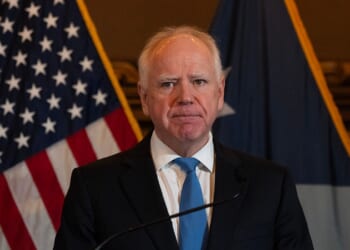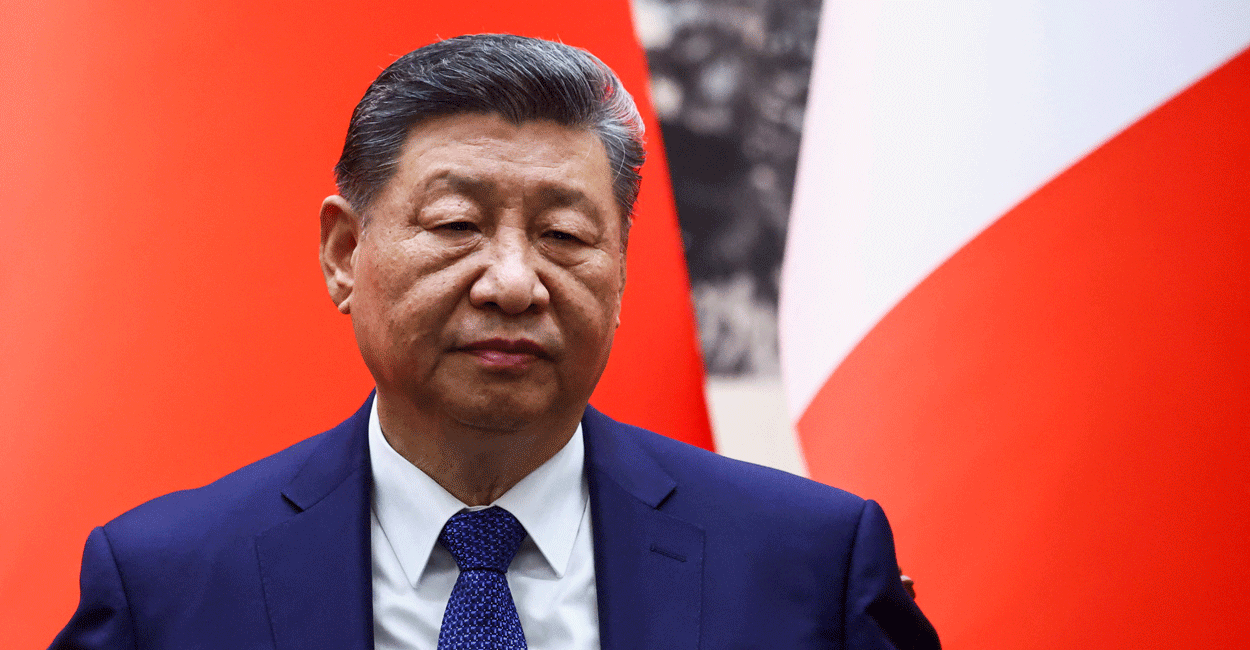
In the coming year, President Trump may meet Xi Jinping up to a half dozen times, an intense period of high-level diplomacy amid unprecedented mutual trade and supply chain warfare with China.
The stage was set by the leaders’ Oct. 2025 summit in Korea which President Trump described as a convening of the “G2,” recalling a discarded diplomatic idea that that U.S. and China stand as peers above other countries and groupings like the G7 and G20, and should partner together to govern the world.
However, China has conspicuously declined to join Trump’s revival of the “G2” label, even though Xi has sought to establish such global power-sharing arrangements with the United States in the past.
Xi’s change of heart is a reminder that, no matter how many times the leaders convene in 2026, the United States and China are headed for more conflict, rather than a turn toward cooperation.
China “embraced” the G2 concept early in the Obama administration as a potential means to “make major global decisions without other U.S. partners present.” Later, China promoted a “New Type of Great Power Relations,” a similar concept which emphasized curtailing U.S. influence over the CCP’s so-called “core interests.”
Then and now, China’s own behavior ruled out such an arrangement. Instead, China’s actions continue pushing the world towards a bipolar order of competing techno-economic blocs, much like the first Cold War.
China continues to deindustrialize the rest of the world by doubling down on state-subsidized industrial overcapacity and an unsustainable attempt to prop up its struggling economy by dumping unprofitable exports around the world.
In November, Xi Jinping reiterated his longstanding directive for China’s industry and government to pursue one-sided decoupling from the U.S. and other advanced economies. China is currently attempting to “tighten international production chains’ dependence on China,” while severing its reliance on foreign technology.
These strategies, unanswered for far too long, have allowed China to pursue its own economic and technological autonomy while cultivating Western economies’ dependence on China, both of which China is now leveraging to exercise veto power over all of the world’s technological supply chains.
The economic coercion China has deployed through its dominance of rare earths has, in effect, constrained U.S. sovereignty–leading to compromises on critical national security actions.
Senior U.S. officials, who should be fully focused on advancing U.S. national security, have instead been tasked with “ensuring that departments do not take actions that could threaten the détente [with China].”
China’s economic coercion leaves the United States—and ultimately, the free world—with only two options.
The first is surrender: Flinch away from the pain of weaning off decades of addiction to Chinese industry. Allow China continued access to Western markets while it decouples on its own terms. Permit the continued concentration of critical technologies and industrial capacity inside China. Become compliant vassals who export capital and commodities to China’s factories, ever fearful China will cut dissenters off from its manufactures.
The second option is to fight back: Reclaim American sovereignty. Purge our supply chains of dependencies on adversaries with the same speed and purpose that China has purged Western suppliers from its own. Close our markets to China’s overcapacity. Reestablish secure supply chains. Reindustrialize the free world.
The trend toward mutual decoupling between the United States and China seems to be all but guaranteed.
Both countries perceive decoupling as urgently necessary for their vital interests. This decoupling is unlikely to be confined to specific advanced technologies.
Commodity trade could have been an exception, but China has begun restricting both the import and export of commodities to coerce the U.S. and the world at large.
By comparison, exploiting foreign reliance on China’s manufactures would generate less backlash and consequences for the Chinese state than restricting commodity exports. Such sanctions can be more targeted and have already been used to attack Western companies.
Any critical industry, large employer, or politically important company dependent on China now faces existential sanctions risk.
Until one country or the other fundamentally reconsiders its interests—or folds and accepts reliance on the other—this process will increasingly separate the world into two rival techno-economic blocs.
There will be ambiguity, contestation and differing degrees of alignment.
Ultimately, only the United States and China have the heft to act as centers of gravity in this century. There will be exceptions, but firmly delineated bipolarity, not multipolarity, will be the prevailing geo-economic paradigm going forward.
Xi Jinping and the CCP seem to understand this trajectory.
Despite U.S. policy paralysis stemming from China’s rare earth coercion, despite the second Trump administration’s openness to a mutually beneficial relationship with China and despite genuine attempts at reaching a trade deal, the coming years will more closely resemble a fight than an embrace.
The United States can either accept China’s dominion or will have to deprive China of the thing it needs most to fuel its economy and enable its blackmail: access to the world’s most important consumer and capital markets.
This process will indeed forge a sort of “G2” world—one characterized by technological rivalry, competition for industrial scale and a less open field for China’s predatory industrial policy. That’s not the kind of “G2” that Xi wants.