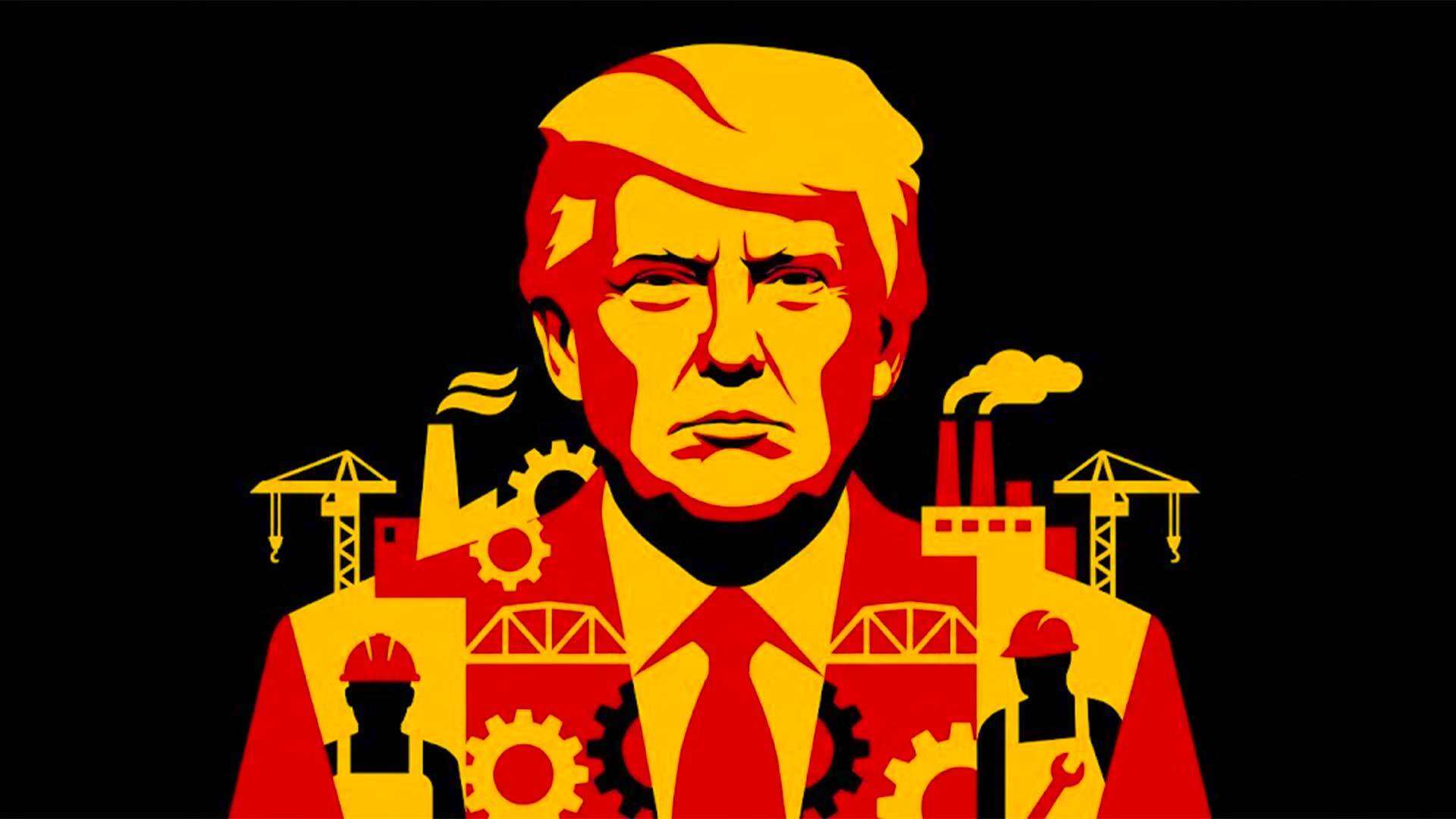
Like a kid in a toy store with a nearly unlimited supply of someone else’s money, President Donald Trump is on a shopping spree the likes of which America has never seen.
With the announcements earlier this month that the federal government will take equity stakes in a company that makes advanced lasers and another that mines critical minerals, the Trump administration has now bought pieces of more than a dozen private companies. What began as an apparent effort to prop up stumbling giants like U.S. Steel and Intel has quickly morphed into a recurring, even routine, behavior. And it is all happening without even an attempt at getting congressional authorization.
As I detailed in a recent cover story for Reason, this pivot towards a more aggressive form of state capitalism is a risky experiment that involves more central planning, invites more corruption, and risks both taxpayer dollars and vital sectors of the economy. Even amid the Trump administration’s many other intrusions into the private economic sphere—tariffs, attacks on independent media outlets, and so on—the rapid acquisition of shares in so many private companies has been astonishing.
Since that article was published a few weeks ago, there has been a whirlwind of additional acquisitions. In November, the White House announced a $750 million investment (with funds coming from the Pentagon and the Commerce Department) in Vulcan Elements, a North Carolina-based company that makes advanced magnets. In return, the government is taking a $50 million equity stake in the company and an unspecified “warrant” that allows the government to buy stock in the company. An $80 million deal with ReElement Technologies, which is also involved in the supply chain for rare earth minerals, was announced at the same time.
This month, the White House announced that it was taking a 10 percent stake in Korea Zinc, which is building a new plant in Tennessee. The Trump administration is also taking an undisclosed equity stake in xLight, a Silicon Valley startup that will receive $150 million from taxpayers via the CHIPs and Science Act. The company is attempting to compete with the Dutch firm ASML, which is currently the only manufacturer in the world producing the ultra-violet lithography machines capable of making high-end semiconductor chips.
Meanwhile, the Trump administration also granted permission to Nvidia to sell its most advanced chips to buyers in China—but only after the company agreed to pay 25 percent of the profits from those sales to the federal government. That ought to raise some questions. Do the Trump administration’s worries about the national security value of rare earth minerals and high-end technology simply vanish if a private company is willing to pay a big enough bribe?
There’s no doubt that many of these companies do important work in critical parts of the economy, and that producing more rare earth minerals and semiconductors will strengthen America’s economy and national security. And there is certainly a long history of the federal government propping up, subsidizing, and protecting businesses for political reasons.
What’s happening now is fundamentally different. As Scott Lincicome writes in The Dispatch, previous subsidies and other forms of protectionism were “offered broadly, provided at arm’s length, and authorized by law. They’re also relatively insulated from ongoing government involvement and oversight: Washington doesn’t interest itself in a firm’s public share price or day-to-day business—sales, purchases, factory locations, etc.—beyond (perhaps) ensuring that the company complies with terms of a government contract or subsidy agreement. Trump’s state corporatism fundamentally differs from these policies in that it empowers (if not requires) the government to be involved in a specific company’s routine operations and to care deeply about the firm’s ultimate success or failure.”
Indeed, the Trump administration has not made a convincing case for why it is buying stakes in these companies—and why these companies in particular, rather than others. At a minimum, it should make that case to Congress and get congressional authorization for these purchases. If American taxpayers are going to be equity stakeholders in more than a dozen private companies, their elected representatives ought to approve that.
Unless Congress demands such a thing, there’s unlikely to be much resistance to Trump’s new state capitalism. That’s because the companies involved in these deals seem eager to go along.
“State capitalism is a two-way street. Many businesses, by aligning themselves with Trump’s agenda, elicit better treatment—in their ability to sell to China, the tariffs they pay, how they are regulated, and what mergers are allowed,” wrote Greg Ip, The Wall Street Journal‘s chief economics commentator, in a recent piece about how CEOs are navigating Trump’s state capitalism. “In other words, state capitalism doesn’t just serve the interests of the state, but of favored capitalists.”
And the Trump administration does not seem likely to place its own limits on this behavior. Asked recently about the logic behind these acquisitions, Trump said, “We should take stakes in companies when people need something.” That’s an answer that lacks any limiting principle.
A powerful executive branch unrestrained by Congress, precedent, or principle will only keep growing. The past few months have shown that even vague claims of “national security” are enough to establish a new and dangerous norm that allows presidents to insert themselves in the management of private companies. It would be surprising if this trend does not continue.