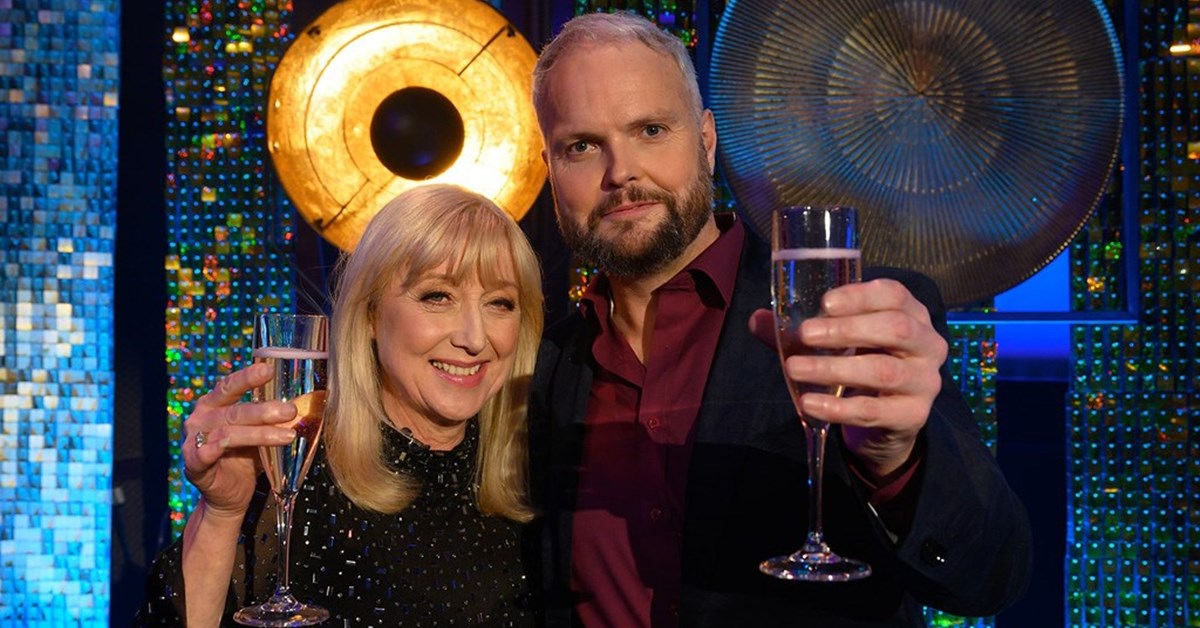
FOR New Year, I decided to forgo my annual hate-watch of Jools Holland’s Annual Hootenanny, and, on the advice of a Church Times reader, I tuned into BBC Alba’s Cèilidh na Bliadhn’ Ùire 2025 (31 December, iPlayer). This Gaelic-language programme is broadcast from the banks of the River Clyde in Glasgow, and it’s everything the Hootenanny should be: authentic, celebratory, unpretentious, and, most importantly of all, filmed live on New Year’s Eve. The Hogmanay cheer is so warm and genuine that you can almost smell the flaming Drambuie.
With sincere performances from talented Scottish musicians and an audience of ordinary people, the New Year Cèilidh is the real thing, including a blazing rendition of “Auld Lang Syne” just after the chimes, with linked arms aplenty. It was a heartening contrast to the broadcast of the London fireworks, which included a version by Boney M, against a backdrop of freezing-cold, confused-looking tourists. If you’d like to see something that feels truly festive, as opposed to the po-faced performance of the Hootenanny, then perhaps give this a try in 2026.
A review of the year is usually in order before January kicks off in earnest, and this one, provided by satellite imagery, was fascinating viewing. Channel 4’s 2025: The year from space (Friday) makes use of images taken 300 miles up by more than 9000 different satellites, to depict a very different perspective on the year.
There is much to reflect on here, all seen from on high. There were human celebrations such as the Kumbh Mela, a gathering in February of more than 600 million Hindu pilgrims, creating a city of tents and temporary infrastructure visible from space. There were majestic natural events, such as the great migration of herds of wildebeest in Kenya and Tanzania, the largest movement of land animals on the planet, seen from above as a heaving, roiling river.
The year 2025 was another containing natural devastation, such as the Los Angeles fires — a vision of hell more akin to Middle-earth than planet Earth — and the havoc caused by Hurricane Melissa, which decimated much of Jamaica (News, 7 November). And there was, of course, terrible destruction caused by man, in places such as Gaza and Sudan, all grimly observable, like stains upon the surface of the earth.
This reminded me of the Booker Prizewinning novel Orbital, by Samantha Harvey, which describes 24 hours on a space station as it orbits the earth, gloriously describing the beauty and fragility of it all (Book Club, 1 November 2024). The view from above gives a sobering perspective on our own existence, which, in turn, brings to mind the humbling words of Psalm 8. When seeing such vistas of damage and despair, renewal and hope, who are we, indeed, that God should still care for us?