THE UK is one of only seven countries in which no religious group makes up the majority of the population, a new study has found.
The study by the US-based Pew Research Center’s Global Religious Futures project measured, in 201 countries and territories, how evenly seven religious categories — Christians, Muslims, Hindus, Buddhists, Jews, other religions, and the unaffiliated — were represented.
Only European country is among the ten most religiously diverse: France, whose population is largely Christian (46 per cent) and religiously unaffiliated (43 per cent), but with a sizeable (nine per cent) Muslim minority. France, as well as the UK, is among the seven in which no religion holds a majority. The others are South Korea, Australia, Singapore, Mauritius and Ivory Coast, as well as the UK.
The most religiously diverse countries are in the Asia-Pacific area, with Singapore at the top, with the most even spread of faith groups, with the exception of Suriname, in South America, which comes second.
In UK census data from 2021, Christians account for less than half the population of England and Wales — only 46 per cent said they were Christian, down from 72 per cent in 2001. Thirty-seven per cent said that they had no religion, the second largest group in the UK. Other faith groups had very small populations. Overall, the UK ranks 12th in the index of religious diversity.
The report says that religious diversity levels around the world did not substantially change between 2010 and 2020, as the religious composition of most countries remained fairly stable. While the data indicate that some countries have diverse populations of religious groups, nations are much more often religiously homogeneous, and in 194 countries and territories, half or more of the population fall into one religious category. This includes 43 countries where at least 95 per cent are in the same religious group. These countries are predominantly Muslim or Christian.
Where there is the greatest religious diversity, Christians are still often the largest group. In half of the world’s ten most religiously diverse countries — Togo, Benin, Suriname, France, and Australia — Christians are still the biggest faith group.
Slightly fewer countries also have a fairly even split between two faiths. For example, in Eritrea, almost equal numbers of Christians and Muslims live side by side (47 per cent and 52 per cent, respectively).
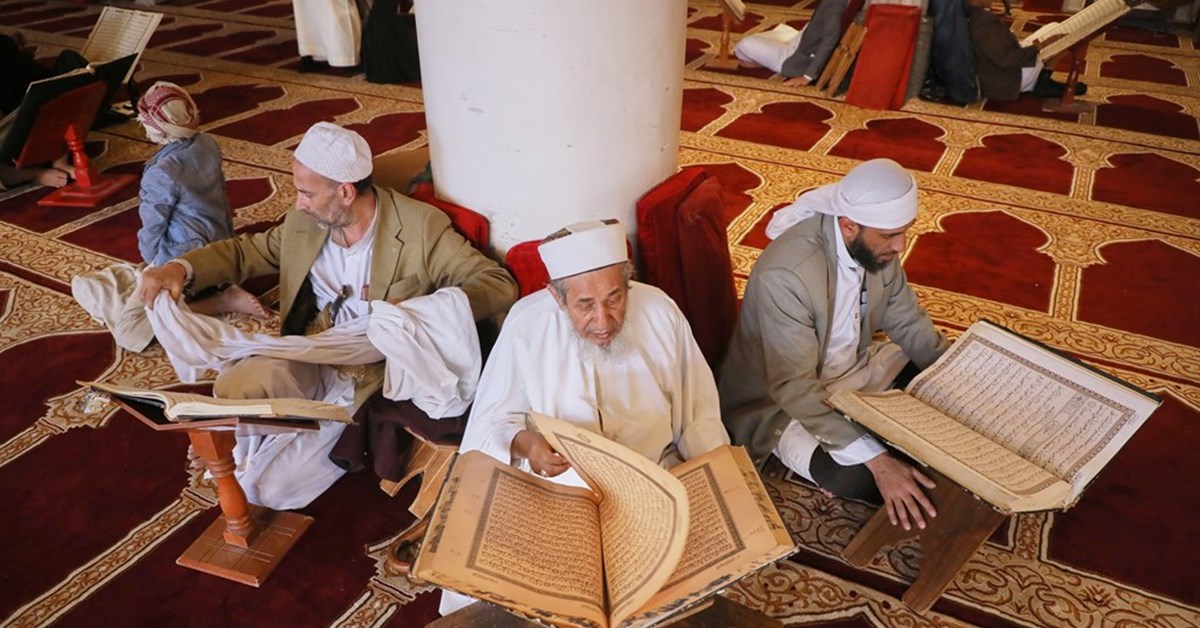
The Middle East-North Africa region was found to be the least diverse of the regions studied: 94 per cent Muslim. The region includes five of the world’s ten least religiously diverse countries and territories.
Eight of the ten have populations that are almost entirely Muslim: Tunisia, Iraq, Western Sahara, Morocco, Iran, Somalia, Afghanistan, and Yemen are all more than 99 per cent Muslim.
Where populations had become more religiously diverse, it was found to be because of growing proportions disaffiliated from religion — usually from Christianity. In countries where very large Christian populations shrank in the decade up to 2020, and the small number of the religiously disaffiliated increased, as in Ireland, then religious diversity increased. This was also true in the United States, where the large Christian majority shrank by 14 per cent to 64 per cent, and the number not identifying with any religion increased by 14 per cent.
Conversely, in the Netherlands, where the religiously unaffiliated grew further to 54 per cent and became the majority, religious diversity fell.