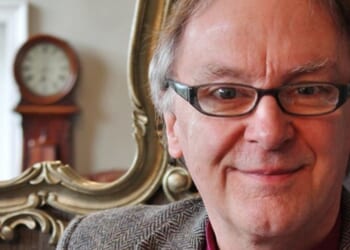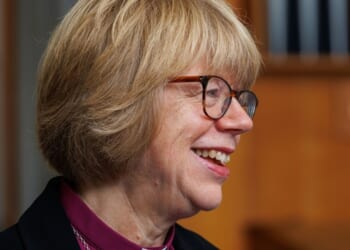
A PROPOSAL to ban social media for the under-16s has received support from the Bishop of Oxford, Dr Steven Croft.
On Monday, the Government launched a consultation on the proposal, which mirrors one introduced in Australia late last year. Dr Croft, the Church of England’s lead bishop on AI and technology, told the Church Times that he welcomed the consultation and was in favour of a ban.
An amendment to the Children’s Wellbeing and Schools Bill was due to be debated in the House of Lords on Wednesday. If passed, it would require social-media companies to prevent under-16s’ using their platforms.
On Tuesday, Dr Croft confirmed that, had he been able to attend the debate, he would have spoken and voted in favour of the amendment, but he also welcomed consultation, as it would allow young people’s voices to be heard.
He was speaking on the fringes of a conference organised by the University of Bath’s Centre for Doctoral Training in Accountable, Responsible and Transparent AI and held in Lambeth Palace on Tuesday.
In his address, Dr Croft suggested that “every act of radical human exploration offers new perspectives on what it means to be human,” and the development of AI was no different.
His interest in the technology used to be regarded by other bishops as “niche, if not eccentric”, he said, but it was now widely recognised as an important issue that posed ethical questions for society.
The recent controversy around the AI tool Grok (News, 16 January) was one example, Dr Croft said. Users in the UK were blocked last week from being able to generate deepfake sexualised images on the social-media platform X, after the developed triggered criticism from Sir Keir Starmer and the announcement of an investigation by Ofcom.
Dr Croft said that he had been “very encouraged” by the Government’s “robust” response, but, because the technology was “developing faster than the regulation can develop”, there was a “responsibility” on tech companies, as well as on governments to “stand up to them”.
Discussion about the development and regulation of AI needed not to be restricted to a narrow class of experts, he said. Parish priests should think about the pastoral issues at play.
At a recent clergy conference in the diocese of Oxford, 100 young people had been invited to talk about their concerns about the world, and AI was “top of their concerns”, Dr Croft said. The conference encompassed questions about whether there would be jobs in the future, and young people’s relationship with social media.
Ethical questions thrown up by new technology were “ubiquitous”, including whether to continue to engage on social media.
In the past week, two dioceses — Southwark and Blackburn — announced that they were mothballing their X accounts, and the bishops of the dioceses were also coming off the platform.
A statement posted by the Bishop of Southwark, the Rt Revd Christopher Chessun, on Thursday of last week said that the diocese had reflected “long and hard about the merits of maintaining a presence on X in the face of the rise of disinformation and harmful, extremist content on the platform”.
The controversy over Grok crossed a “red line”, the statement said — a position mirrored in a statement posted by the diocese of Blackburn on Monday.
Several dioceses had already left X over concerns about the platform’s direction since it had been acquired by Elon Musk in 2022 (News, 17 January 2025).
At Tuesday’s conference, the rabbi and barrister Dr Harris Bor spoke about the sabbath as a test case for how to manage interaction with new technologies. As part of the sabbath, Orthodox Jews abstain from using their phones or computer, and this helped them to foster a more deliberate relationship with technology, with attendant insights into what was distinctive about being human, Dr Bor suggested.
Dr Croft also spoke about the notion of human flourishing, suggesting that it was important to pay attention to those things that “stir the spirit”.
Other speakers included the Assistant Professor in Digital Religions at the University of Zurich, Professor Beth Singler (Features, 1 September 2023), who surveyed the ways in which religious communities had embraced or rejected AI, and the ethical questions arising from so-called “God-like” AI.