VATICAN CITY (LifeSiteNews) — The secretary of the Dicastery for the Promotion of Christian Unity has said one of the founding texts of Lutheranism offers a model for rediscovering common ground among Christians ahead of a planned ecumenical commemoration in 2030.
On January 22, Archbishop Flavio Pace made the remarks in an interview with Vatican News published on the occasion of the Week of Prayer for Christian Unity, as he reflected on “upcoming ecumenical commemorations,” in particular the 500th anniversary of the Diet of Augsburg and the Confessio Augustana – the primary confession of the Lutheran church – in 2030.
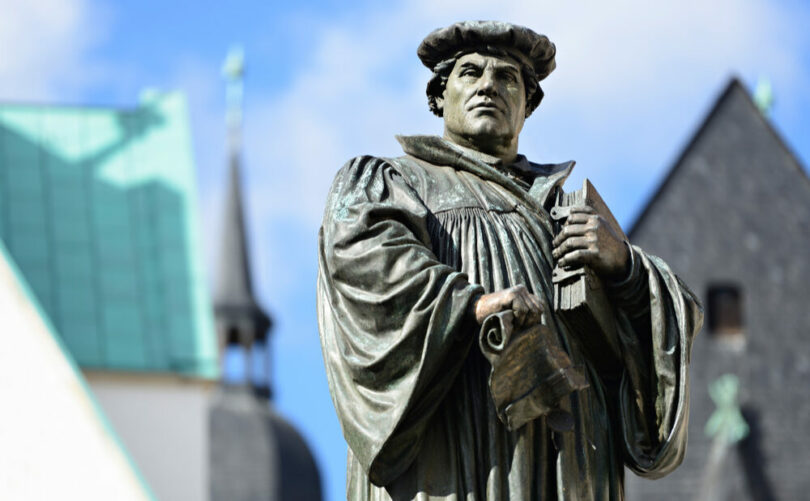
“After the crisis with Martin Luther, there was an attempt to find common ground, a shared profession of faith among the countries we now identify with the Reformation,” Pace said. “It is important to commemorate that text in order to rediscover a common foundation and at the same time to recover something more for our present day.”
READ: Pope Leo appoints new Cape Town archbishop who considered adding pagan rite to the liturgy
The Confessio Augustana, written by the Lutheran theologian Philip Melanchthon and presented in 1530 to Emperor Charles V, is one of the founding texts of Lutheranism. The purpose was to show Catholics that they did not intend to create a new Church, but to address perceived “theological abuses” and, in their view, return to the faith of the early Church. Among the practices that were condemned was reception of Holy Communion under the single species of bread, priestly celibacy, the understanding of the Mass as a sacrifice, the traditional view of Confession, the doctrine of penance, and the unity between Church and state.
The Catholic Church responded to the Confessio with a detailed work prepared by papal theologians, known as the Confutatio Augustana. In it, the Church addressed the Lutheran theses and called for a return to the full Roman Catholic doctrine. These themes were later taken up again and developed at the Council of Trent.
Pace’s remarks align with an ecumenical approach that sees as necessary “beginning again” from a common ground or fundamental point of reference, often identified with the Nicene–Constantinopolitan Creed. Pope Leo XIV himself appears to share this view: in his recent apostolic letter In Unitate Fidei, he downplayed the Filioque truth of faith as a theological controversy that has “lost its raison d’être.”
Leo XIV emphasizes that today’s pursuit of unity “does not imply an ecumenism that attempts to return to the state prior to the divisions.” Rather, he envisions an ecumenical path that “looks to the future” and “seeks reconciliation through dialogue as we share our gifts and spiritual heritage.”
READ: Pope Leo XIV claims Leo XIII as early champion of ecumenism
This year, the observance of the Week of Prayer for Christian Unity coincided with catecheses by Pope Leo XIV on the Second Vatican Council, particularly the dogmatic constitution Dei Verbum. Pace noted that the Second Vatican Council emphasized divine revelation not only as a set of propositions, but as a relational encounter between God and man, a perspective he said has informed contemporary ecumenical dialogue.
According to Pace, “Dei Verbum is in some way the completion of Dei Filius, which belonged to the First Vatican Council, where the focus was indeed on these more intellectual truths.”
Pace explained that the 2030 commemoration of the Diet of Augsburg will take place in a year already marked by other significant anniversaries, including the 2,000 year anniversary traditionally associated with the beginning of Jesus Christ’s public ministry.
READ: Attempts to change Church governance to synodal model have failed throughout history
“There are many cross‑cutting ecumenical initiatives that would like to place at the center a shared reading of the Sermon on the Mount. I hope that this anniversary will be a fruitful year not only for relations with Lutherans but also for other ecumenical themes,” Pace said.
Pace also recalled that the Week of Prayer will conclude with the celebration of Vespers at the Basilica of Saint Paul Outside the Walls in Rome on January 25, presided over by Pope Leo XIV. According to Pace, the basilica has a long-standing ecumenical significance.
“It is the basilica that this year hosted the visit of King Charles and the granting of the title of Confrater, which already makes it a place closely linked to ecumenism. It is also the council’s basilica, where Vatican II was announced,” Pace noted, as well as the one in which Paul VI, in 1966, gave his own episcopal ring to the then Anglican Archbishop of Canterbury, Michael Ramsey.