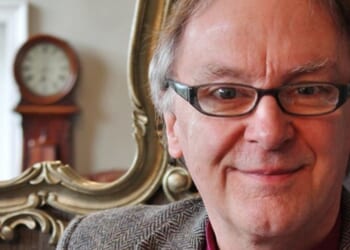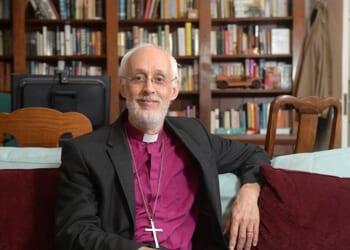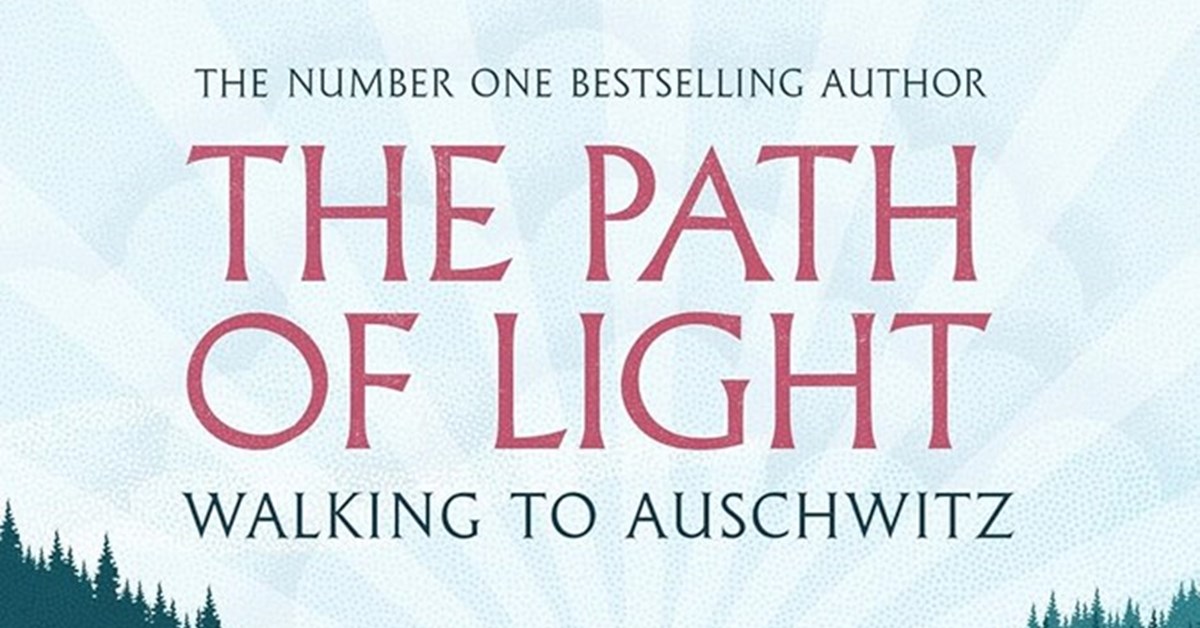
SIR ANTHONY SELDON is a well-known historian of post-war British politics, and a headmaster who has written extensively on education. In 2021, he walked a path along No Man’s Land to help to establish the “Western Front Way”, which produced The Path of Peace (Features, 11 November 2022). The Path of Light is a sequel, focused this time on the Second World War.
Seldon’s aim is to walk from Kilometre Zero, where the Great War’s trenches ended at the Swiss border, across Germany, the Czech Republic, and Poland, to Auschwitz. His route this time is not predetermined, but his agenda is clear: alongside the horrific narrative of the Holocaust, “I wanted to be uplifted on my way by learning about the men and women of honour who at great risk protected those deemed by the Nazis to be ‘others’.”
He approaches this as someone whose father and whose late wife were Jewish and has incorporated this heritage into his identity as a “practising Christian”. He also wants to face some of his personal demons, “the fear of failure and inadequacy that has stalked me all my life”.
But things do not go to plan. Shortly before departure, he is asked to step in immediately as head of Epsom College, whose head teacher and her daughter have just been shockingly murdered. He takes the post, and reconfigures his walk as something that he must now complete in segments over what turns out to be two years. He is diagnosed with heart trouble, which limits his capacity but redoubles his septuagenarian determination.
He is not an exemplary walker. On day one, ten minutes after saying goodbye to his present wife, she drives up to point out that he has set out in exactly the wrong direction. Another day, after he has trudged eight kilometres, she rings to report that he is wearing her boots. His eagerness to tell us how much his newly married wife means to him is an agreeable minor theme.
He enjoys the convivial company of his wife and various friends along the way, but the principal company that he seeks are the “figures of light” associated with the places he is visiting. Sometimes, they are well-known — Schindler, Kolbe, Bonhoeffer — but mostly, and of particular interest, he brings to light “overlooked heroes”.
His inspiration is the classic inter-war walking accounts of Patrick Leigh Fermor, and, as in Fermor, the personal narrative occasionally gets buried beneath historical detail. But, by the end, Seldon gives us a powerful account of the war, and especially its anti-Semitism, from a less familiar East European perspective.
Many long-distance walkers are walking away from their everyday business. Seldon is the opposite. When he misses a train, he sits on the platform and pens an article about Keir Starmer. He spends a day fielding enquiries on the day that his book on Liz Truss is serialised. And the murder inquest requires his care for those affected.
He follows the international news, walking and writing against the disturbing backdrop of events in Ukraine and in Gaza, and with particular concern for the “assault on truth” by the Trump administration. He is not shy of hearing echoes: “it is no longer absurd to highlight some parallels between Hitler and Trump.”
By the end of this absorbing book, he does not find answers to his “inner demons”, but is much more at peace with himself. As for all that made Auschwitz possible, he worries why “people at large were passive and failed to speak out.” But there were those figures of light: “Their lives and actions show that we have agency, and ultimately we have the freedom to decide whether it will be darkness or light that will prevail in our lives.”
The Revd Philip Welsh is a retired priest in the diocese of London.
The Path of Light: Walking to Auschwitz
Anthony Seldon
Atlantic Books £20
(978-1-80546-410-5)
Church Times Bookshop £18