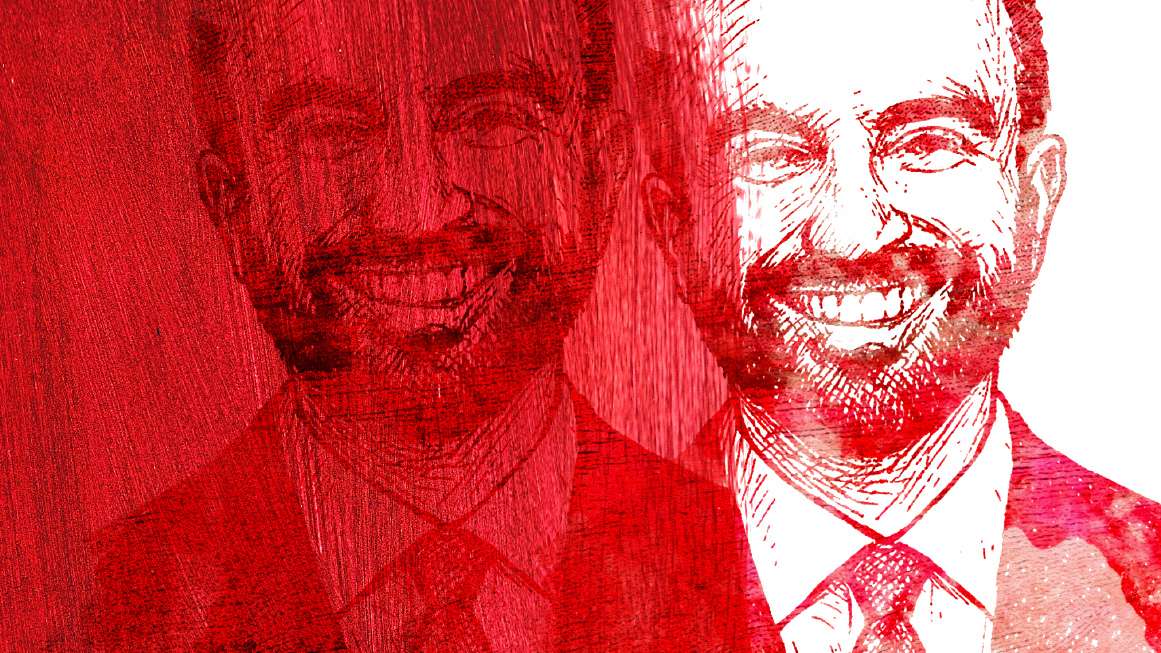
In the February/March 2026 issue of Reason, we explore Mayor-elect Zohran Mamdani’s policy goals and what they mean for New York City. Click here to read the other entries.
A few weeks before the New York Democrats’ mayoral primary, The New York Times asked Zohran Mamdani for something he had changed his mind on. The self-described socialist gave a surprising answer: “the role of the private market in housing construction.”
Earlier in the race, Mamdani’s messaging on housing had been in line with his leftist worldview. One of his chief campaign promises was to freeze rents on rent-stabilized housing units. His campaign platform bluntly declared that “we can’t afford to wait for the private sector to solve [the housing] crisis.” Yet here he was conceding that private builders had a role to play in bringing costs down and that the city should liberalize regulations to help them do that.
“I clearly recognize now that there is a very important role to be played, and one that city government must facilitate through the increasing of density around mass transit hubs, the ending of the requirement to build parking lots, as well as the need to upzone neighborhoods that have historically not contributed to affordable housing production,” he told the Times.
Free marketers have generally been aghast at Mamdani’s rise from obscure hard-left State Assembly member to leader of America’s largest city. Calling for everything from huge tax increases to city-run grocery stores, he’s given libertarians plenty of reasons to be glum about his incoming administration.
But in his campaign pitches for a more affordable New York, Mamdani sometimes staked out positions that suggest he understands, sometimes, that the government can make things more expensive.
One of his early, characteristically upbeat campaign videos called attention to the fact that halal food trucks were (illegally) paying around $20,000 in cash to rent a limited number of city-issued street vending permits. Breaking up this city-enforced cartel and issuing permits to anyone who applied for one, Mamdani said, would end the “Halalflation” that had raised the cost of a chicken and rice plate from $8 to $10.
Several times during the campaign, the candidate praised Jersey City and Tokyo for their record of staying affordable by building a lot of housing. Given both cities’ relatively open zoning laws and record of robust private-sector housing construction, market-oriented “abundance” liberals saw this as a dog whistle that he might, deep down, be one of them too.
During a lengthy interview on the Odd Lots podcast, Mamdani went into more detail about the kinds of deregulation he supported to enable more housing construction, such as ending parking minimums and two-stair requirements. He also criticized the New York City Council’s practice of “member deference,” whereby the Council will reject housing projects that are opposed by the councilmember whose district they’d be built in.
Though his endorsement came very late in the game (literally on Election Day), Mamdani also supported a series of ballot questions that would amend New York City’s charter to pare back the City Council’s ability to modify or veto individual housing projects and small-scale upzonings.
It would go much too far to say that Mamdani has had a deeper ideological shift to a more market-oriented perspective. He has continued to insist that rent freezes and faster permitting of new housing can coexist as complementary policies.
He’s of two minds on city-created cartels as well. While he opposes licensing caps for street vendors, he has championed the interests of taxi owners who saw their own cartelized industry disrupted by the rise of ride-share services such as Uber and Lyft.
This all suggests confusion more than conversion. Mamdani believes some cartels are good and others are bad. He’s happy to see capitalists build more housing units, and he’s happy to push for rent controls that make it unprofitable for them to maintain the ones that already exist.
Even in his most YIMBY (“yes in my backyard”) moments, Mamdani talks about upzoning like it’s just one element of a city-led central plan to put more units in the right places. He shows no sign of embracing the idea that private property owners should generally be free to make decisions about how they develop their land.
Who knows what a mayor with such mixed messaging might actually do once in office?
An optimist could read into all this a promising degree of pragmatism. Mamdani got his start in politics as a down-the-line socialist, tweeting that the workers need to own the means of production and that “taxation isn’t theft. Capitalism is.” The closer he’s gotten to power, the more he’s been willing to publicly shed that hard-left rhetoric for a more practical approach to policy—one that recognizes, here and there, the role markets will have to play in securing a more affordable New York City.
This article originally appeared in print under the headline “The Two Faces of Zohran Mamdani.”