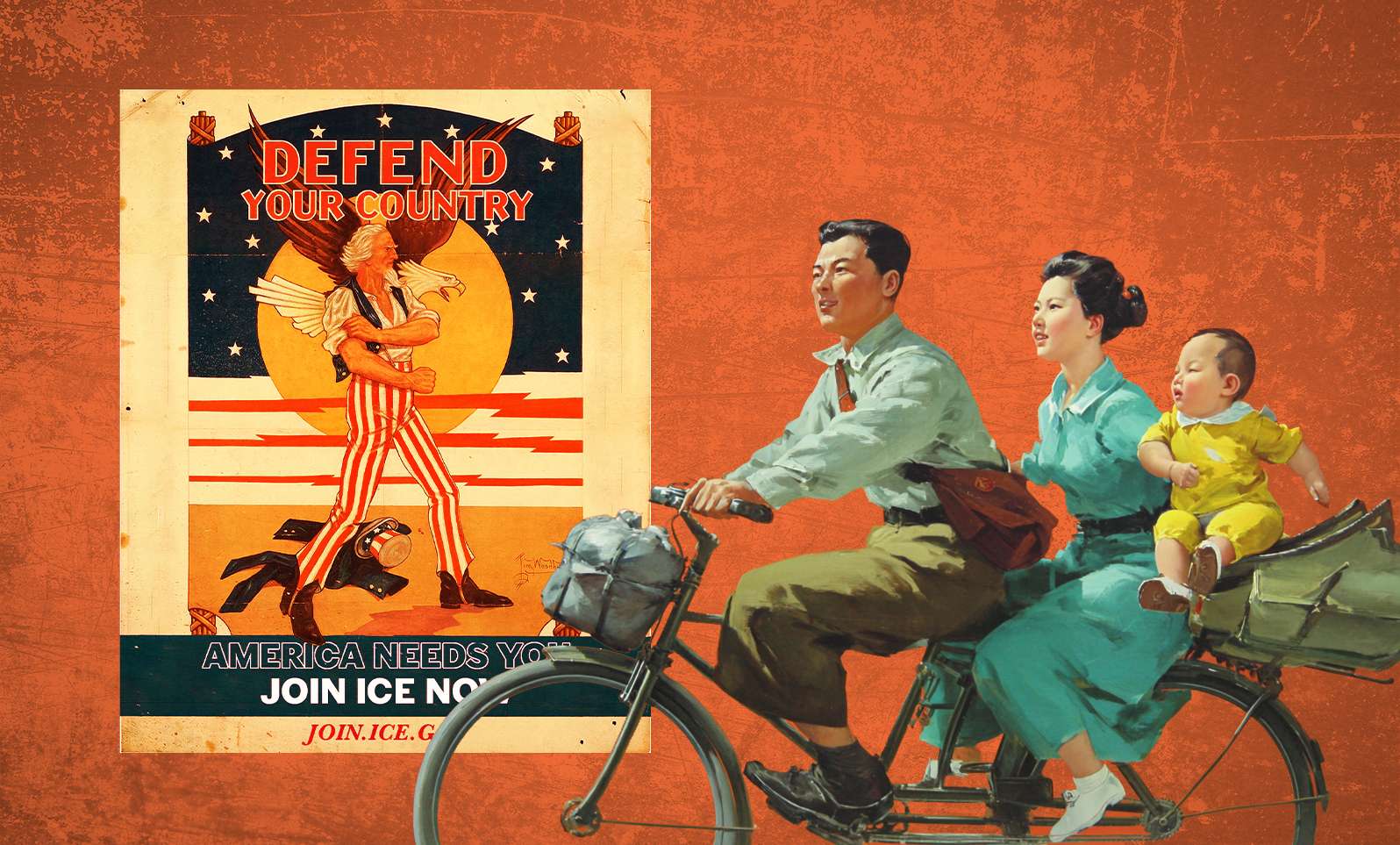
In 1988, Peng Peiyun was assigned to China’s State Family Planning Commission. Her job was to implement the relatively new one-child policy. The Communist Party was sure that it knew how many people should be in the Chinese population to prevent famine and overcrowding—so sure, in fact, that it was willing to require abortions and sterilization under threat of violence. It was willing to remove “illegal children” from their homes and deny their families access to work, education, and medical care.
After Peng’s recent death, official state media dutifully called her “an outstanding leader” for her work on women and children. But on Chinese social platforms, many people responded with anger: “Those children who were lost, naked, are waiting for you over there” in the afterlife, read one Weibo post translated by The Times of India.
The one-child policy’s consequences are now well known: millions of “missing girls” due to sex-selective abortion, a rapidly aging society with too few young workers to support it, a generation of only children facing crushing demographic math, and a citizenry trained to believe that population levels are a matter of state permission, not personal choice.
During the four decades the policy was in place, 324 million Chinese women received IUDs (placed four months after the delivery of their first child, by law). Another 108 million were sterilized. The IUD could be removed only after a collective political decision was made to grant an exception and permit a second birth, or after menopause.
That did not stop millions of Chinese people from having the additional children they desperately wanted. Families bore harsh but irregularly enforced penalties for their decisions. Over time, exceptions to the policy proliferated for different classes, demographics, and ethnicities, demonstrating greater mercy and even greater hubris.
Today, China’s population is shrinking, births are collapsing, and the same government that once punished pregnancy is now begging for it with subsidies, propaganda, and social pressure, all of which have so far failed to reverse the trend. Even after decades of highly directive engineering and violent enforcement, the “right” number of people remains stubbornly out of reach.
***
The same category error animates today’s immigration crackdowns in the United States. Population control is technocratic arrogance at its most intimate and brutal.
The Trump administration is attempting to violently control the country’s population numbers. Officials insist that there is an optimal number of people, that this number can be known in advance, and that the state is justified in taking extraordinary measures to reach it (perhaps as many as 100 million deportations). Human beings are reduced to variables in a giant math problem—too many or too few, surplus or shortage—rather than agents whose individual choices matter.
The United States is now living with the consequences of this mindset. Immigration enforcement has become a delivery system for broader state power: warrantless checkpoints within 100 miles of the border, covering roughly two-thirds of the population; secretive detention and data sharing; increasingly aggressive surveillance tools originally justified as exceptional. Reason has documented, just in recent weeks, ICE’s purchase of phone-cracking technology, the collection of American citizens’ DNA into federal databases, and repeated cases of citizens wrongly detained in immigration raids because bureaucrats doubted their papers. These are not hypotheticals. They are the routine costs of trying to fine-tune the population by force.
America’s own history provides a counterexample every bit as clear as China’s cautionary tale. For most of its existence, the United States did not centrally plan its population numbers at all. The federal government barely policed entry until the late 19th century. Even during the so-called Great Wave of immigration from roughly 1870 to 1914—when tens of millions arrived and the foreign-born share of the population matched today’s levels—exclusion rates were minimal. This was the era in which America industrialized, built continental infrastructure, and emerged as a global power.
Restriction was the anomaly. When broad federal immigration barriers arrived—beginning with the Page Act of 1875 and the Chinese Exclusion Act of 1882—they were motivated by fear, racism, and economic misunderstanding. They did not make the country stronger or more cohesive. They made it smaller, meaner, and more reliant on coercive state power to enforce artificial limits. Like the exceptions to the one-child policy, the thicket of rules became increasingly complex without providing clarity or justice.
No planner knows in advance how many people are “too many,” or which people will contribute most to a society’s future. China’s leaders thought fewer births would guarantee prosperity; they are now trapped by demographic decline. American immigration hawks insist fewer newcomers will preserve stability; the price they are already paying is expanded surveillance, higher prices for goods and labor, eroded civil liberties, and a creeping normalization of authoritarianism.
Peng changed her mind by the end of her life. She saw that population control had produced the opposite of its intended effect, and that human societies are not machines to be optimized by decree. Her New York Times obituary noted that she is survived by her husband, four children, four grandchildren, five great-grandchildren, three sisters, and two brothers.
“Fertility policy should return to the norm of allowing citizens to make their own decisions about childbearing,” she wrote to China’s leaders in 2018. That recognition came far too late for millions of Chinese families, but it is still a lesson worth learning.
This article originally appeared in print under the headline “No One Knows the Right Number of People.”