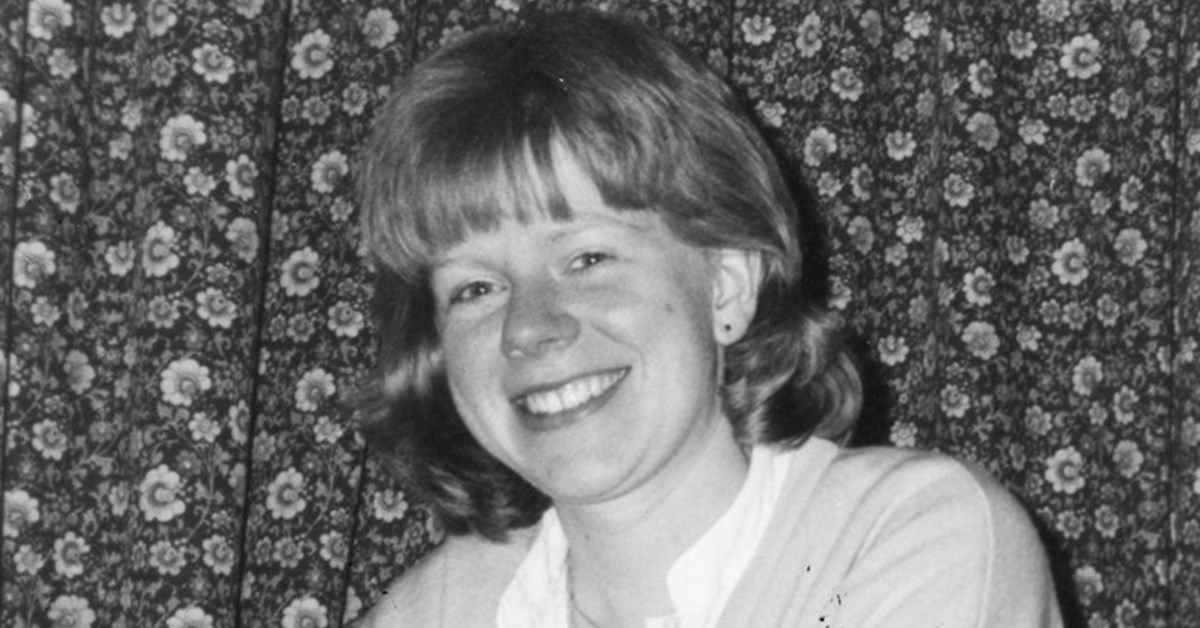
AT THE earliest opportunity, in April 1981, Sarah Bowser, aged 19, was elected to the PCC of St Stephen’s, South Lambeth. It was her first taste of Anglican committee work, which later came to dominate her life. One of her initial responsibilities was helping to arrange the accommodation for a ten-day parish mission in September 1981, “Meet Jesus”. A team of 25 students from different universities were sent by the UCCF to help the St Stephen’s congregation “introduce the parish to the Lord Jesus”.
They engaged in school assemblies, home groups, door-to-door visiting, a youth night, and a tea for senior citizens, and distributed copies of Luke’s Gospel to 2500 homes. Disappointingly, however, there was “little harvest”. Only six new people joined the congregation as a result of the mission, although St Stephen’s was glad to have raised its profile, and became “more committed to God” and to the local parish.
In early 1982, there was debate at the PCC about how best to incorporate students within the church family, and whether they should be offered “student associate membership”, rather than transferring their membership formally from their home churches. Ms Bowser felt strongly on the subject, and resisted the proposal.
As a student member of the PCC, she noted that several students considered St Stephen’s to be their “family church”, and that they intended “to remain in London for some time”, and therefore wanted to become “full electoral members”. Those who were likely to stay in London only during their undergraduate years were also “happy to be part of the family”, she argued. St Stephen’s was a good place to begin to work out her theology of Christian belonging and the implications of viewing church as “family”.
It was a diverse Christian community. In the 1980s, there were few nuclear families of married couples with children. Most adults were single, separated, divorced, or widowed. It was also educationally mixed. Helen Harrison (deaconess at St Stephen’s from 1982 to 1986) explained that, on a typical Sunday, “A man unable to read or write could be found sharing the same pew with an Oxbridge graduate who knew more Greek than the full-time staff put together.”
There were many varieties of spoken English, from Cockney to northern dialects to “immaculate Queen’s English” and those with little English or none. “It is a daunting task,” Ms Harrison reflected, “to create worship and community in which all could feel equally at home and find a part to play.”
HERE, Ms Bowser witnessed at first hand the challenge of welcoming and integrating everyone within the Christian community, no matter their background or family situation. South Lambeth’s multiracial character was reflected in the community at St Stephen’s. The church loaned its premises to three black-majority Pentecostal churches: Faith Temple Church of Christ, Christ the King Pentecostal Church, and King Jesus Divine Church.
But St Stephen’s itself also attracted a multiracial congregation, with about one third from Caribbean or West African heritage. This resulted in some striking visual contrasts when they gathered together for worship. The young white professionals who wore suits and ties at work during the week deliberately dressed down on Sundays. The Black members, often in low-paid jobs, wore overalls and aprons at work, but came to church in their colourful Sunday finest.
It was a joyful meeting of cultures, although, sometimes, the racial tensions were painful. Early in his time at St Stephen’s, the Vicar, the Revd Christopher Guinness, decided that the six lay distributors at holy communion should be three white and three Black. This new policy brought racial prejudice to the surface within the congregation, and some expressed their fears that “white people might refuse to receive communion from a black hand.” Mr Guinness insisted, however, that this public demonstration of equality “spoke louder than a thousand sermons on the unity we all have in Christ”.
Ms Harrison suggested that there were “many barriers that need to come down that are as high as the nearby tower blocks. Barriers of colour and creed, barriers between rich and poor, young and old, male and female, barriers of class and culture. There are no riot shields in church, but the differences are all too often hidden behind a grave Christian smile.”
Nevertheless, it was rare for Black members of the congregation to take on other public functions in the Sunday services, or to stand for election to the PCC. The influx of young white graduates was welcome in many ways, but Mr Guinness worried that “it is a struggle to stop the professionals from disabling the local church members who are not at home reading lessons or sitting on committees.”
The church family at St Stephen’s was diverse, but the lay and ordained leadership was not. This was an institutional failing which Ms Bowser experienced at first hand in her local parish, and, in later years, sought to redress as she rose to influence within the Church of England.
ST STEPHEN’s was a missionally active congregation. In 1983, it took part in Luis Palau’s Mission to London, providing counsellors and worship leaders for the local mission events on Clapham Common, visited by 24,000 people — more than 700 of whom made professions of conversion.
 Lambeth Palace
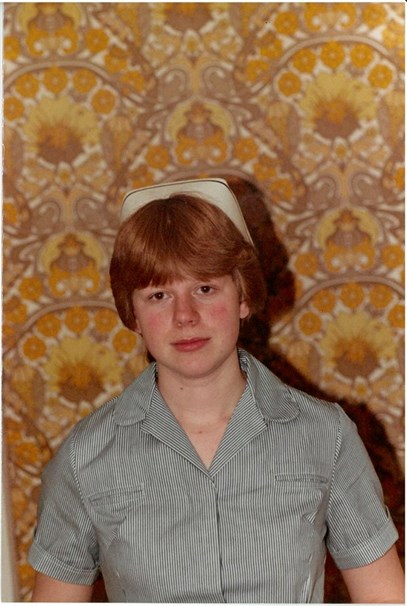
Archbishop Mullally as a trainee nurse
Within the parish, it ran outreach events on the local council estates, with drama, songs, and talks. There were also regular “guest services” with visiting preachers, including, in 1986, a future Archbishop of York, John Sentamu (Vicar of Holy Trinity, Tulse Hill), who “spoke, sang, and acted the Good News”.
Mr Guinness told the annual church meeting that the central question they must ask themselves was, “How many people have come to know Christ as their Lord and Saviour, and been incorporated as his disciples within this Body of Christ during the past year?” One of the church’s top priorities, he insisted, was to ask God how they could “creatively win people for him here in South Lambeth”.
Yet this evangelism also had to reckon with the realities of social deprivation. Mr Guinness argued that, to be effective, it must “touch the needs of the people of this community, body, mind, and spirit”. Evangelism was to be centred on the cross of Jesus Christ, but must reach “the hungry, thirsty, stranger, naked, sick, and imprisoned”. Proclamation of the gospel went hand in hand with its social implications, a keynote in Ms Bowser’s later teaching.
St Stephen’s provided a vibrant Christian environment. There were parish weekends to Ashburnham Place, in Sussex, each autumn, and one third of the congregation attended Spring Harvest, a Charismatic jamboree, at Minehead, in Somerset, each Easter. At one Ashburnham weekend, for example, “many experienced the powerful touch of the Holy Spirit on their lives”.
A few went to John Wimber conferences in Brighton and Edinburgh, where the Vineyard church-planter expounded his Californian brand of “power evangelism” with signs and wonders. Several members of the congregation offered themselves for missionary service or for ordination in the Church of England.
Ms Bowser threw herself into church life, volunteering in many different ways, including as co-ordinator of the music group. She was also part of the prayer- ministry team, launched in 1986, which prayed for individuals after the Sunday services at the front of the church. “Ministry is the act of giving help in love,” she explained in a report for the annual church meeting. “Jesus ministered in power, and gave his disciples authority to do likewise.”
The ministry team’s vision was for God to “make each member of his family whole through healing”. They met every month or two for teaching about counselling and the gifts of the Holy Spirit, and for “praying and being prayed for, worshipping and listening to God”. They saw “direct answers” to prayer, Ms Bowser said, and “God’s healing through person-to-person ministry”, but she acknowledged that they needed “courage to make ourselves available to the Holy Spirit, to the Church, and to one another”. Healing was central to her profession as a nurse, and also to her broader conception of Christian flourishing.
Another of Ms Bowser’s activities was a Tuesday Club, for children aged eight to 14, which met each week at St Stephen’s Primary School. It was an outreach event for those outside the church and usually attracted about 15 children for football, rounders, and other organised games, and ended with a Bible reading or a Christian story.
There were occasional outings to a Christmas pantomime, or to Epsom Common. Tuesday Club’s purpose was to encourage the children “to play and share together in a Christian atmosphere and learn about God”. They wanted to “present Christ to the children and to assure them of their individual value to God”.
Tuesday Club’s leader was Eamonn Mullally, an Irish-born management consultant, six years older than Ms Bowser. He had been raised as a Roman Catholic before changing to Anglicanism. They initially met in 1980, soon after Ms Bowser’s arrival in London, at her Courland Grove hall of residence, where one of Mr Mullally’s brothers was also a student.
Ms Bowser and Mr Mullally got to know each other through St Stephen’s, including serving together on the PCC, and began dating. They were married on 11 July 1987, in her home church, St John’s, Woking, where Mr Guinness officiated, and Ms Harrison preached the sermon.
This is an edited extract from Archbishop Sarah Mullally by Andrew Atherstone, published by Hodder & Stoughton at £22 (Church Times Bookshop £17.60); 978-1-3998-2878-9.
Listen to an interview with Professor Atherstone on the Church Times Podcast here