Most Americans have an oddly distorted view of higher education. But that view has little to do with the financial reality facing most colleges and universities, hundreds of which are quietly sliding toward insolvency.
When asked what comes to mind about universities, a national survey of more than 30,000 respondents most often cited liberal bias, antisemitism, and political activism. As one commentator put it, “graduates of a small cadre of elite universities disproportionately populate America’s leadership class and key institutions,” which helps explain why media narratives fixate on them. Another writer noted that “less than 1% of U.S. college students have attended an Ivy League university, yet these schools dominate employers, media and parents’ wishes. But why do we never hear of the other 99%?”
This distortion matters. It gives the public a deeply unrealistic picture of higher education. Most colleges do not have billion‑dollar endowments, global prestige, or armies of activists marching on their quads. Their challenges are far more prosaic and far more urgent: rising costs, declining enrollment, shrinking budgets, and existential questions about survival.
Because so much public attention is fixed on the Ivy League and its peers, it often misses the paradoxes confronting the majority of institutions — paradoxes that go to the heart of cost, debt, and sustainability. Why do tuition prices keep rising even as online learning becomes cheaper? Why do schools raise prices faster than inflation? Why, with the Bureau of Labor Statistics projecting 19 million annual job openings requiring a college education between now and 2033, are so many young people concluding that college isn’t worth it? And with $1.8 trillion in student loan debt — much of it held by students who borrowed five or six figures — we have to ask, are these loans helping or harming the very people they are meant to serve?
These questions all point to a deeper question: What is the actual financial health of America’s colleges and universities? And how does that health shape everything from marketing and recruiting to pricing, faculty quality, and academic offerings? Most Americans, many legislators, and even many trustees do not have good answers. Opening the “black box” begins with understanding the financial realities of the sector — and how it arrived here.
The Surprising Financial Fragility Of Hundreds Of America’s Universities
wellesenterprises. Getty Images.
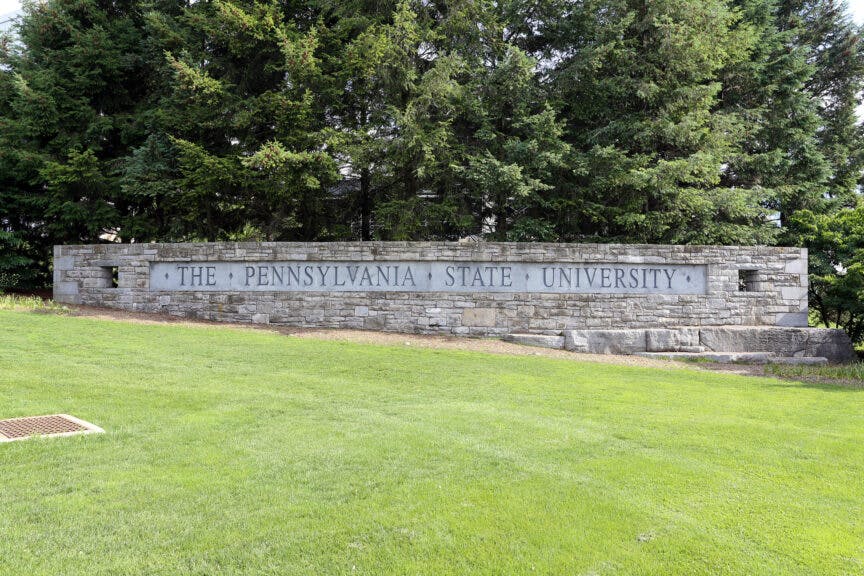
There are 2,661 public and private four‑year colleges and universities in the United States, not counting trade schools or the nearly 1,500 community colleges. Roughly 80 four‑year institutions have closed since 2020 — a small number compared to the hundreds now under severe financial strain. Three major credit agencies have issued negative outlooks for higher education in 2026, citing declining enrollment, new limits on federal loan programs, and obstacles for international students.
The most widely accepted measure of institutional financial health is the Composite Financial Index (CFI), developed by KPMG and education finance experts. It evaluates net operating performance, reserves, return on net assets, and viability. A CFI of 3.0 or higher signals strength; 1.0 to 3.0 indicates caution; below 1.0 signals financial stress. A similar federal measure, the Financial Responsibility Composite Score (FRCS), is used for Title IV eligibility.
There is no single public source listing CFIs for all four‑year institutions. FRCS data are incomplete and vocational schools are mixed in. To understand the landscape, one must aggregate accreditor reports, state dashboards, audited financial statements, IPEDS data, bond‑rating downgrades, enrollment trends, and tuition‑dependency ratios. When this is done — a task well suited to AI — the picture is stark: hundreds of institutions appear to have CFIs below 1.0, including some with tens of thousands of students.
Most Americans have no idea what this means. A CFI below 1.0 signals that a school is struggling to cover its costs and may not be financially sustainable.
In household terms, it is like living paycheck to paycheck with rising bills and no savings. These institutions are highly tuition‑dependent and often forced to cut programs, freeze wages, lay off staff, defer maintenance, reduce student services, and raise tuition simply to stay afloat. They typically have little or no endowment, high debt, and almost no financial cushion.
What This Financial Stress Means For Students
Brandon Bell/Getty Images
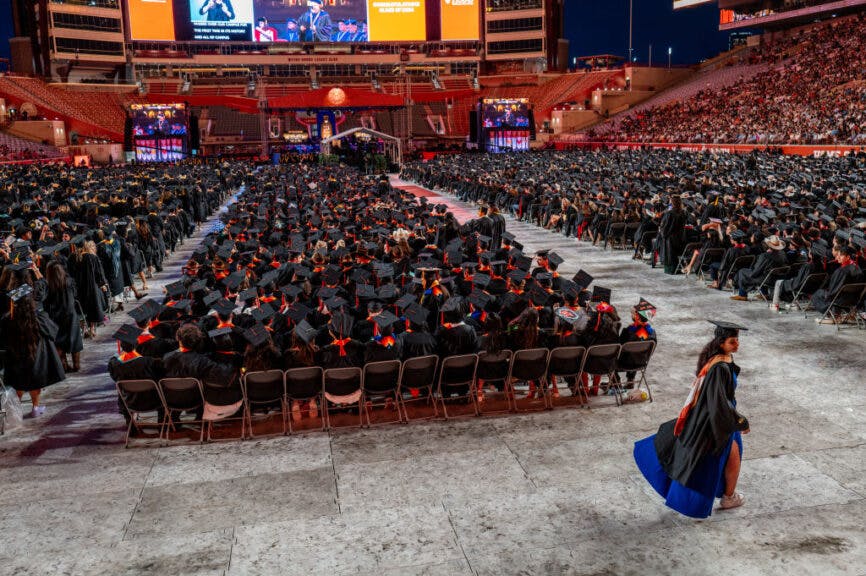
The consequences for students are real and immediate. When resources are tight, institutions delay hiring, freeze salaries, or rely more heavily on adjunct instructors. Class sizes grow. Course offerings shrink. Faculty have less time for mentoring or research collaboration.
Low‑CFI schools struggle to attract top faculty, who understandably prefer more stable institutions. Academic programs may be consolidated or eliminated, reducing the breadth of study. Support services such as advising, tutoring, counseling, and career placement may be scaled back. Facilities show signs of deferred maintenance — outdated labs, aging classrooms, underfunded libraries. Extracurriculars and campus life are pared down. Schools try to shield students from the worst effects, but financial fragility inevitably constrains the educational experience.
For families, college is one of the largest investments they will ever make, second only to buying a home. Yet the price keeps rising, and the debt required to finance it has soared. To most Americans, higher education remains a “black box”: judged by brand, price, and 3rd party rankings rather than by underlying financial health. Gallup polls show that public confidence in the importance of higher education has collapsed by roughly 40 percentage points since 2010.
Understanding the sector’s financial underpinnings is essential — not only for policymakers but for families making life‑altering decisions.
How Higher Education Reached This Point: Four Seismic Shifts
Don and Melinda Crawford/UCG/Universal Images Group via Getty Images
The current crisis did not emerge overnight. Four major events and trends reshaped the landscape and pushed hundreds of institutions into financial jeopardy.
-
The Rise Of Community Colleges
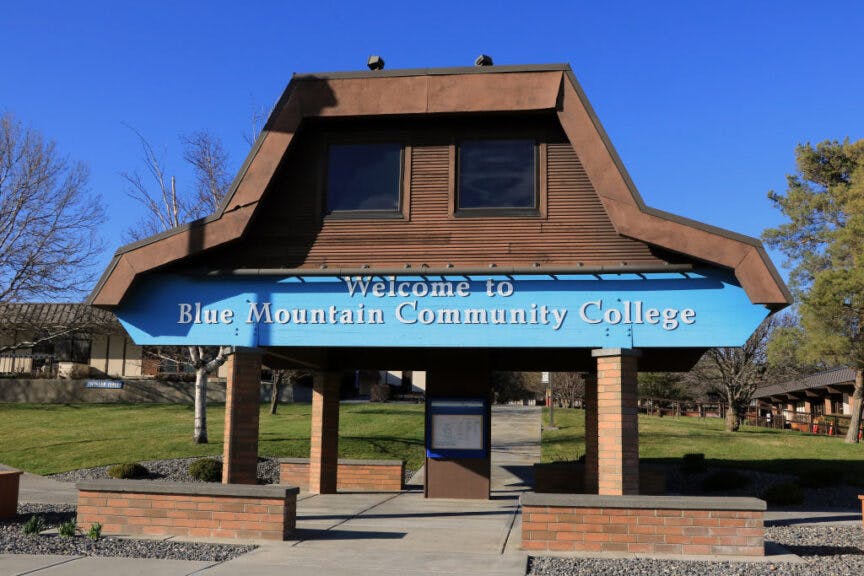
Community colleges — originally “junior colleges” — expanded dramatically after the 1947 Truman Commission on Higher Education called for a national network of low‑cost, open‑access institutions. Combined with the GI Bill, this led to explosive growth: states added nearly one community college per week during the 1960s and 1970s.
These institutions offered lower cost, open‑door admissions, flexible schedules, and access for nontraditional, first‑generation, and working students. Enrollment more than tripled between 1960 and 1980.
More recently, community colleges have begun offering four‑year bachelor’s degrees, intensifying competition. Over 150 community colleges across 24 states now confer bachelor’s degrees directly, often in high‑demand fields like nursing, teaching, and IT. Many partner with state universities, allowing students to attend a local community college for four years and receive a diploma from a flagship institution — at a fraction of the cost.
Community colleges now account for 32–35% of all college enrollment, and their value proposition is increasingly compelling.
-
The Medicaid Squeeze On State Budgets
For public institutions, the most consequential budgetary shift has been the rise of mandatory Medicaid spending. In 1980, states devoted an average of 9% of their budgets to Medicaid and 6% to higher education. By 2025, those numbers flipped to 31% and 3%.
The Great Recession accelerated the trend. Between 2008 and 2010, many states slashed higher‑education funding by double digits. Overall funding fell by more than $6.6 billion between 2008 and 2018. Universities responded with layoffs and steep tuition hikes. The University of California raised tuition 30% in a single year. Michigan cut funding by 30%. Florida’s flagships raised tuition by double digits in consecutive years.
The recession ended, but the tuition hikes did not. Financially stressed institutions have raised tuition nearly every year since 2010, while more stable schools averaged increases every two to three years. Public universities have raised tuition nearly 30% over the past decade; elite privates continue to push 4% annual increases.
-
The Demographic Cliff
The number of college‑aged students is projected to fall 15% between now and 2037, with even steeper declines in the West. Enrollment peaked at 21 million in 2010 and has since fallen to 19 million, with further declines expected through 2035.
Most institutions built their campuses assuming a growing population of 18‑year‑olds. Instead, they now face a widening gap between supply (classroom seats and dorm beds) and demand. Residential campuses serving traditional‑age students are hit hardest.
-
The Online Revolution
Perhaps the most transformative force has been the democratization of knowledge. When people say that the cost of education has soared, they are not technically accurate. When considering education in the purest sense; it has actually plummeted. The cost of attending IHEs or obtaining credentials from them has certainly soared, but the best leading-edge information from the most credible sources is now largely available for free online.
Online learning has become a mainstream alternative: 10–11 million students take at least one online course, and more than 5 million study exclusively online. Growth is projected to continue at a 14% CAGR through 2032.
Social media and smartphones have reshaped communication, marketing, and recruitment. But smaller institutions lack the staff, technology, and budgets to compete with well‑resourced universities or sophisticated online providers. Many hoped technology would level the playing field; instead, it widened the gap.
The Result: A Bifurcated Higher Education System
These four forces have produced a sector split into two diverging paths:
- Institutions competing on cost and convenience, often through online or hybrid models, transfer pathways, and local access.
- Institutions competing on selectivity and prestige, leveraging brand strength to maintain pricing power.
Many schools cannot play either role effectively. They lack the scale, brand, or financial resilience to compete on prestige and selectiveness — and lack the technology, flexibility, locations, and/or cost structure to compete on convenience. Hundreds now sit in the middle, financially fragile and struggling to define their place in a rapidly changing landscape.
* * *
Greg Salsbury, Ph.D., serves on the Board of Advisors for STARRS.US., and is the former president of Western Colorado University. He earned his Ph.D. from the University of Southern California, an M.A. from the University of Illinois, and an M.A. from the Annenberg School for Communication and Journalism at USC.
John Kawauchi, MBA, is a former VP of Enrollment Management and Marketing of Western Colorado University and Lake Superior State University, after spending most of his career in Retirement Planning and Product Marketing in the Financial Services industry. He earned his MBA from the University of Chicago and a BS from Cornell University.
The views expressed in this piece are those of the authors and do not necessarily represent those of The Daily Wire.