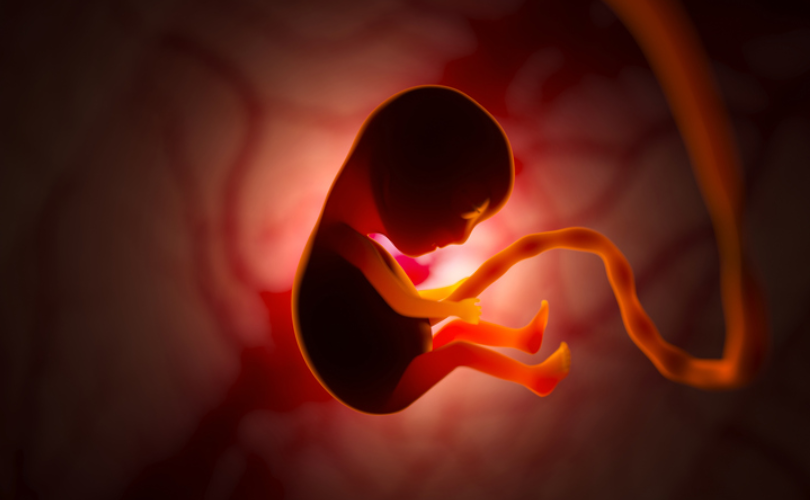
(LifeSiteNews) — “A squat grey building of only thirty-four stories. Over the main entrance the words, CENTRAL LONDON HATCHERY AND CONDITIONING CENTRE, and, in a shield, the World State’s motto, COMMUNITY, IDENTITY, STABILITY.”
So read the opening words of Aldous Huxley’s Brave New World, where human reproduction has been relegated to “hatcheries.” Women no longer bear children, instead the production of human beings has been industrialized. Babies are artificially produced, grown to adulthood in artificial wombs, and pre-programmed for their roles in society.
With the invention and rapid expansion of In-Vitro Fertilization, or IVF, America has edged closer to the chilling vision that Huxley describes, where natural birth has been replaced by scientific “decanting” from bottles. Hundreds of thousands of tiny babies are created only to be discarded. Hundreds of thousands more die when implantation in the uterus fails.
READ: Senior Vatican diplomat calls for ban on surrogacy
The growth of this “industry” has been handicapped by the shockingly low success rates of IVF. Companies tout a “success rate” of 50 percent, but this is only true for women under the age of 35, who account for only one-third of their customers. For women over 35, who make up two-thirds of their customers, IVF only results in pregnancy about 10 percent of the time.
Yet the reproductive industry, in search of profits, is now taking us even farther down the road to this dystopian future by creating tiny artificial wombs to study implantation.
In December, Cell Press published three separate research papers detailing experiments by scientists aimed at learning more about what they called that “initial bond between mother and embryo.”
They first engineered endometrial cells – cells that make up the lining of the uterus – to create a number of microscopic uteruses. Human embryos from IVF centers were then placed in these uteruses, while the scientists watched whether implantation was a success or failure.
Of course, the embryos, whether they implanted or not, all soon died, sacrificed for “science.” And the scientific advance that the scientists hoped to achieve would facilitate even more IVF, which is immoral as well.
But these experiments have ramifications that go well beyond their use for IVF, as the scientists themselves admitted. In fact, they proudly asserted that the technology they have developed will contribute to the development of “artificial wombs.” They claim that the full realization of such “wombs” remains “science fiction.”
We are not so sure about that.
Artificial reproductive technology has made significant advances over the past few decades. Already, in Japan, researchers claim to have successfully gestated a mammal from embryo to birth in an artificial womb.
If the reports are to be believed, this ectogenesis – as gestation outside the womb is called – involved a goat embryo. And, of course, while goats and humans are both mammals, they are very different.
The evidence suggests that we are well on the way toward turning the theoretical concept of artificial wombs into reality. The question no longer seems to be “if” ectogenesis can be achieved for human beings, but “when.”
Unfortunately, there is no shortage of human embryos for scientists to exploit in their experiments. Millions of “excess” embryos are created every year, because the IVF process results in the creation of up to a dozen embryos for every single couple. But only a tiny fraction of these are implanted.
Ectogenesis violates current global standards banning the growth of embryos past 14 days. But these limits are already being violated in countries like China. And even in the West, scientists have repeatedly transgressed ethical guidelines governing research involving vulnerable preborn lives. This was the case with CRISPR gene-editing, as well as the creation of embryos from “three-parent IVF.”
As scientists continue to work toward ectogenesis, we are left to wonder what level of human sacrifice this will entail. How many preborn infants will be sacrificed in this quest to gestate a baby to term in a faux amniotic sac?
And there is another question, too: how would a baby be affected by growing in a sterile environment devoid of the comforts of a living womb inside their own mother?
A baby spends nine months cradled in his mother’s womb, with the sound of her heartbeat as a constant comforting sound. Her motion throughout the day rocks the baby. By 23 weeks at the latest, a baby recognizes the sound of his parents’ voices. Babies are born recognizing the voices of their mother and father, and can be soothed by familiar music they heard in the womb. Newborn babies can be calmed after birth by simply placing them on their mother’s chest.
When Chiara was pregnant, she had a “call and response” with her son. Beginning at 20 weeks she could press anywhere on her belly, and he would respond by kicking or pressing back at that same spot. After birth, he recognized her and her husband’s voices, and even his grandparents’ voices since she spent a lot of time with them while pregnant. Countless videos online show newborn babies calming after birth by simply being placed on their mother’s chest or near her face.
We know that children who are neglected in the first few years of life, who have no caregiver to bond with, fail to achieve proper neurodevelopment. In severe cases, the grey and white matter of their brains are dramatically reduced. So, what would happen to a preborn child’s brain if their natural first home, their first bond, and their first caregiver were stripped away?
Another question arises as well.
Just as surrogacy created confusion over determining legal motherhood and sperm donation confusion over legal fatherhood, so artificial wombs will create a snarl of legal questions over parenthood. Just who will be considered the parent of a child born through ectogenesis? The mother? The father? The highest bidder? Or perhaps, following Huxley, the state?
Scientists involved in ectogenesis research say that their research “will demand strict regulation, rigorous oversight, and unprecedented ethical frameworks.”
WATCH: Modern-day crisis: Exposing the evil agenda of surrogacy
But even this will not be enough. As we saw with in vitro fertilization, when there’s money to be made, industry expands faster than regulations can keep up with.
At the end of the day, whatever regulations, oversight, and ethical framework is put in place, the research itself will result in the destruction of even more human lives.
Human sacrifice, whether to ancient pagan gods, or modern medical science, is never acceptable.
Steven W. Mosher
President, Population Research Institute