
What happens when we separate God’s law from His Gospel in the name of political neutrality? If you’ve been paying attention to Evangelical discourse recently, you’ve likely encountered what’s now called “Third Wayism” — a term for the modern Evangelical approach to political and cultural engagement without the baggage of moral or political absolutism.
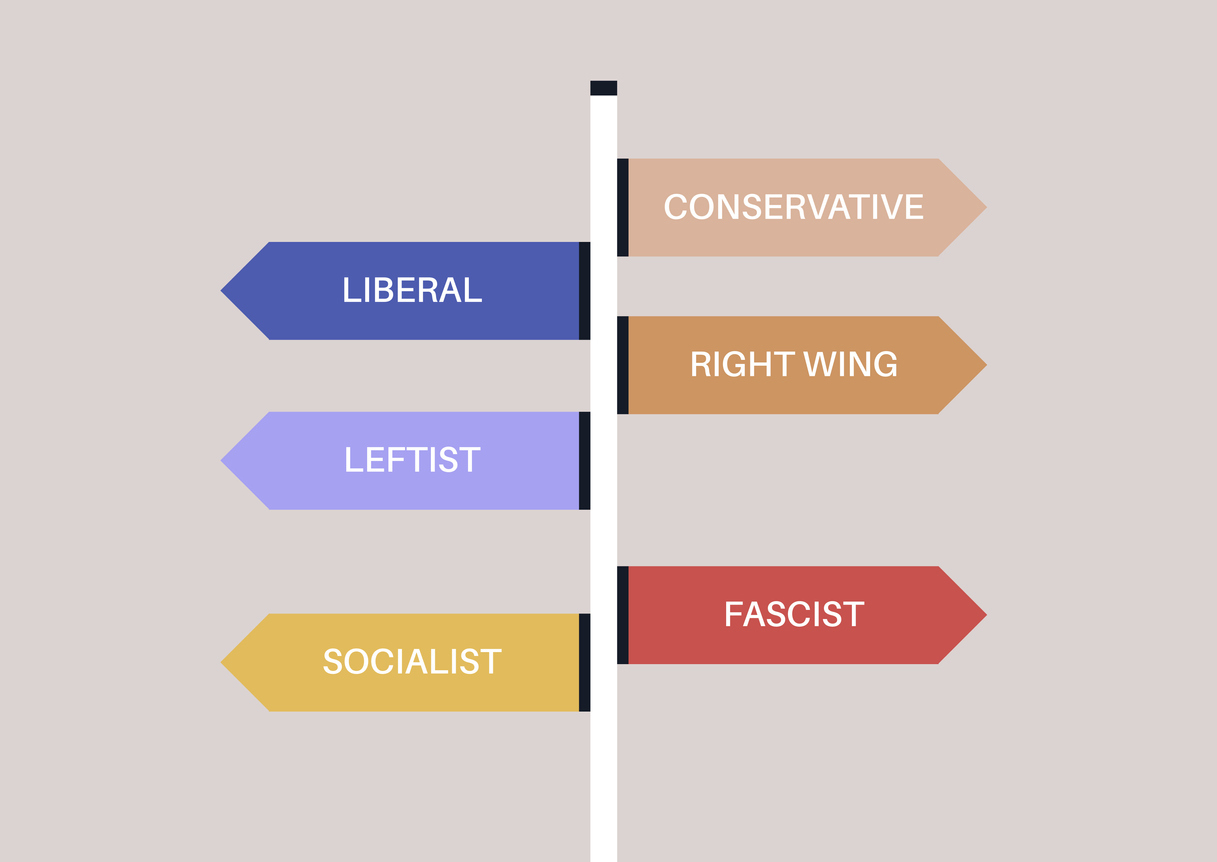
The premise sounds reasonable enough on the surface: Occupy a middle ground between the Left vs. Right culture war, avoiding strong alignment with either major political party, platform, or group.
Proponents claim they’re simply being “winsome” and “balanced” — rising above tribalism and transcending versus trendsetting in order to proclaim a pure Gospel untainted by political entanglements.
Third Wayism often sounds like this: “Jesus is neither right nor left.” Or “Jesus wasn’t an elephant or a donkey. but the Lamb.” Or “Jesus would be too liberal for conservatives and too conservative for liberals.”
That’s true enough, but is that all that needs to be said about our cultural and political divide? What actually happening here? Third Wayism has become a Trojan horse for laundering progressive ideas into the Evangelical churches under the guise of neutrality.
It’s a form of bait-and-switch theological liberalism that prioritizes cultural accommodation over biblical faithfulness. And while Third Way advocates claim to critique extremes on both sides, their focus disproportionately critiques conservatives while blindly ignoring radical leftist policies like sexual indoctrination in schools, transing our youth, leftist political violence, mass illegal immigration, socialism and government theft, and a host of other issues.
Make no mistake: This isn’t just a problem of church leaders failing to exact the right prescription to our political problems. It’s a theological crisis. And it bears a striking resemblance to one of the earliest heresies the Church ever confronted: Gnosticism.
How should Christians think about Third Wayism and its real dangers?
First, theologically, Third Wayism is a form of a neo-Marcion heresy, a Gnostic heresy that attempts to separate God’s law from His Gospel
In the second century, a heretic named Marcion taught that the God of the Old Testament — with His law, judgment, and wrath — was fundamentally different from the God of the New Testament, who offered only love, grace, and mercy. Marcion essentially wanted a Gospel without the law and grace without any sacrifice.
Marcion was the first to want to unhitch the Church from the Old Testament.
The early Church fathers rightly condemned this as heresy. Because you cannot separate the law from the Gospel. Yes, the law and the Gospel are two separate categories, but you cannot know the good news of Jesus Christ without first knowing what Christ is saving you from. You cannot understand grace apart from God’s justice or holiness.
Third Wayism makes the same fundamental error as applied to the cultural and political divide in America. It wants the comfort of the Gospel without the confrontation of God’s law. It wants to affirm God’s love without acknowledging God’s moral standards applied to the way people live and vote.
It claims to hold biblical convictions while simultaneously refusing to apply those convictions to concrete moral, cultural, and political realities.
When Third Way leaders avoid clear biblical teaching on these fronts, they avoid the law and confuse the Gospel. When they critique “Christian nationalism” more forcefully than they preach about abortion or gender ideology, they’re separating God’s law from the Gospel.
The result is a neutered Christianity that offers neither prophetic clarity nor pastoral courage. A faith that is all Gospel and no law, all comfort and no conviction, all grace and no truth.
Second, morally and politically, Third Wayism creates confusion rather than clarity in the Church
Pastor Josh Howerton recently made a profound observation: Political and cultural engagement are, in some very meaningful sense, a lead measure to the Great Commission, not a distraction from it. Show me a map of the most progressive areas in America, then show me a map of the least-churched areas in America — it’s the same map.
Why? In Howerton’s words, it’s because progressivism is built on a secular Critical Theory lens instead of a Christian theological lens. It trains people to think of biblical marriage as “homophobic,” biblical justice as “racist,” biblical gender roles as “oppressive patriarchy,” and biblical sexuality as “transphobic.”
Howerton concludes, “This installs what Tim Keller himself called ‘defeater beliefs’ into the populace, making evangelism significantly more difficult.”
Yet Third Wayism refuses to name this reality clearly. Instead of equipping Christians to engage the culture war with biblical wisdom, it scolds them for being too political. Instead of providing moral clarity on life, marriage, family, and religious liberty, it offers mushy platitudes about “loving our neighbors” without defining what biblical love actually requires.
The practical result is devastating. Christians are disarmed precisely when they need to be the most engaged. Pastors remain silent on the defining moral issues of our day, hiding behind the excuse of neutrality. And the Church becomes culturally irrelevant — not because we’re too controversial, but because we’ve lost the courage to speak the truth.
Finally, Third Wayism presents a particular danger to the Evangelical Church because conviction and courage must form the center and foundation of truth
Here’s a principle every Christian must understand: If you cannot defend truth, you will cease to exist.
The Church doesn’t survive by being pleasant. It doesn’t grow by being inoffensive. It doesn’t faithfully represent Christ by avoiding controversy. Throughout church history, the moments of greatest faithfulness have been the moments of greatest testing: When courage was demanded, Christians stood firmly on Scripture at the exact time when culture demanded compromise or death.
Third Wayism, by contrast, is the posturing for comfort absent of controversy. It’s the stance of leaders who have more to lose than to gain from taking clear positions.
But Scripture is clear. As Paul writes to the Galatians, “Have I now become your enemy by telling you the truth?” (Galatians 4:16). Or as Jesus warned His disciples, “Woe to you when all people speak well of you” — that’s how you could tell false prophets (Luke 6:26). Also, there’s the Lord’s rebuke of Laodicea, “I know your works: you are neither cold nor hot … because you are lukewarm … I will spit you out of my mouth” (Revelation 3:15-16).
The Church needs prophetic voices who will declare truth with conviction. We need Christians who understand that they need both law and grace when presenting the Gospel.
So what should we do? We must reclaim theological courage. We must refuse the false choice between biblical faithfulness and cultural-political engagement. Today, those pastors who speak to the cultural and political controversies sooner are actually getting to the Gospel quicker.
We must also remember that we worship a Savior who cracked a whip and overturned tables, even in God’s house. We must teach the whole counsel of God — both law and Gospel, both justice and grace.
Above all, we must remember: If you cannot defend truth, you will cease to exist. The Church that trades conviction for Third Way comfort may soon discover it has forfeited its very soul.
Originally published at the Standing for Freedom Center.
Ryan Helfenbein is the Executive Director of the Standing for Freedom Center and the Vice President of Communications and Public Engagement at Liberty University. Ryan hosts “The Give Me Liberty” weekly podcast and is also a weekly contributor on “In Focus with Alison Steinberg.”If you’re interested in having Ryan as a guest on your show or speak at your next event, contact us at freedom@liberty.edu.Follow Ryan on Twitter at @RHelfenbein.