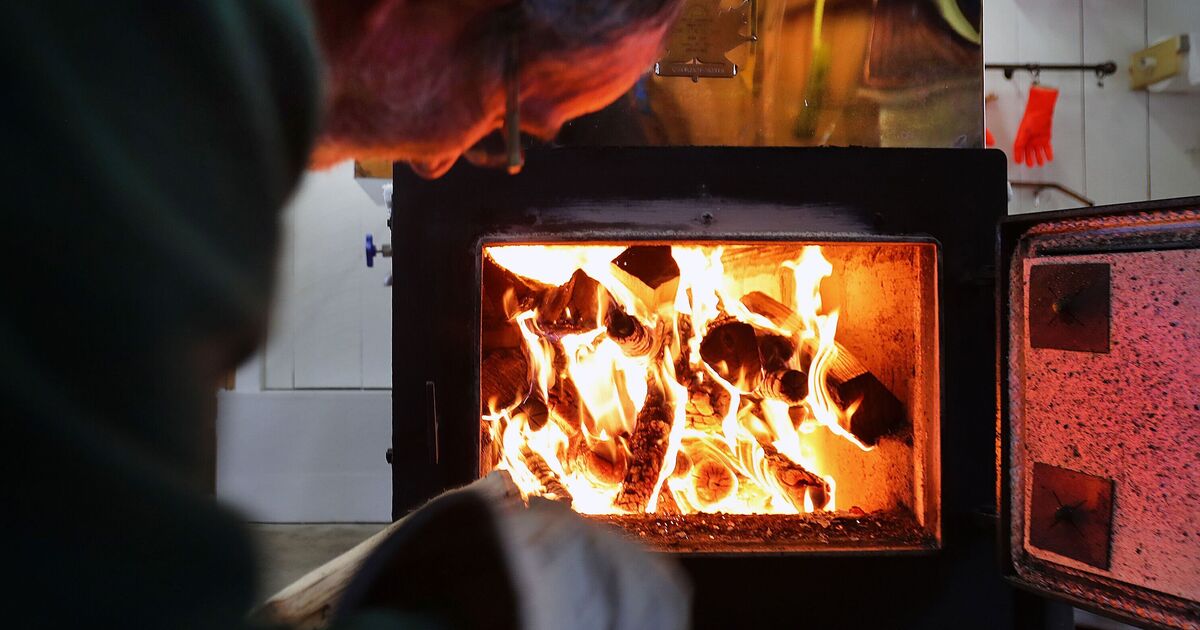
An update has been given by the Department for Environment, Food & Rural Affairs on a potential ban for some kinds of wood-burning stoves. This week it was announced that rules for wood burners could be tightened to lower their smoke emissions as part of the Government’s updated environment plan.
Any new stoves would have to be changed after the regulations come in, although existing wood burners would not be impacted. In a new parliamentary question, Labour’s Bell Ribeiro-Addy asked Secretary of State for Environment, Food and Rural Affairs Emma Reynolds: “Whether she plans to introduce further restrictions on domestic wood burning in urban areas with poor air quality.”
In answer, Emma Hardy, Parliamentary Under-Secretary (Department for Environment, Food and Rural Affairs said this week the government was concerned at the pollution caused by wood burners and explained new regulations were coming in: “Wood burning is a major source of fine particulate matter (PM2.5), especially in urban areas. The Government is currently considering options for reducing the impact of domestic wood burning on people’s health and will consult on measures to reduce emissions from this source.”
The Government said it will consult on measures to reduce the environmental impact of the public burning wood, such as stoves and bonfires, as it unveiled the revised environmental improvement plan (EIP) on Monday. Under the proposals, manufacturers of stoves that use “solid fuel” could have to phase out or amend older models to ensure they meet the new standards.
Pollution limits may also be tightened in smoke control areas of the country, where there are restrictions on what fuels can be domestically burned in fireplaces or stoves.
Ministers said the consultation will seek to minimise the impact these changes have on those who need to burn wood and to respect traditional celebratory festivals such as Bonfire Night and Diwali.
It comes as part of the proposed measures to tackle air pollution in the updated EIP, which replaced the last government’s plan with a series of new environmental targets.
The Government has tightened the target to cut the concentrations of PM2.5 – a fine particulate pollutant linked to asthma, lung disease and heart conditions – by 30% by 2030 compared to 2018 levels.
According to the official figures, a fifth of PM2.5 emissions in 2023 came from domestic combustion. It is understood that the EIP will bring the UK’s PM2.5 standards in line with the EU, which was not the case under the previous EIP, published by the Conservatives in 2023.
Many parts of the UK are smoke control areas where:
- you cannot release smoke from a chimney
- you can only burn authorised fuel, unless you use an appliance approved by Defra (also known as an ‘exempt appliance’ or ‘Defra approved appliance’)
In England you may have to pay a penalty of up to £300 if your chimney releases smoke in a smoke control area.
You can be fined up to £1,000 if you buy unauthorised fuel to use in an appliance that’s not approved by Defra.
What you can burn in smoke control areas
In a smoke control area you can only burn fuel on the list of authorised fuels, or any of the following ‘smokeless’ fuels, unless you’re using a Defra approved appliance:
- anthracite
- semi-anthracite
- gas
- low volatile steam coal
Exempt appliances that can burn unauthorised fuels
Unauthorised fuels, such as wood, can only be burned in exempt appliances such as some boilers, cookers and stoves.
You must only use the types of fuel that the manufacturer says can be used in the appliance.
Outdoor ovens, burners and barbecues
You can use outdoor barbecues, chimineas, fireplaces or pizza ovens in smoke control areas.
If your appliance uses a chimney on the roof of a building (for example, a summerhouse), you can only burn authorised fuel unless it’s an exempt appliance.
Garden bonfires
You’re allowed garden bonfires in smoke control areas but you need to follow the rules on bonfires.