Acts 2.14a,36-41; Psalm 116.1-3,10-17; 1 Peter 1.17-23; Luke 24.13-35
THE most important theological question that Christians can ask about their faith is: “Is it true?” The most important historical question that Christians can ask about their faith is: “Did it happen?” The Emmaus Gospel — unique to Luke, precious to believers — requires a response to both questions. Or, at least, it requires us to be aware of the presuppositions that we bring to the story.
Only one of the elements of the Emmaus episode is straightforwardly “super-natural”. In verse 31, Luke records that Jesus “vanished from their sight”. His sudden appearing (verse 15: “Jesus himself came near and went with them”) may have been supernatural, but the text says only that Jesus approached Clopas and his companion and fell into step beside them.
That is not much of the supernatural in a long episode. And — before we get distracted by the battle between faith and reason, or science and religion — we should bear in mind that, in pre-scientific Bible days, people did not demarcate their religious experiences in this way. They knew as well as we do that some things that happen are “ordinary”, and others are “extraordinary”. But they did not sort events into dualistic philosophical categories as a way to make sense of them.
Modern scholars are less holistic. A few cheerfully explode the historical character of Emmaus by referring to it as a “legend”. Some suggest that its theological elements have more the character of myth than logic. Others assert that its factual reality is obvious, and its basis in real-life events should be self-evident to any reasonable reader.
This is not one of those occasions when we can sit on the fence, declaring that Emmaus contains elements of all of these. If we read the Gospel while holding to a prior conviction that people do not dematerialise at will, and, before that, that dead people can never be resurrected in a physical form, then we have no choice but to dismiss the whole story as a pious fiction. A very beautiful fiction, yes. An inspiring fiction, certainly. A life-changing fiction? Beyond doubt. But not the truth.
Christians are used to conflicts of detail between the Gospels. If the empty tomb is the mark of the resurrection, then women, in all four Gospels, are the first witnesses of the Easter miracle. If, on the other hand, we reckon the resurrection by someone’s encountering Jesus himself in his resurrection body, then Matthew and John still give that honour to women. The short version of Mark records only some women’s witnessing of an empty tomb, not any encounters between the disciples and the risen Lord.
In Luke, though, Clopas and his companion are the first witnesses of the resurrection marked by a meeting with the risen Lord. Luke agrees with the other Gospels that women were the first witnesses of the empty tomb: but he gives the first sighting of the resurrected Jesus to “two of them” (verse 13), a reference back to “the apostles” (mentioned in verse 12, before the lection), namely Clopas and his companion.
In a formal police interview, the first rule of convincing your interrogators is to keep it simple. Do not elaborate — because your questioner will catch you out if you vary any of the details. But the first rule of making fiction sound like fact in historical narratives, when one’s main readers may not be sceptical scholars or trained interrogators, is: generate plausible imaginative details. Flesh out particulars like the weather, the locations, the details of people’s appearance, the main characters. At the very least, give a name to Clopas’s companion.
Luke is often said to be the Church’s first historian. That is not always meant as a compliment, because, as a pre-modern historian, he is happy to show what side he favours, and tells his tale in a way that persuades readers to see events as he sees them. Still, the power of his Emmaus story does not lie in plausible corroborative details, but in the absence of them — a contrast to the pious fiction (arguably) that is Mark 16.
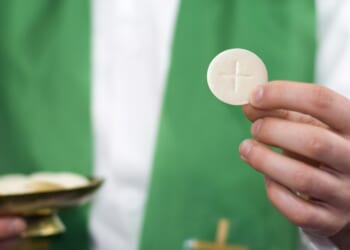
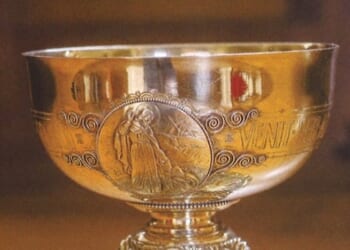
The location of Emmaus resists all attempts at convincing identification. The appearance and disappearance of Jesus remain mysterious. But the most powerful message of Emmaus is theological, and historical, and as true in today’s Church as it was on that road, just before the Church was born: they recognised Jesus — as we recognise Jesus — in the breaking of bread.