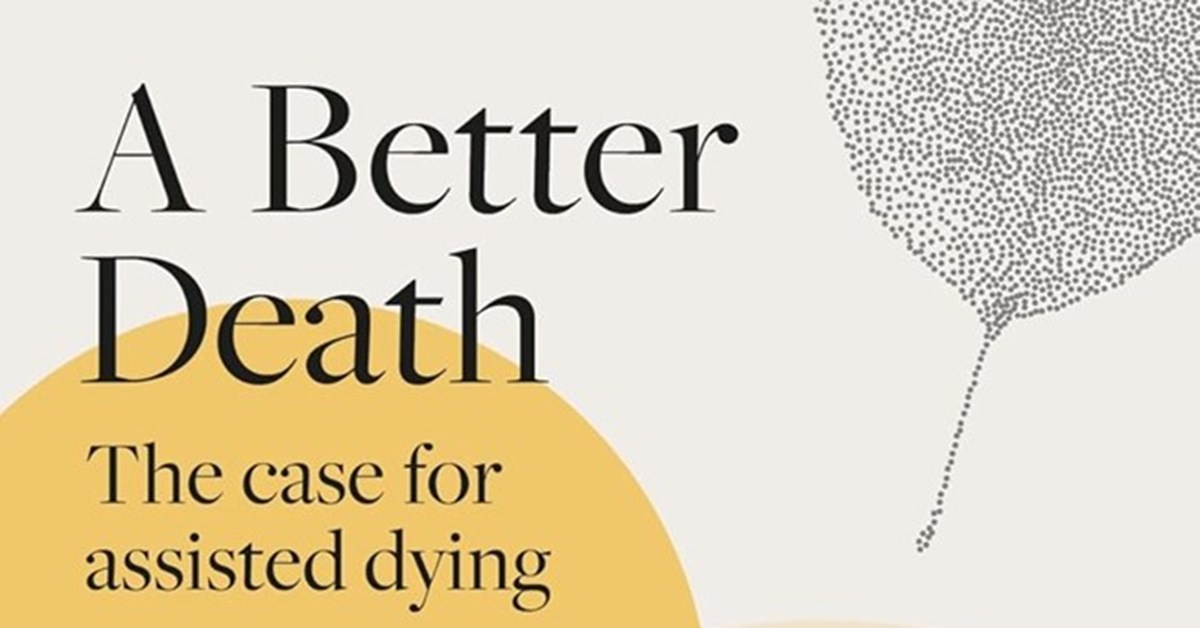
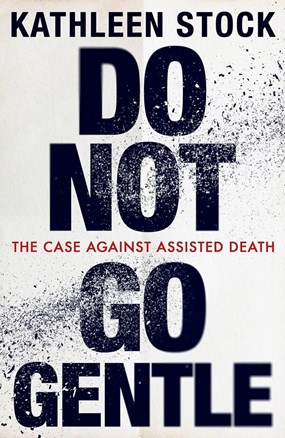
SIDE BY SIDE, these two books appear counter-intuitive. The defender of legalised assisted dying is a well-known Jewish rabbi, whereas its strident adversary is a secular philosopher. Jonathan Romain, though, is a liberal-minded Reformed/Progressive rabbi, and Professor Kathleen Stock, while sticking mostly to secular arguments, admits to being a lapsed Roman Catholic who recently has “found myself attending church services from time to time, looking for something that secular values can’t seem to bring”. Both have been controversial on public ethical issues — reminiscent of the late Sir Roger Scruton and Lord Biggar today — but have my critical respect. Intelligent provocateurs can help us to think more deeply and ethically.
In the 2005 House of Lords debate on assisted dying, the late Lord Habgood was the only bishop to eschew faith-based arguments. A shaper of public medical ethics, he made a crucial distinction between his own Christian commitments and standards that should be imposed by law upon others. Neither Romain nor Stock needs to be taught this lesson: their contrasting books are written accessibly to persuade secularist and religious readers alike.
Both authors spend time picking through details of the Terminally Ill Adults (End of Life) Bill currently stalled in Parliament. Although this Bill has fallen, there are bound to be further Bills and, given public support (among churchgoers too), one seems likely to pass. The key test will be whether it meets three main objections: that such legislation will: damage doctor-patient relations; make vulnerable people more vulnerable; and fail to prevent abuse.
Romain supports assisted dying, not euthanasia, seeing the latter as “when someone else — be it another individual or the state — takes a person’s life”, whereas assisted dying is “when a person who is dying takes their own life. . . Others may assist in making it possible, but the person alone is responsible for carrying it out.” As in the State of Oregon, he requires someone terminally ill to have the physical and mental capacity to take their own life voluntarily, using medically prescribed drugs (presumably barbiturates) at home and in their own time.
Defenders of Oregon claim that simply possessing these drugs gives recipients great comfort and that only about one quarter eventually use them. Several late members of my family had medical access to barbiturates. Undoubtedly, they found great comfort from this, even though none appeared to end their life using these drugs. Nevertheless, critics (including the recent Bill, following the BMA) say that Oregon risks leaving unused life-ending drugs available to be abused by others. Again, that does not seem true of my family. Others, including Stock, criticise Oregon, variously, for: poor recording-keeping; medical prescribers conniving; and gradually expanding criteria for those qualifying for these drugs.
For Romain, it is compassion (alongside choice) that drives his commitment to assisted dying: “When dying people who are suffering dreadfully ask for release, where is the compassion in answering ‘no’? Perhaps that explains why the founder of the British Voluntary Euthanasia Society in 1935 (which later became Dignity in Dying) was not only a minister of religion . . . but . . . Dean of St Paul’s.”
He notes, tellingly, that opposition to assisted dying is declining among doctors and nurses. During 21 years on the BMA’s Medical Ethics Committee (MEC), I witnessed this change at first hand. Policy is finally made by the BMA’s annual Representatives Meeting, albeit advised by its MEC. After very extensive quantitative and qualitative surveys of doctors across England and Wales, by 2020 many of us concluded that there was no longer majority support for opposition to end-of-life legislation. Romain sets out the details here accurately.
But what of protecting the vulnerable and framing a safe law? Here, he (like the recent Bill) is less sure-footed than Stock. How are vulnerable elderly or those living with serious disabilities protected when they feel that they are a burden to their families or to society at large? And how will legislation avoid abuse from relatives seeking their money?
Stock’s well-argued and original thesis is that legalised systems of assisted death (her preferred term), based upon both choice and compassion/mercy, involve a contradiction. The logic of choice is that everyone keen to die should be offered assisted death, whereas the logic of compassion is that this should be offered only to the terminally ill suffering intractable pain. In this extreme form, she argues, these positions are clearly incompatible.
In addition, she maintains persuasively, pro-choice arguments often depend on the dictum that — following the 1961 decriminalisation of suicide — we have a right to choose when to end our lives. In contrast, she insists, there is no right requiring others to assist our death. And compassion-based supporters of legislation, she claims, implicitly presume that ending a life is more compassionate than palliative control of physical pain, let alone self-reported “mental pain”.
Frankly, she exposes a contradiction that runs throughout Romain’s well-meaning book.
Yet, something important remains. Romain’s final chapter envisages a time when assisted dying is legal (as may well happen, despite critics) and recommends prayers and Psalms to comfort families and their soon-to-die relatives. Professor Paul Badham, another supporter, has suggested a final eucharist for Christians. When my family believed that I was dying from endocarditis last year, this is what gave me strength and grace in abundance: prayers, Psalms, Nunc Dimittis, and eucharist. And my parents, 17 years apart, both asked me to share the eucharist with them just before they died. This deeply pastoral response — for supporters and critics of assisted-dying legislation alike — is simply absent from Stock.
The Revd Dr Robin Gill is Emeritus Professor of Applied Theology at the University of Kent.
A Better Death: The case for assisted dying
Jonathan Romain
Reaktion Books £12.99
(978-1-83639-164-7)
Church Times Bookshop £11.69
Do Not Go Gentle: The case against assistant death
Kathleen Stock
Bridge Street Press £22
(978-0-349-13664-6)
Church Times Bookshop £19.80