MOSES MAIMONIDES (1135-1204) was the outstanding Jewish thinker of the Middle Ages. His status within Judaism is roughly equivalent to that of St Thomas Aquinas in Christianity, and his writings on philosophical theology proved influential on thinkers in other faith traditions (including Aquinas himself). This new Very Short Introduction by Ross Bran acquaints us with both the life and work of its subject, weaving the two together in interesting ways.
Maimonides’s vast scholarly oeuvre covers the fields of rabbinic law, philosophical theology, and medical science. In accordance with Jewish practice at the time, his work as a rabbi was undertaken as a voluntary public service, while he earned his living as a doctor. Maimonides was born in Córdoba, in what was then Muslim Spain. His life would take him to Morocco, Palestine, and, ultimately, Egypt. There he became a physician at the court of Sultan Saladin (1137-93) and, for a while, held office as Ra’is al-Yahud — communal leader of the Jews of Egypt.
Maimonides’s three great works are commonly reckoned to be his Commentary on the Mishnah (1167-8); the Mishneh Torah (aka “The Code”, 1168-77), and his Guide of the Perplexed. Interestingly, of these three, only the Mishneh Torah — a thorough codification of Jewish law — was written in Hebrew. Conversely, both the Commentary (a rabbinic text) and The Guide (a philosophical work) were composed in Judaeo-Arabic, a dialect of classical Arabic written in Hebrew characters.
As a philosopher of religion, Maimonides was chiefly preoccupied with combating the dangers of anthropomorphism (endowing God with human characteristics) and anthropopathism (ascribing human emotions to God). In fact, any mode of talking about God which obscured the absolute simplicity of divine being was to be resisted.
Ultimately, according to Brann, Maimonides holds that “only actions ascribed to God are valid expressions.” Influenced by the Muslim thinker Abu al-Farabi, Maimonides argued in The Guide that the manifestation of God through prophecy (above all, that of Moses) occurred through a kind of emanation: “an overflow overflowing from God through the intermediation of the Active Intellect”.
The Revd Alexander Faludy is a freelance journalist based in Budapest.
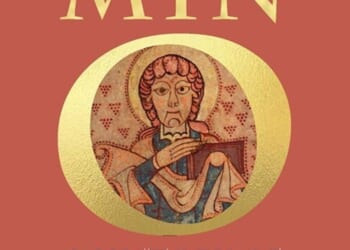
Moses Maimonides: A very short introduction
Ross Brann
OUP £9.99
(978-0-19-753698-8)
Church Times Bookshop £8.99