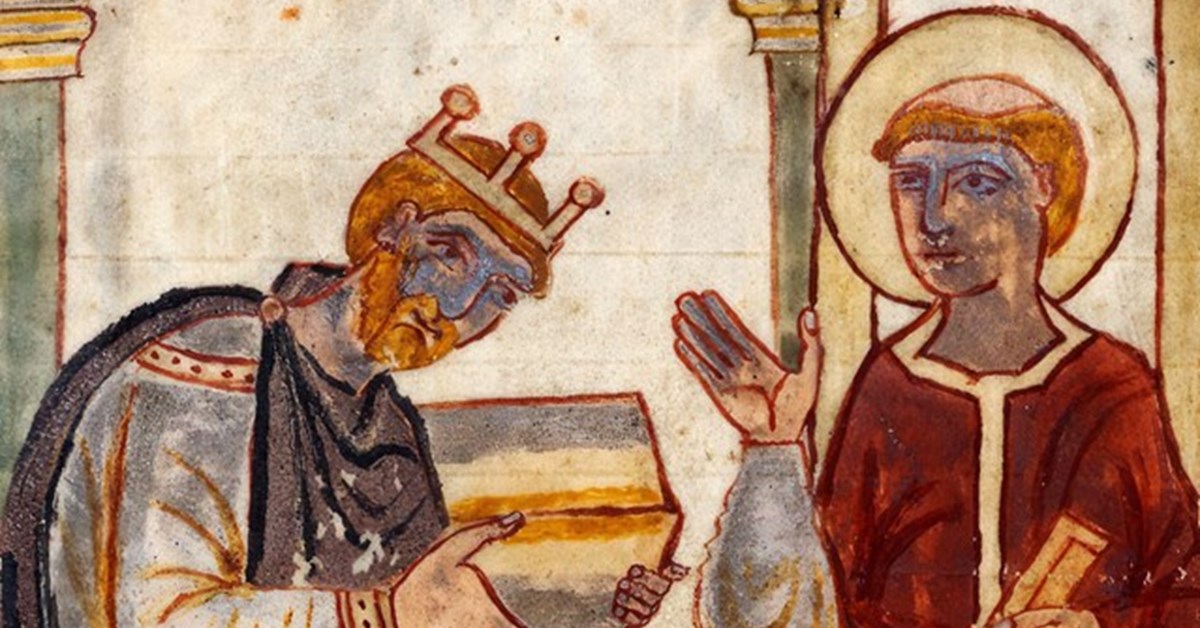
IN 927, Æthelstan, king of the English, who had taken control of the Viking kingdom of York, met the princes of Wales, the king of Scots, and the ruler of English Northumbria, at Eamont Bridge in Cumbria. All recognised him as their overlord. This made him become the first king to rule practically all of modern England and the first to have nominal lordship over the whole of Britain.
The date, so important for our national history, will gain a great deal of attention next year: its 1100th anniversary. It will probably be forgotten again soon afterwards by anyone other than historians. Æthelstan failed not in making an impact on his times, but on historiography. Even today, it is not altogether on his side.
Born the eldest son of his father, Edward the Elder, he was brought up in Mercia by his redoubtable aunt and uncle, Æthelflæd and Æthelred. Wessex, his ancestral kingdom, viewed him with some reserve, and his coming to the throne faced challenges there. Unlike his grandfather Alfred, he inspired (or employed) no biographer or chronicler, and the keeping of annals during his reign was distinctly poor.
Yet, what a king he was: how active and successful in a career that spanned only a dozen years! He did not marry, for whatever reason, but was constantly active, travelling his kingdom with huge retinues of nobles, bishops, and other British rulers, establishing the royal presence and issuing codes of laws. He paid attention to the Church, patronising monasteries with lands and relics. The later Church reformers Æthelwold and Dunstan were probably influenced by him.
On a larger stage still, he was the first English king to gain prominence on the Continent. There he was admired as a strong man who had mastered the Vikings. He brought up two future kings of France and Norway in his court, and the rulers of France, Burgundy, and Germany were glad to link with him by marrying his sisters.
Investigating Æthelstan and his times is not easy. The source material is thin, and historians must immerse themselves in a range of disciplines: chronicles, charters, archaeology, topography, and several languages. Professor Woodman has mastered all of them and explains them judiciously, carefully weighing his interpretations, avoiding over-confident statements, and allowing for alternative possibilities. He has covered every aspect of the king and his reign in an admirable way and written a definitive account that will last for many decades.
Two years before his death, Æthelstan faced a fresh challenge. The Vikings of Ireland, with their eyes on York, the king of Scots, and possibly his neighbour of Strathclyde, united to invade England and undo his power. The king and his brother Edmund met them at Brunanburh, which the author sensibly locates at Bromborough, in the Wirral. There they achieved a victory so great that it was recorded with awe not only in England, but in Wales, Ireland, and Scandinavia.
For the only time in his reign, the Anglo-Saxon chroniclers unbent themselves to record a great song of triumph in English verse, of how the soil grew dark with the blood of Scots and Vikings in the slaughter of the battle and the pursuit. I doubt whether that will get much attention next year. England’s great victories are none too popular these days.
Dr Nicholas Orme is Emeritus Professor of History at Exeter University.
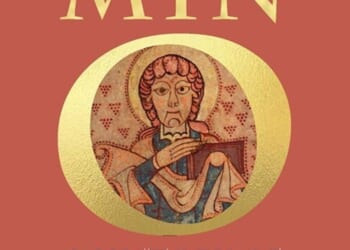
The First King of England: Æthelstan and the birth of a kingdom
David Woodman
Princeton University Press £30
(978-0-691-24949-0)
Church Times Bookshop £27