Britain’s electricity grid faces the risk of being swamped by solar power in the coming months, energy officials have warned.
The National Energy System Operator (Neso) announced it will need to deploy “more tools, more often” to maintain stability when sunshine triggers spikes in power generation.
For the first time, the grid operator is preparing to pay households and factories to use surplus electricity. Large power stations may also receive unprecedented instructions to shut down.
The warning emerged as Rachel Reeves headed to Washington for an International Monetary Fund summit, where she intends to urge global leaders to adopt her approach to tackling the energy crisis stemming from Middle East tensions.
The Chancellor will advocate for “collective action” while pushing nations towards net zero targets.
In its summer outlook published on Tuesday, Neso said there are no concerns about electricity supply this summer. However, it warned that the war in Iran is likely to push prices higher due to Britain’s reliance on gas.
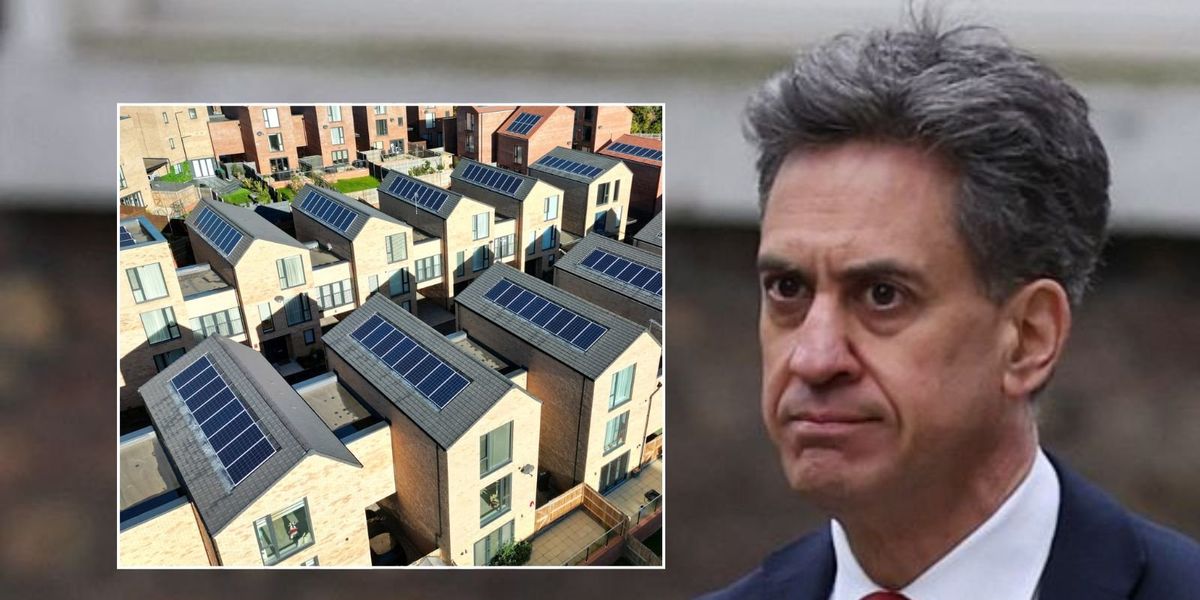
It also highlighted growing challenges in managing the grid during periods of low demand and high solar output, as Energy Secretary Ed Miliband continues to expand wind and solar capacity to meet net zero targets.
Energy Secretary Ed Miliband continues to push ahead with ambitious expansion plans, aiming to triple solar capacity across Britain by 2030. He recently relaxed planning regulations to speed up solar farm construction and last week gave approval to the country’s largest solar project to date, located in Lincolnshire.
Grid instability arises when renewable sources produce substantial amounts of electricity while consumer demand remains low. Without proper balancing, this mismatch can cause blackouts.
The problem is compounded because many onshore solar and wind installations lack direct connections to the main transmission network, leaving Neso unable to control their output.

Energy Secretary Ed Miliband continues to expand wind and solar capacity to meet net zero targets
|
GETTYSolar capacity on the grid has more than doubled over the past decade, reaching 22 gigawatts as homes and businesses installed rooftop panels to reduce energy bills.
Neso estimates a 75 per cent probability that national demand will fall to a new record low during the late May bank holiday, potentially dropping to 11 gigawatts. Meanwhile, wind and solar could simultaneously generate 18 to 19 gigawatts.
One expert noted the situation echoed last year’s Iberian Peninsula blackouts, when solar farms triggered a chain reaction that cut power across Spain.
Adam Bell, a consultant at Stonehaven and former Whitehall energy department official, said Neso faced the challenge of “making sure the grid remains stable”.

Solar capacity on the grid has more than doubled over the past decade
|
GETTY“They don’t have the ability to turn this solar generation off, so instead they want to turn consumption up and that could actually be good for households and heavy industry – it is free power,” he said.
However, independent energy consultant Kathryn Porter raised concerns about Labour’s green energy strategy.
“Once again, we’re seeing Neso putting behaviour change by consumers front and centre, and saying that having consumers change their behaviour to help balance the system instead of expecting the system to serve them,” she said.
“But also, why the hell do we keep building more solar if we’re already at a position where we’re generating more electricity than we need? That is only going to make this problem worse.”
A Government spokesman defended the outlook, stating that independent system operators had confirmed electricity and gas supplies would “comfortably meet demand this summer” thanks to Britain’s “diverse and resilient energy system”.

Energy Secretary Ed Miliband continues to push ahead with ambitious expansion plans,
|
GETTY“As the current conflict in the Middle East shows, the best way to increase Britain’s energy security long-term is by accelerating to clean homegrown power that we control, including renewables and nuclear,” the spokesman added.
Under Labour’s clean power plans, Mr Miliband is seeking to triple solar capacity across Britain by 2030. Mr Miliband loosened planning rules so more solar farms are built and approved the country’s biggest project so far in Lincolnshire last week.
Kayte O’Neill, Neso’s operating chief, said: “The complexity of operating the system at low demand is increasing, and we may need to use more of our tools and use them more often than in previous summers.
“Our analysis shows that low demand is increasingly driven by weather patterns – most notably solar photovoltaic generation – rather than underlying consumer behaviour.”