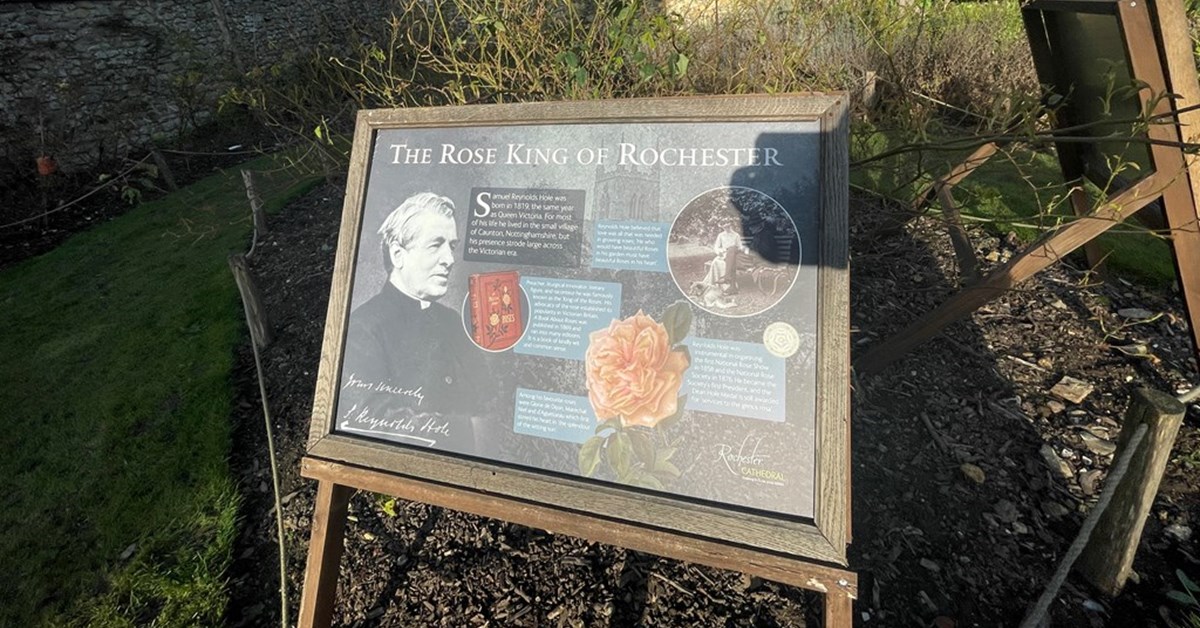
A LOVE of roses and an ardent belief in the healing power of gardens links the present Dean of Rochester, the Very Revd Dr Philip Hesketh, with a Victorian predecessor, Samuel Reynolds Hole — a connection that has brought funding for a horticultural therapist as part of the cathedral’s wider well-being and mental-health support services.
Dean Hole, who held the office from 1877 to 1904, laid out a garden behind the cathedral and planted a collection of 135 varieties of rose. His chief work, A Book About Roses, is credited with popularising the rose in English gardens, and his conviction that “He who would have beautiful Roses in his garden must have beautiful Roses in his heart”, led Alfred, Lord Tennyson, to dub him the “Rose King”.
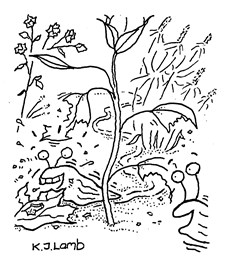 “I must say, Gerald, you’re looking so much happier since the garden was planted”
Dr Hesketh is equally enthusiastic about gardens, and began a project during lockdown to restore and develop three acres of the Cathedral’s “secret gardens”: reinstating some of Dean Hole’s favourite roses, and creating a wildflower meadow, a fruit orchard, a small vineyard, and an Infirmary herb garden, mirroring the agricultural history of the cathedral’s monks.
“I absolutely love gardening. I enjoy the peace, serenity and satisfaction of watching things grow and flourish,” he said. “I wanted to use the gardens for projects on mental health, well-being, prayer and spiritual growth, and the long term goal for this space was to open it up to offer that to more community groups.
“The gardens and orchard will become a central part of the cathedral’s well-being programme, which will combine music, the arts, and the gardening. I feel I have prepared the ground for this exciting and essential project to go forward, which will help build communities of hope.”
Gardening was truly a religious activity, Dean Hole reflected in his book: “I’ve always believed that the happiness of mankind may be increased by encouraging that love of a garden, that love of horticulture of the natural, or English school, free from rigid formalities.”
Funding for a horticultural therapist to work on the project part-time for three years has come from the Dorothy Kerin Trust, a Christian charity that works in the field of physical and mental health and well-being in the community, in Kent and Sussex. Visitors have a chance to see the “secret gardens” on Saturday 18 April and Saturday 6 June.