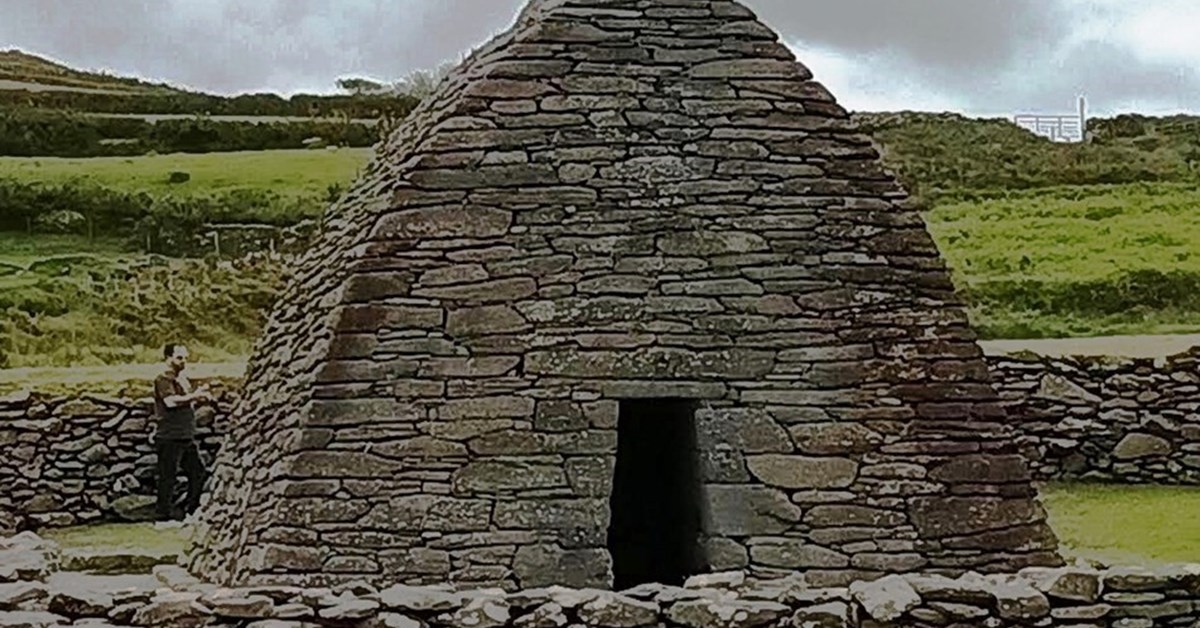
NEAR Smerwick Harbour, on the north-western edge of the Dingle Peninsula, in Ireland, is the oratory of Gallarus. It appears dull and bleak in its isolated setting, but it is one of the best-preserved stone churches in Ireland, and is now on the country’s Wild Atlantic Way.
The chapel may date from the seventh to the ninth centuries; its name means “house of shelter for foreigners”, reflecting its position on a hillside beside an ancient pilgrimage route to the summit of Mount Brandon near by. There, in the sixth century, Brendan the Navigator and his monks had their hermitage.
The sloping side walls give the chapel the shape of an upturned boat. Inside, it is silent, the stone is cool, and there is just a small window on the east side. As I stood there, my eyes became used to the space, and the light seemed to grow stronger. I began to see more colours in the walls — made of old red sandstone — and in the corbel vaulting above.
Slowly, I became aware of those who had come to pray at this holy place over so many centuries: those who might have passed by with Brendan, and those who had climbed to his hermitage to deepen their relationship with God. I felt that I could join with them in a prayer of thanks for all the blessings that they and I had received. The apparent gloom became a place full of their living presence. The colours became more vibrant.
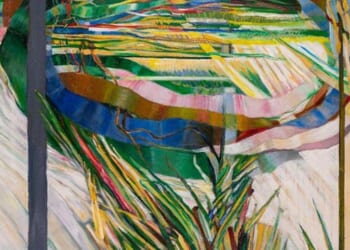
ON MY return home, I imagined myself back in Gallarus, and began a painting of the interior. It was like being pulled into a vortex of the Spirit: it became an intense experience of receiving, of being “inspirited”. I link this with the insight of the German painter Paul Klee: “In art, it is not seeing that is so important but making visible.”
I felt the Spirit move through me, linking my prayer at Gallarus with what came into my painting. Colours emerged, and different shapes and tones seemed to find their place. A cross became visible above the window. I’m intrigued by how this may link to the idea of the layered nature of time, suggesting that what we see now spreads over the past.
T. S. Eliot’s words describing East Coker in Four Quartets seem to reflect the transformation I experienced, first at Gallarus and then back home:
But the faith and the love and the hope are all in the waiting.
Wait without thought, for you are not ready for thought:
So the darkness shall be the light, and the stillness the dancing.
Eliot was writing about finding hope in the dark days of 1940, but there are, even now, too many places of darkness. Waiting allows the Spirit to show us more: there is nothing so dark that it cannot be brought into the light.
A small and simple holy place such as Gallarus still provides protection and enables visitors to make their own connection with the Creator of all things, visible and invisible. From ancient stones, unexpected parts of the colour spectrum may emerge, perhaps pointing to the unity of all creation. Light may shine in the darkness.
The Revd Peter Varney is a retired priest in the diocese of Norwich.