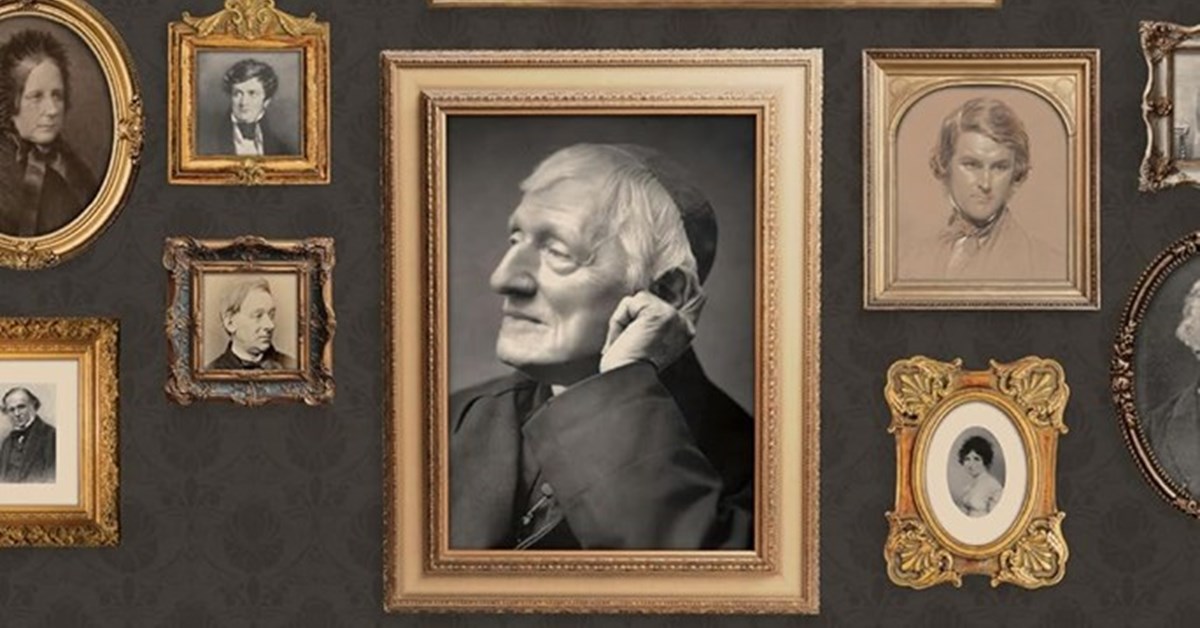
BOOKS on Newman and the laity must be like London buses, coming along two at once. Just recently we had Ben King’s superb monograph on the laity in Tractarian thought (Books, 9 January). Now we have this splendid book from Paul Shrimpton.
Shrimpton’s study is almost exclusively of the work of Newman the Roman Catholic, after his secession in 1845. It is an eloquent and insightful exploration of Newman’s appreciation of the laity not only through what he wrote about them, but also through his interactions with them in a variety of initiatives. Foremost among these are his part in establishing a Catholic university in Ireland in the 1850s — a venture that almost failed because of the rigidity of the hierarchy in insisting on clerical control at almost every point — and his foundation of the Oratory School in Birmingham.
The quotation in the title comes from a letter from Mgr George Talbot, the papal chamberlain, to Henry Manning, Archbishop of Westminster, in 1867. It is a measure of what Newman was up against. Newman, for much of his life, was regarded with no less suspicion by the RC hierarchy than he had been by many of the Church of England bishops.
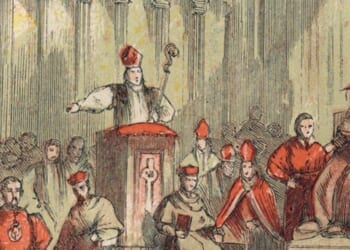
Manning himself had become closely aligned to the centralised, clerical, resurgent Catholic culture called Ultramontane (because it asserted the authority of the papacy “beyond the mountains”); but Newman was always more nuanced. He was no narrow-minded clericalist. He wanted to see the full participation of the RC laity in the educational institutions of the country, including Oxford and Cambridge, and he thought an educated, religiously intelligent laity an essential element for the flourishing of the Church. But most of the hierarchy feared the “taint” or corruption that Catholics might encounter in such places. Their preference was for separation, and for distinct Catholic institutions under clerical control.
Shrimpton picks his way carefully through the evidence of Newman’s writings, and especially his letters and diaries. Many have written about Newman’s educational philosophy before, especially attending to his seminal lectures, The Idea of a University (1852). But the merit of Shrimpton’s book is that it fully integrates this aspect of Newman’s thought with his practical work in setting up educational institutions that sought to give expression to this ideal.
Shrimpton also writes, more briefly, about Newman’s defence of the part played by the laity in “testing” (a better word is perhaps “establishing”) the authenticity of doctrine, something famously set down in his article for The Rambler “On Consulting the Faithful in Matters of Doctrine”. This is the Newman who, indirectly, influenced the shift at Vatican II towards a more holistic idea of the Church, not just as a hierarchy, but as the whole people of God.
In the wake of Newman’s canonisation in 2019, there has been no let-up in the flood of publications about him. But this is an excellent, highly readable, and judicious addition to them. There are just a few slips. The Judicial Committee of the Privy Council in 1850, for example, did not decide that baptismal regeneration “was not an essential doctrine of the Church of England”, though everybody assumed that it had; all it decided in the end was that the Bishop of Exeter had not proven his case against the Evangelical incumbent G. C. Gorham. But that is to quibble. I would thoroughly recommend this engaging study.
The Revd Dr Jeremy Morris is a former Master of Trinity Hall, Cambridge.
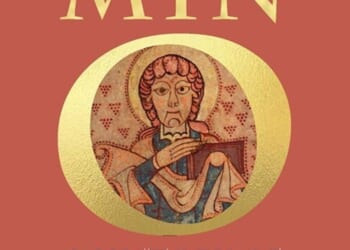
“The Most Dangerous Man in England”: Newman and the laity
Paul Shrimpton
Word on Fire Academic £31.99
(978-1-68578-219-1)