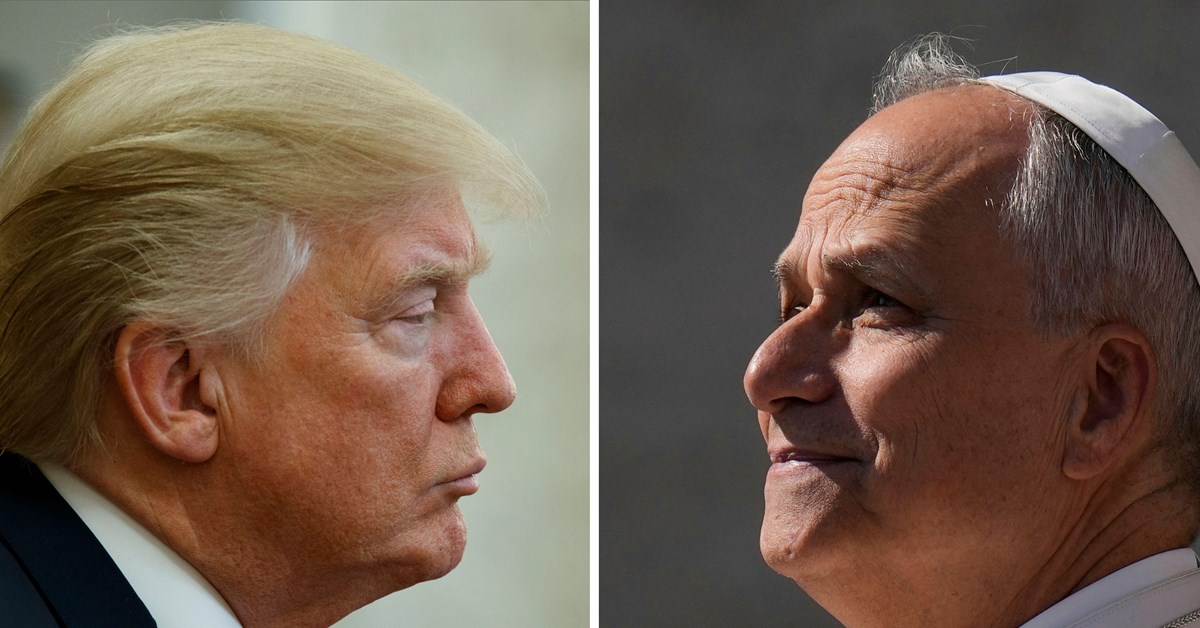
IT IS tempting to dismiss President Trump’s recent outbursts against the Pope as just another eruption of rhetorical excess from a President who routinely disregards the boundaries of political discourse. But we should pause when a scholar as authoritative as Professor Massimo Faggioli, the leading contemporary historian on the Vatican, pronounces that “not even Hitler or Mussolini attacked the Pope so directly and publicly.”
What makes the clash more striking is the restraint shown by the Pope himself. By temperament cautious and soft-spoken, Leo XIV has not engaged President Trump by name. His criticisms have been indirect, framed through the language of Catholic social teaching — concern for migrants, warnings against dehumanisation, appeals for peace. Yet, even these measured interventions have provoked an extraordinary backlash.
A fraught meeting occurred in January in the Pentagon between Trump acolytes and the Vatican’s ambassador to the United States. The papal nuncio, Cardinal Christophe Pierre, had been invited to meet the Under Secretary of Defense, Elbridge Colby. He had been chosen as the man to deliver some “friendly” advice to the Vatican, since his grandfather, a former CIA director, had worked closely with Pope John Paul II to undermine communism during the Cold War.
The Cardinal sat in silence as Pentagon officials picked apart, line by line, the Pope’s New Year state-of-the-world address. They took particular exception to Leo’s judgement that “a diplomacy that promotes dialogue and seeks consensus among all parties is being replaced by a diplomacy based on force”. The political reality, the Cardinal was told, was that the US had the military power to do “whatever it wants”, and this first American pope had “better take its side”.
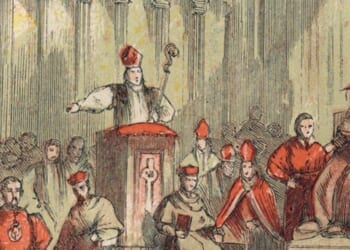
When the Cardinal replied that Pope Leo would follow his own course, guided by the values of the gospel, the exchanges became more heated. Then, one Pentagon official made unfortunate mention of the Avignon papacy: the period in the 1300s when the King of France took the papacy under the control of the French State for 70 years. The implied threat was clear.
The Pentagon later declared that this account was “highly exaggerated and distorted”, but the dramatic deterioration in relations between Washington and the Vatican is clear.
Pope Leo, whose primary theological mentor is St Augustine — the first Christian proponent of the theory of a just war — was “distraught” at Mr Trump’s threat to annihilate an entire civilisation in Iran. He made a highly unusual papal appeal for Americans to call their Congress members to plead against the bombing. President Trump responded with a tirade, calling Leo “weak on crime”, “terrible on foreign policy”, and, bizarrely, accusing him of wanting Iran to have nuclear weapons.
The deterioration continues. At a peace vigil at St Peter’s, on Saturday, the Pope lamented the “delusion of omnipotence” which was making US foreign policy “increasingly unpredictable and aggressive”. The Vice-President, J. D. Vance, riposted that the Vatican should “stick to matters of morality”. Mr Vance, a Catholic convert, has yet to learn that, in Catholic tradition, moral teaching is inseparable from questions of justice and human dignity.
All this is not merely a conflict between a president and a pope: it is a contest over whether moral authority can speak meaningfully into the exercise of power.