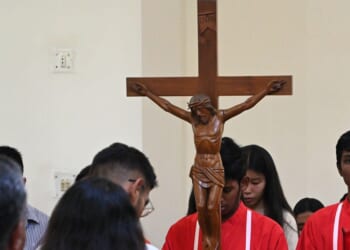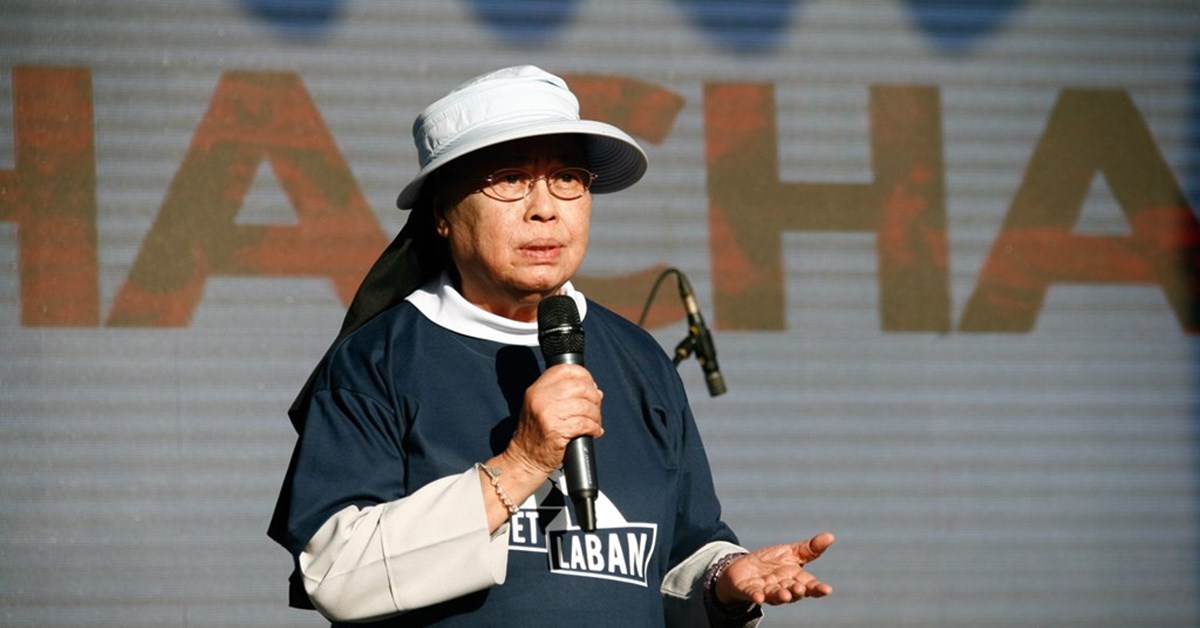
WHAT do you do if you’re a Benedictine Sister, wanting to join a night-time protest, but forbidden to leave your convent without permission? In the case of a Filipino nun living in Manila in the 1980s, the solution was to write a letter to her Superior. “Dear Sister Katherine, I’m going to the La Tondeña strike. I don’t know when I’ll be back. Love, Sister Mary.”
This beguiling anecdote was told at the beginning of Heart and Soul: Faith and revolution in the Philippines (BBC World Service, Friday). In this powerful and simply told documentary, Jay Behrouzi described the part played by faith 40 years ago in the People Power Revolution, also known as the EDSA (Epifanio de los Santos Avenue) Revolution, which took place in her home country before she was born.
Sister Mary John Mananzan joined civilians, factory workers, and farmers protesting against the dictatorial regime of President Ferdinand Marcos. A former soldier, Gregorio Honasan, refused to obey orders to attack them. The armed forces split. A confrontation between the rebels and those loyal to Marcos was looming. And then, over the airwaves of a Roman Catholic radio station, came the voice of Cardinal Jaime Sin, calling on people to head to Epifanio de los Santos Avenue, and block the army’s route to the rebels’ barricade.
Sister Mary described people standing in front of tanks, but Mr Honasan said that the atmosphere was like a family picnic. They believe that their actions were an inspiration for those who later brought down the Berlin Wall. “We considered ourselves state-of-the-art in revolutions,” Mr Honasan said.
The sad postscript to the Philippines’ story is that, 40 years later, human-rights violations, corruption, and poverty are endemic. “EDSA didn’t fail us; we failed EDSA,” Sister Mary said. “Revolution connotes meaningful change. That is the opportunity we missed.”
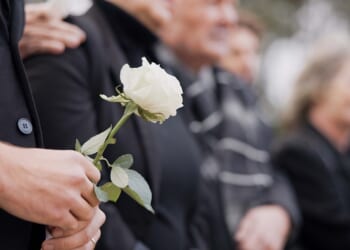
In Last Word: Doing death differently (Radio 4, 20 to 24 April), Matthew Bannister explored another revolution — in how society does death, dying, and memorialising. He attended a Death Café, joined a ferry across the Mersey with a group of mourners clutching the ashes of their loved ones, and conversed with a griefbot designed to capture the essence of a person who has died.
Some of the alternatives given to what Mr Bannister called “the traditional in-a-church funeral, with a vicar and all that kind of thing”, were moving and imaginative; others were wacky, and — in the case of direct cremations — to me, downright sad.
The overall trend is for bespoke funerals that focus on the qualities and musical tastes of the deceased. Given that nearly half the people surveyed persisted in believing in life after death, it would have been interesting to know where Mr Bannister’s interviewees thought their relatives were now.
There was only one acknowledgment — from a Hindu, Bharti Acharya, in Leicester — that the purpose of a funeral, besides celebrating a life, might also be about “assisting the loved one to go on their onward journey”.
The Revd Gerry Lynch is away.