A CALL for evidence for the clergy retirement dignity and fairness review will be made this week. Among the members of the group carrying out the review are the housing economist Dame Kate Barker and Sir Steve Webb, who served as pensions minister from 2010 to 2015.
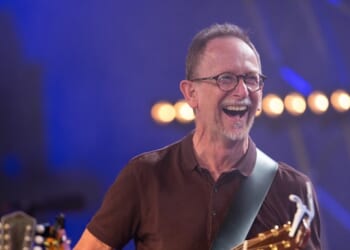
This week, the group’s chair, Dr Andrew Sentance, a former member of the Bank of England Monetary Policy Committee, said that he was confident that the ten months until it is due to report to the General Synod was an adequate timeframe.
The review was commissioned by the Archbishops’ Council following a Synod motion last July which called for a “comprehensive, independent review of what is needed to ensure that clergy and their dependants are supported in retirement with dignity and fairness” (News, 18 July 2025).
In February, the chair of the Archbishops’ Council’s finance committee, Carl Hughes, apologised to the Synod that it had taken longer than planned to establish the review. The Terms of Reference (ToR) were published that month. They include looking at the current landscape in the wake of the the triennium funding process, which entailed returning the clergy pension to two-thirds of the national minimum stipend (NMS), which was itself increased by 10.7 per cent to £33,350.
It is estimated that a full clergy pension, after 40 years, will stand in excess of £20,000 a year in today’s money, which, together with a full state pension, would give an income in retirement of more than £32,000 per annum. The Office for National Statistics has calculated that the average retirement income for single pensioners today is £14,664 a year.
Among the questions set out in the ToR are: “What can be learned from benchmarking in the charitable and faith based sectors?” Members of the group will consider whether a “target level of retirement income” should be set, with “relevant comparators” by profession, and those in the pews. The group must also consider equity between generations and will ask “whether it is appropriate to consider state pension income in affordability calculations”.
The review is taking place in parallel with the Pensions Commission, set up by the Government last year to “examine why tomorrow’s pensioners are on track to be poorer than today’s and make recommendations for change”. The Government estimates that four in ten people are “under-saving for retirement”.
Dr Sentance, who served on the National Association of Pension Funds’ retirement income inquiry in the mid-1990s, said that there were various benchmarks the group could consider, including the public sector and the “average pensioner in the pews”.
Looking across to the wider pension landscape, he noted that the clergy were unusual in remaining part of a defined-benefit scheme. The triple-lock gave state pensioners better protection than they had had for some time, while young people were “struggling to get on the housing ladder”.
Among the principles set out in the ToR are that its proposals should be “fair, effective and plausible” and “reasonably affordable for the Church as a whole”.
In 2001, the Generosity and Sacrifice remuneration review recommended a pay rise of 18 per cent to £20,000, with the new figure based on a primary school headteacher’s salary. It was a recommendation that went unmet — the 2021 remuneration review observed that some of the aspirations of its predecessor “proved unaffordable or perhaps unrealistic . . . there is a need to avoid overpromising.”
On Monday, Dr Sentance said that affordability was calculated by the trustees of the Pensions Board in conversations with actuaries. “Trustees can’t launch out with unaffordable aspirations or groups like ourselves can’t force upon them unaffordable aspirations,” he said.
The review would be setting out “principles that should apply”, he said. For clergy, a key factor was tied housing. “If you had to give the average person on the street advice about how to give themselves dignity and a decent income in old age you’d say, ‘Make sure you own your own house.’ The clergy don’t have such an easy transition to make on that front because they are provided with housing which appears to be beneficial to them at the time, while they are working, but then can leave them in a quite a difficult situation when they retire.”
Currently, about 56 per cent of serving stipendiary clergy own property. In 2024, the Pensions Board reported that more may need help with retirement housing than previously forecast, after a new survey found that 69 per cent of respondents believed it unlikely that they would own a property on retirement (News, 5 July 2024).
The situation of those clergy who were told by their diocese to sell their property before starting ordination training was on the group’s radar, Dr Sentance said. One aim of the call of evidence was to get a sense of the numbers affected. “It’s quite an intrusive type of instruction to give to people,” he said.
“Clearly, if it is something that’s part of a legacy of people who feel mistreated in the past because of that issue then maybe we might want to propose some sort of remedy. Some sort of process . . . whereby people can have their situation assessed and provide evidence that they were disadvantaged because of this.
“There are also examples of people who have invested in property and done that alongside their career in the clergy.”
Another aim of the review was to recognise that clergy were not a “uniform entity” and that there appeared to be inequities in their experiences of retirement.
Before serving at the Bank of England, Dr Sentance held a number of senior positions as an economist in the business world, starting in the mid-1980s, including chief economist at British Airways. Until 2018, he was a senior economic adviser with PricewaterhouseCoopers. He is director of music at Holy Trinity, Bengeo, in the diocese of St Albans.
The group is due to report to the Synod in July before producing its written report in February.
“In one sense that may seem a short timescale in Church of England terms but, in my experience, to be able to tackle a substantial issue in just under a year is actually quite a generous amount of time,” Dr Sentance said.
The group recently held its first meeting. Its eight members are: the Revd Aneal Appadoo, Vicar of St Luke’s, Reigate; Mark Chapman, a former partner at Longview Partners LLP; Dame Kate Barker; the Ven Antony MacRow-Wood, a retired Archdeacon of Dorset; Helen Platts, a retired Manchester diocesan secretary; the Ven Elizabeth Snowden, a retired Archdeacon of Chelmsford and the retired clergy officer for Huddersfield Episcopal Area; Sir Steve Webb; and John Ball, CEO of the Pensions Board and a participant observer.
The call for evidence will go online this week: Clergy Retirement Dignity and Fairness Review | The Church of England