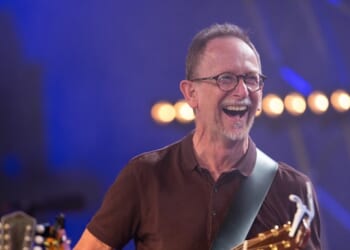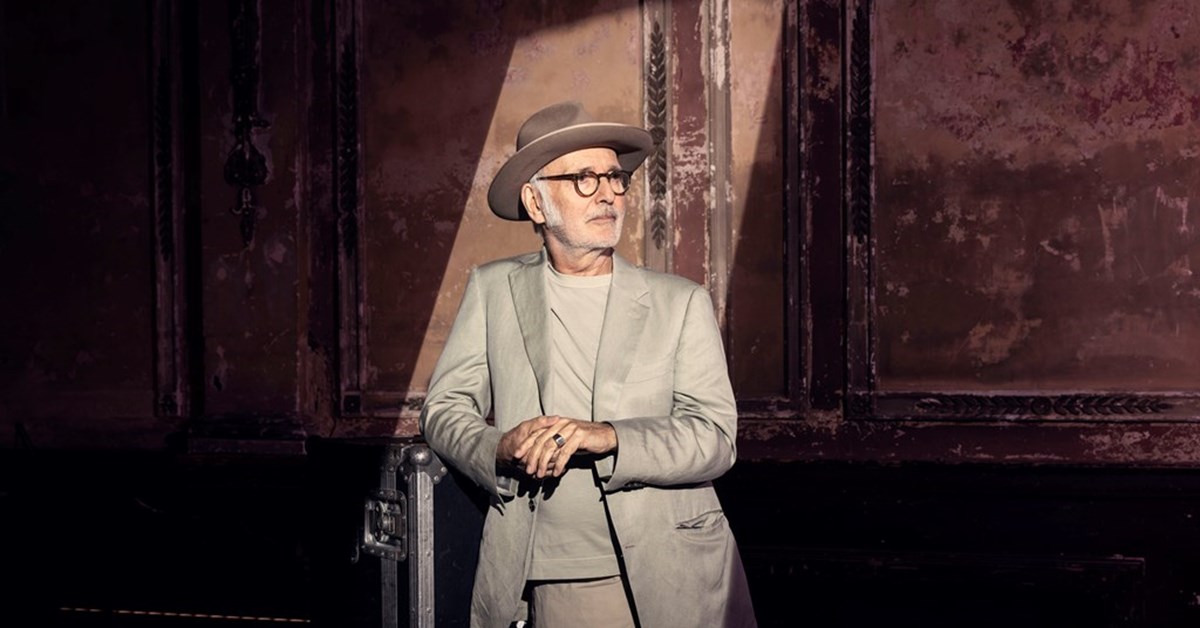
TOM SERVICE sounded just a little bit star-struck as he interviewed the Italian composer and pianist Ludovico Einaudi for Saturday Morning (Radio 3).
Einaudi, undoubtedly the most popular contemporary composer of classical music, is touring the UK, playing his own compositions, which Service described as “simple sounding, stripped down to essentials”. In “Jay”, played by the composer himself in the studio, the melody was just one note, undergirded by constantly changing harmony.
It is therefore ironic that Einaudi was taught composition by Italy’s prince of the avant-garde, Luciano Berio. He still retains a great affection for his teacher’s notoriously challenging music — his operas, in particular.
In a revealing exchange, Einaudi said that, even the night before, in the Albert Hall, he felt as though he were somewhere more spiritually intimate: “It felt like being in a big cathedral and giving a sort of spiritual speech.” For Service, this was “the hyper-romantic dream — music is the new religion. You’re a secular priest.”
“It’s a nice alternative to religion,” the maestro cheerfully agreed. “Music is beautiful religion — very open and free to everybody, and there are no fights.”
For much of the Church, the late 20th century was about creating religionless Christianity; when the dust settled, there was, instead, religion without God.
Religionless Christianity was an unspoken backdrop to an episode of Heart and Soul (World Service, Friday) that frustrated me by presenting an interesting and worthwhile story as a unique and groundbreaking one.
Pastor Jane Codrington was a Methodist minister for years, before walking away to set up an independent congregation, “We Are Church”, that meets in a school hall in suburban Johannesburg. She said that she rejected “the hypocrisy” of denominational Christianity, where she struggled to see authenticity in the leadership, especially in relation to their handling of money, which she felt was at odds with what they preached from the pulpit.
Most of all, it was the intentional embrace of LGBTQ+ Christians that made “We Are Church” distinctive — but not, in urban South Africa, unique; nor are its workshops on Palestine, trans inclusion, and child protection. Other congregations, both inside and outside the country’s main Protestant denominations, have walked a similar path, a reality simply overlooked by the programme’s producers in search of a story.
Yet it was hard not to be moved by the cost that Pastor Codrington, and her husband, had borne in terms of public abuse and broken relationships — even within their families.
Moving, too, were Pastor Codrington’s reflections on the recent death of her adopted daughter, and the thoughts of Vincent, a graphic designer and member of her congregation, who had to flee Uganda as a refugee because of credible fears of homophobic assault, or even murder.