THE calling to walk alongside people in their journey of faith has never been limited to ordained or licensed lay ministers. Over the past 30 years, training for spiritual directors, who may also be known as spiritual accompaniers or companions, has developed to the point that there is a wide range of resources and training courses on offer today.
No universal certification exists. Practitioners, however, often complete one- to three-year part-time courses. Training recommendations and pathways vary according to diocese. Good-practice guidelines stipulate that directors should receive regular supervision and have their own spiritual director.
So, what exactly does it mean to be a spiritual director, and what qualities are needed? The executive director of the Retreat Association, Alison MacTier, is a practising spiritual director. She describes the relationship as helping people to “reflect more deeply on their faith journey and relationship with God”. “Although there are similarities, counselling is often goal-centred and problem-solving, with the focus on the interaction between both parties,” she says. “Spiritual direction assumes that both parties are open to the same focus of the Spirit’s forming.”
Janet Brown is an experienced lay spiritual director and a tutor on the Holy Listening Formation in Spiritual Direction course at Launde Abbey, in Leicestershire. “It’s providing an environment and holding space for somebody,” she says. “Usually, you won’t know this person, and the fact that you’re probably not in the same church as them — you’re not part of their family — means there’s freedom for them to be very honest.
“If someone’s struggling in their church, they can come and tell me. That objectivity is very helpful. This is all in the presence of God and hearing what God is saying, but I often feel that a big gift of spiritual direction is somebody being able to come and be completely honest. That’s what I like about going to see a spiritual director. If I’ve got doubts or I’m questioning, I can absolutely say all of that to her. And there are not always other environments, as a Christian, where you can do that.”
Qualities needed in spiritual direction include listening, but also the ability to set yourself aside to provide space for someone to process their own journey.
“Somebody might be talking about things that are not what I believe at all,” Mrs Brown says. “I sometimes think, when I see someone for spiritual direction, that, before I see them, I need to take off my rucksack. That’s my journey that I’m on, and I need to put it down, then walk over to the path that they’re on. I walk with them for a bit and then come back to my path, pick my rucksack back up again, and carry on my journey. So, I’m not trying to drag them over because my journey is so great.”
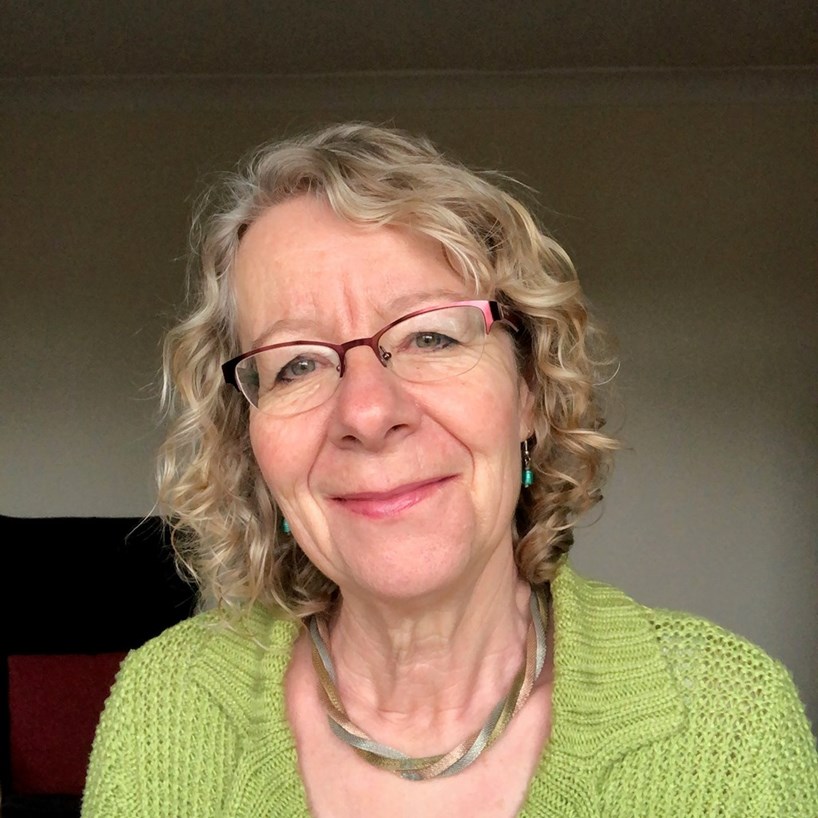 Janet Brown, lay spiritual director and tutor on the Holy Listening course at Launde Abbey
The Revd Liz Rawlings, discipleship and vocations enabler for Leicester diocese, spirituality adviser, and a trained spiritual director, agrees: “It’s really a question of getting ‘me’ out the way,” she says: an attentiveness to the person’s own inner journey with God is paramount.
“There’s an absolute desire to enable all Christians to go deeper. We find that people often stumble across spiritual direction, either because they’ve hit a crisis in their faith or a crisis in life that has caused the foundations of their faith to wobble, and they need somewhere to explore that.
“Sometimes, churches are really good at providing the milk of feeding our spiritual life, but often aren’t quite so good at helping us chew over the gristly meat. Spiritual direction gives people the space to really dig into the tough questions.
“When people find themselves in a position where their framework of faith no longer works for them, and they’re pushing at the edges of it, they need a safe space to explore that in an open and honest way, and know that they’re being held by the love of God. We’re allowing God to lead people on their journey of faith.”
Typically spiritual directors meet “directees” every six weeks for about an hour, although that varies. Increasingly, spiritual direction may also be offered online. Spiritual directors may charge a set fee or ask for a donation, depending on whether it is their livelihood or a ministry.
“It’s generally good practice for directors to be part of a wider Christian community themselves,” Miss MacTier says. “That brings a certain accountability and grounding. They’re rooted somewhere and know what it is to be part of a living, breathing Christian community.
“Listening and discernment are key qualities. Self-awareness and awareness of boundaries are also essential.”
WHILE it is not necessary to be ordained to pursue a vocation in spiritual direction, for many it can be a way of adding another dimension to their ministry.
Prebendary Nick Helm is co-chair of the Spiritual Direction Forum UK. He says: “There are people who have moved out of parish ministry into spiritual direction, but not many. Most clergy will offer it alongside their parish ministry rather than as a full-time vocation.
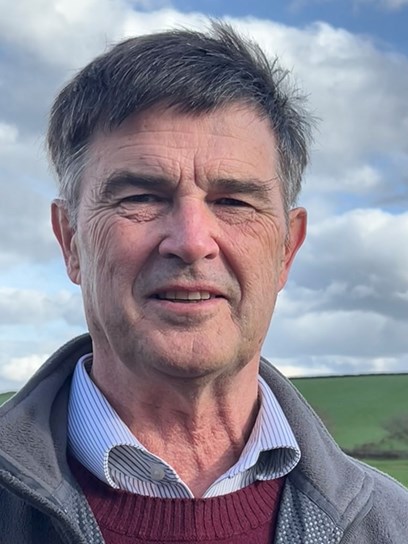 Prebendary Nick Helm, co-chair of the Spiritual Direction Forum UK
“Historically, there are a few examples in the Anglican tradition. Reginald Somerset Ward left parish ministry in the 1910s to focus on spiritual direction, but he was very much the exception. Generally, not many clergy go full-time in this work.”
There are different practice and training-route pathways being offered by dioceses. For example, the diocese of London points to spiritual-director training at the London Centre for Spiritual Direction: “Encounter”, which runs one evening per week and three Saturdays a year, over a period of three years.
Coventry’s training is a year-long, part-time course run by the diocese. In Birmingham, the ecumenical Forum for Spiritual Directors and Companions offers spiritual director training, professional development and supervision through Birmingham Churches Together.
Sheffield offers a six-month, stand-alone Spiritual Growth and Transformation (SG&T) discipleship course that is available to anyone, but subsidised for those living in the diocese (£200), followed by a further six-month Art of Spiritual Accompaniment course, for those interested in seeking authorisation as a spiritual accompanier in the diocese.
The website Prayer Eleven offers a comprehensive list of spiritual-director training routes around the UK. The Retreat Association holds a list of all known spiritual- director training courses in the UK by diocese, which it updates every year. It also organises conferences for those who train others in spiritual direction, which Miss MacTier describes as “a networking event where people can exchange good practice and ideas, with an element of training”.
As a result of the conferences, the Retreat Association produced two documents to help to support the ministry of spiritual direction: the Spiritual Direction Guidelines 2016, which give a clear outline on the essential components of spiritual direction, and the Guidelines for Developing Programmes for Spiritual Directors 2024, which includes information on how to evolve and develop a Spiritual Direction course.
“The guidelines came about partly as a way of safeguarding the ministry of spiritual direction — and partly as a way of setting out the parameters of what spiritual direction is,” Miss MacTier says.
“There is an on-going discussion within those who practise spiritual direction around the level of regulation that’s needed. Most directors will have DBS checks, safeguarding training, and supervision as a basic requirement for being listed by diocese and other referral organisations.”
CURRENTLY, there is also no UK accreditation for spiritual direction. When people complete a course, they receive a certificate of completion rather than something measured against a national standard.
“Courses in spiritual direction may vary in length and content. Most are across one or two years — some are face to face, online or a mix of the two,” Miss MacTier says.
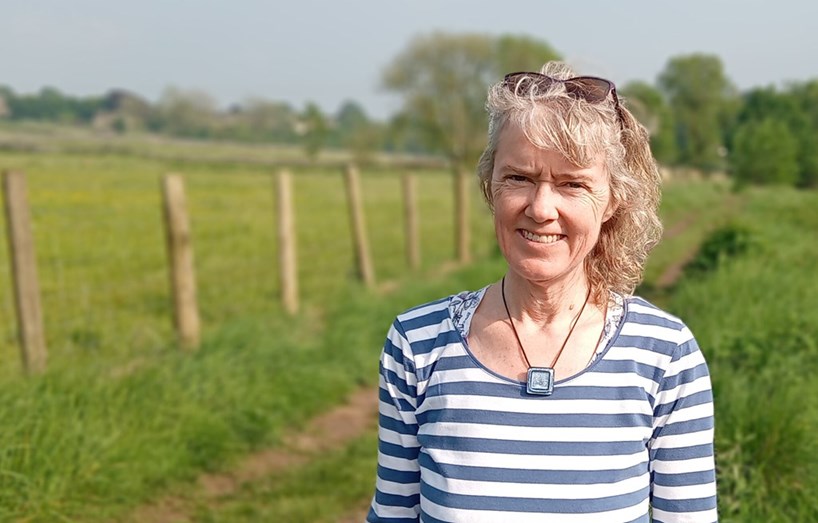 Alison MacTier, executive director of the Retreat Association
In Leicester diocese, those interested in becoming a spiritual director are signposted to the Holy Listening course run by Launde Abbey, the diocesan retreat centre for the Leicester and Peterborough.
Current fees are £1860 per year for the two-year course (one day a month Feb-May; Sept-Dec plus one two-day residential per year) and includes all tuition, materials, meals, and the cost of the residentials.
Mrs Rawlings says: “It’s been really important to us to have a course locally because we’re always wanting new directors to ensure we have the capacity for people coming to us for spiritual direction. We get people asking for spiritual direction not just from Anglican churches, but other traditions.
“When people come to talk to me about exploring spiritual-direction courses, we will talk about the Holy Listening course, but also encourage people to explore other options that may suit their needs, such as the London Centre for Spiritual Direction, which offers online options.
“Underlying everything, though, is that the training is about us and our relationship with God. It’s about giving people the skills to hold a space for the directee, how we do good listening, how we are attentive to God and the directee, and then the practical things surrounding that structure which enable that space to work.”
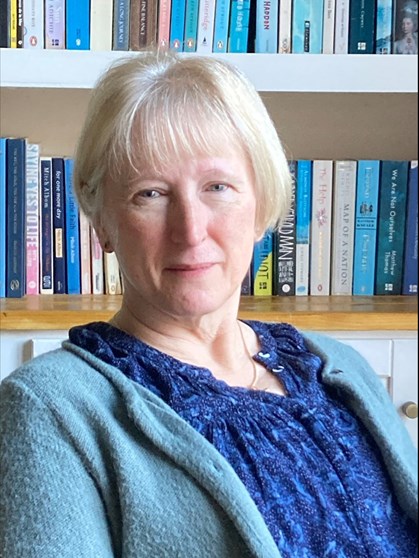 Revd Liz Rawlings, discipleship and vocations enabler at Leicester Diocese, spirituality adviser and spiritual director
For people to join the diocese’s Fellowship of Spiritual Directors list, Mrs Rawlings says, “We say that training courses should have at least 15 days of training. There is discernment before people go into training and then a discernment process before people join our list. We take references, including one from the training institution, and then two members of the core team meet the person for a discernment conversation. They complete an application form, undertake safeguarding training, and are expected to be in spiritual direction themselves and in a supervision group.”
In Leicester diocese, as in some others, courses are self-funded. “It requires a huge amount of generosity on behalf of spiritual directors, who are giving their time and resources to offer this ministry,” Mrs Rawlings says. “That can mean that it restricts certain people — who may well be gifted in the ministry — who are simply not able to access training for availability and financial reasons.”
Some bursaries are available to those wanting to train as spiritual directors. A limited fund of the Retreat Association can help those who might not otherwise have access to training. The Encounter course at the London Centre for Spiritual Direction provides a list of potential bursaries or grants (link in online article).
Prebendary Nick Helm, co-chair of the Spiritual Direction Forum UK, has offered spiritual direction for more than 25 years
“IN 1992, I became Vicar of a parish in Sheffield. Three years in, I had a very difficult year. There was personal bereavement, alongside a number of challenging situations in the parish. I felt on the edge of breakdown.”
The spiritual director that Prebendary Helm was seeing at the time suggested he attend an individually guided retreat (IGR), which, he says, “took me into a very deep and dark place initially”.
“The turning point came while praying with the baptism of Jesus,” he says. “Using Ignatian imaginative prayer, I entered the scene, went under the water with Jesus, and came out hearing the words, ‘You are my son.’ I heard them as words from God to me personally. Emotionally, it was overwhelmingly joyful. It completely changed my perspective on life, on God, and on ministry.”
Further retreats followed, and Prebendary Helm became involved in running them alongside his parish ministry. One night, he picked up a book, Sleeping With Bread, which explores the Ignatian examen.
“The writer realised that spiritual direction and retreat work had been the most life-giving part of his year, and his companions encouraged him to do more of it,” Prebendary Helm says.
“I found myself thinking, ‘Wouldn’t it be wonderful to belong to an organisation that would let that happen?’ And then I sensed a response: ‘You do.’ I immediately thought, ‘Don’t be ridiculous — it’s the Church of England.’ But the response came again, gently: ‘You are.’”
A conversation with his bishop led to a new ministry as Bishop’s Adviser in Spirituality in the diocese of Sheffield, and Bishop’s Chaplain.
“At its heart, being a spiritual director means having a deep desire to help people journey more deeply with God,” Prebendary Helm says. “You need the ability to listen well, and to create a space of safety and openness, where people can speak from their more vulnerable selves — even when what they bring is difficult, disturbing, or very different from your own views.
“Discernment is at the heart of it. You’re listening with an ear, an eye, and a nose for the stuff of God in it all. What might be God’s Spirit at work in this person? And then to help the person recognise that, and respond to God about it.
“For anyone considering this vocation, the most important thing is to pay attention to the sense of call or longing within you. My own journey unfolded in ways I could never have planned. Thirty years on, I can still say, at times, it continues to feel like that — extraordinary, surprising, and deeply gift-given.”
Ruth Mwenya trained as a spiritual director with the London Centre for Spiritual Direction and has been a spiritual director for a year
RUTH MWENYA, a primary-school teacher, lived and worked in Zambia for 11 years. “After returning to the UK with my children, I started seeking what God might want me to do, and exploring my own journey with God.
“I studied counselling, as listening seemed to be a skill I had, but was unable to complete the course because of life circumstances, and wasn’t sure that it was exactly the right fit. I got my own spiritual director to help me unpick things. It was my own experience of being in spiritual direction that led me to want to become a director myself.
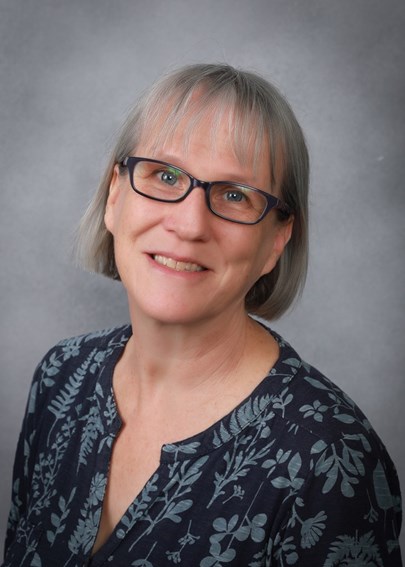 Ruth Mwenya, a spiritual director in Leicester diocese
“I find the relationship with a spiritual director so helpful in terms of my own spiritual journey, and giving me freedom to think outside the box. I can say anything and my spiritual director helps me to find God in that, or just holds the space.
“When I first read about the Encounter course, I realised I wanted to do it, even if I didn’t become a spiritual director, because of its focus on contemplative faith.
“The first year is about the Christian tradition of spiritual direction, the second about the self, focusing on our interior journey with God, and the third about the ‘other’ — exploring and acknowledging the diversity of humanity, and also preparing us for practice. In the third year of the course, you take on two ‘directees’, with the weekly tutor time becoming group supervision.”
The course is mainly online, Mrs Mwenya says. “This means people from all over the country can join, rather than needing to be in or near London. Weekly travel to London for five weeks would have been beyond my budget.”
A portion of Mrs Mwenya’s annual course fees was paid for through a bursary from the Retreat Association. After completing the course, she went through the Leicester diocesan discernment process and was welcomed into its fellowship of spiritual directors.
“I continue to teach part-time, and I currently have four directees. It is a privilege to sit with people, holding a space for them to connect with the divine — a space in which they can be true to themselves and find the sacred in their day-to-day life.
“Spiritual direction is often seen as something for ‘professional’ Christians to do — people who are full time in ministry, or in paid ministry. I would encourage all people of faith to explore working with a spiritual director. It has been an invaluable tool for me.”