SHAKESPEARE was well versed in philosophy, because of the European, humanist education that he received at the Stratford-upon-Avon Grammar School, as well as the reading that he did throughout his career as a writer.
David Womersley’s Thinking Through Shakespeare begins with Samuel Johnson’s “Shakespeare is, above all writers, at least above all modern writers, the poet of nature; the poet that holds up to his readers a faithful mirror of manners and of life.” The book ends with Ben Jonson’s famous 1623 panegyric in memory of his “beloved, the author, Master William Shakespeare, and what he hath left us”. “He was not of an age, but for all time!” writes Jonson about his dead friend, “Yet must I not give nature all. Thy art, My gentle Shakespeare, must enjoy a part.” Johnson and Jonson are worthy bookends to Womersley’s impressive exploration of what we might mean when we claim that Shakespeare is “universal” or that he exemplifies “the human condition”.
Womersley draws freely on the history of philosophy, politics, morality, thought, and drama. Shakespeare is presented as an intellectual and self-consciously reflective dramatist, one who turned the philosophies that helped to form him into dramatic conflicts, debates, and questions. “Shakespeare’s universality was not simply a matter of accumulation of insight,” argues Womersley: “it was also, more importantly, a matter of severe selection and concentration.”
Each of the chapters takes as its focal point one of “the great tragedies” along with a “fundamental aspect of human life”. Othello poses questions about identity. How do we qualify our separateness from others, Womersley asks, “whether it be with lieutenancy or with friendship or (most centrally) with marriage”?
After a philosophical and artistic discussion, we are invited to consider the main play and several other Shakespearian works. Alongside Othello, Womersley reads The Comedy of Errors, Love’s Labour’s Lost, and Much Ado About Nothing, but not — perhaps surprisingly — The Merry Wives of Windsor or The Winter’s Tale, Othello’s other comic counterparts, both propelled by jealousy.
Hamlet enables Womersley to explore how “civilisation” relates “to what lies outside it”, namely “barbarism”. The end of the play signals neither “revenge nor justice” and “offers nothing by way of resolution”, illustrating how “civilisation springs a trap on the human personality,” setting a moral standard while accommodating indirection and evasiveness. In relation to Hamlet, Womersley presents readings of Titus Andronicus, Coriolanus, Antony and Cleopatra, Julius Caesar, and The Tempest.
Macbeth is the focus for a discussion about politics and religion, which, along the way, includes Walter Bagehot’s critique of “the various fictions that had gathered round the English constitution”, its “system of checks and balances distributed between Crown, House of Lords, and House of Commons”. Womersley offers a corrective to readers who assume that Richard II polarises an argument between the divine right of kings and parliamentary law. “Divine right” is every bit as worldly and political as “secular” authority. Part of Richard II’s tragedy is that he fails to understand this. Henry VI, Parts Two and Three, King John, and All is True (Henry VIII) are read alongside Macbeth.
King Lear is a tragedy about the painful awareness of our own expendability. None of us holds “an unchangeable place in the regard of others”. The play explores the personal and emotional cost of substitutions: Goneril and Regan for Cordelia, Edmund for Edgar, Gloucester’s mistress instead of his wife. Philosophically, the play connects with the Western tradition of weighing up what is expedient against what is morally right. Measure for Measure and — interestingly — Shakespeare and John Fletcher’s The Two Noble Kinsmen are considered along with King Lear.
Womersley’s impeccably sourced and well-structured book deserves careful and slow reading. While his philosophical engagement omits all mention of Shakespeare in performance, I expect I will be thinking about some of the “universal”, philosophical questions and arguments that run through the plays next time I see one on stage.
The Revd Dr Paul Edmondson is a Shakespeare scholar who works for The Shakespeare Birthplace Trust.
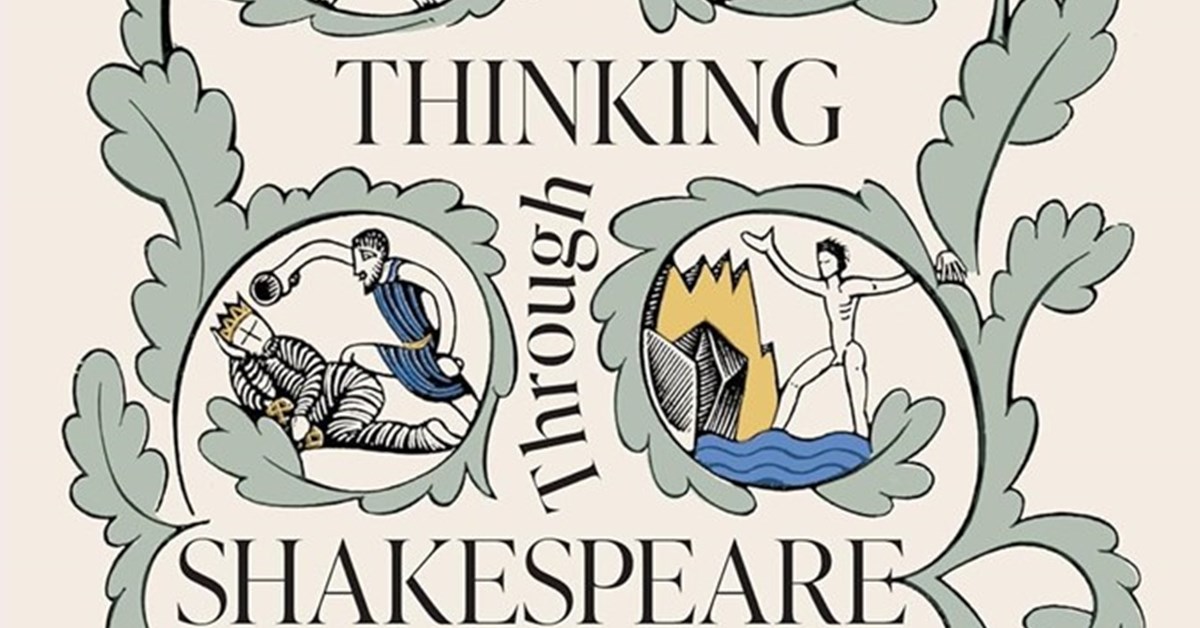
Thinking Through Shakespeare
David Womersley
Princeton University Press £30
(978-0-691-15410-7)
Church Times Bookshop £27