JIMMY WALES is the co-founder of the non-profit free encyclopaedia Wikipedia. A few years prior, he had launched the platform Nupedia. This required contributors to prove that they were an expert before posting on it. After a year, it had only 21 articles. Wikipedia, which assumes that volunteers will post accurate content, had more articles, just two years after its launch, than Encyclopaedia Britannica. The difference? Trust.
Wikipedia is an extraordinary success story, and a heartening one in a world in which trust is increasingly under attack. So he has condensed what he has learned about trust into Seven Rules. To frame them, he draws on Frances Frei’s triangle of trust, which holds that where true trust exists, authenticity, empathy, and logic are the three key factors at play. In this context, authenticity means honesty, integrity, or character; empathy means benevolence or caring; and logic concerns competence or capability, or your ability to deliver.
He develops this into his seven rules, starting with Make It Personal: trust is won or lost person-to-person, and there is no substitute for this basic human connection. Next, Wales argues that trust is in our nature. We are born to connect and collaborate, and we should lean into this, despite the prevailing narrative that casts it in doubt. Third, a strong, clear, and positive purpose is required for people to work together: find it, and keep reminding people why it is important.
Next, “Give to get,” by which he means that you have to trust others for them to trust you. So, do not wait: go first. His fifth rule is about manners: Wikipedia works because of civility, and, if you cultivate this kind of culture, it fosters trust. His penultimate rule is about not taking sides. You are more trusted if you are non-partisan, which is why Wikipedia works so hard to remain both independent and neutral.
Last, be “clear as glass”. Drawing on stories of falls from grace, Wales argues that the only way to re-establish trust is to be utterly transparent, particularly in cases where people suspect that you have something to hide. He concludes the book, however, by saying that winning trust and keeping it is ultimately dependent on your ability to deliver. If you do not come through for them, people will lose their trust in you, and it is hard to get back.
In a world beset by fake news and misinformation, Wikipedia is one of the world’s boldest experiments in public trust. It is good to have such a rich resource on trust written by someone who has real experience of building it, through this platform. I imagine that most of us have come to rely on Wikipedia, and very much appreciate the model that lies behind it.
His rules are derived from this experience, but also apply in a more general leadership context. In public life, we all stand or fall on our ability to adhere to these rules, undergirded by a commitment to his triangle of authenticity, empathy, and logic. In view of this, his book is both a useful aide-memoire and a checklist for when trust seems to be under threat: the chances are that one of these rules is out of kilter, and diagnosing which one will be the first step to fixing it.
Dr Eve Poole is executive chair of the Woodard Corporation and writes on theology, economics, and leadership.
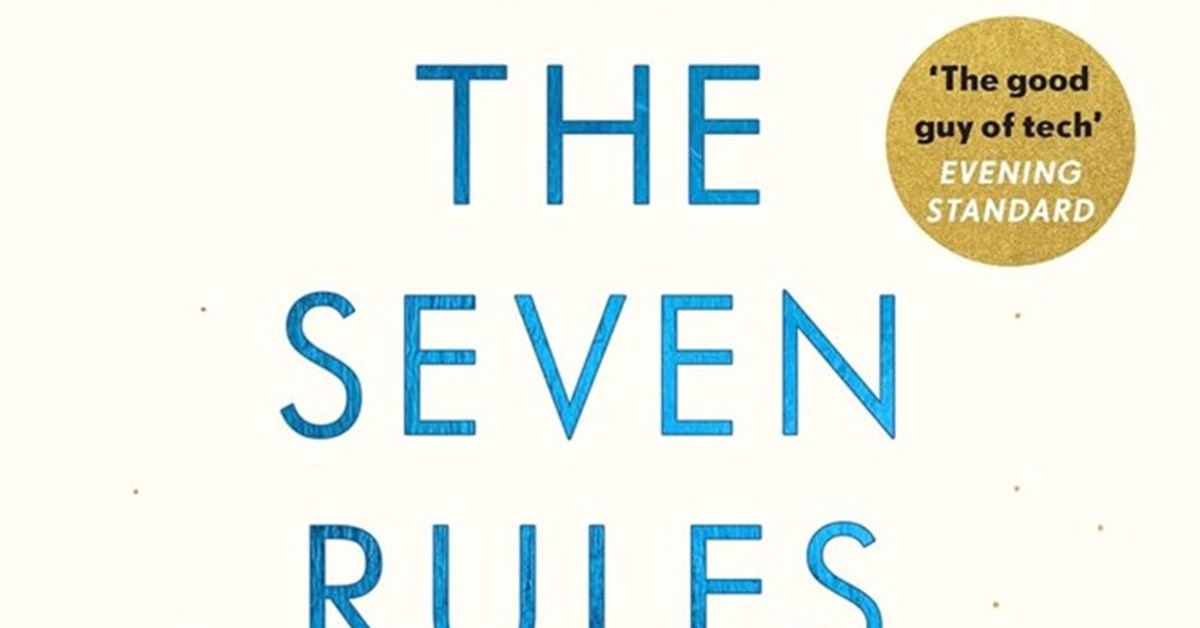
The Seven Rules of Trust: Why it is today’s most essential superpower
Jimmy Wales
Bloomsbury £22
(978-1-5266-6501-0)
Church Times Bookshop £19.80