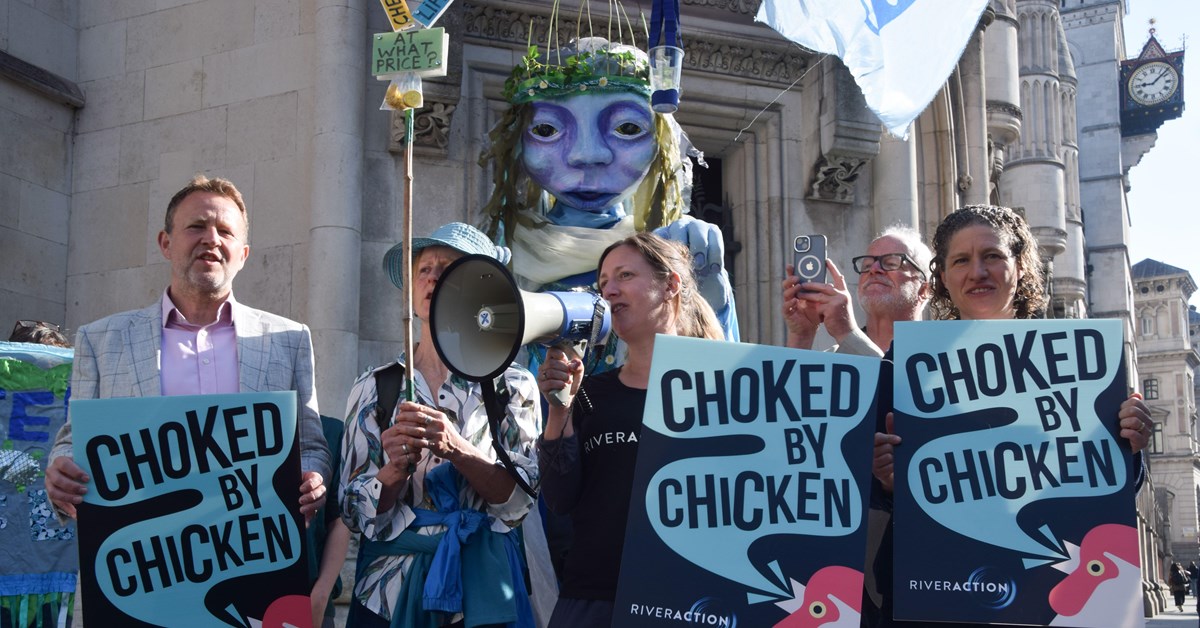
ONE of the more heartening moments of the week came from the banks of the River Wye, where more than 4500 people in its catchment along the Welsh-English border have launched a landmark anti-pollution case against a powerful corporation and the local water company. It is also a battle against one of the darkest and most destabilising forces in modern politics: our widespread sense of impotence.
The week brought an extreme manifestation of that with the third assassination attempt on President Trump in less than two years: an assault that laid bare the depth of the visceral polarisation over which he has presided in American society. A wild gunman is, perhaps, the most nihilistic form of agency imaginable to individuals who feel powerless in a time when Messrs Trump and Netanyahu have shattered the taboo against assassination.
Our own country this week saw a lesser example of the vehemence that right-wing populism and the backlash against it can produce. Suella Braverman’s insistence that a Reform UK government would revise the “woke” school curriculum to teach pupils, instead, to be proud of Britain’s history was met with the acid observation by one liberal commentator of the irony that a party full of “people who dislike Muslims” was turning out to have policy preferences “uncomfortably close to the Taliban’s”.
But there is a better way to attempt to restore a sense of control over institutions that no longer represent us. Eco-activists at the High Court this week saw the solution not in individual violence or populist rhetoric, but in collective action within the law.
The giant chicken-processing corporation Avara Foods dominates industry around the River Wye. Some 24 million chickens — one quarter of the UK’s chicken population — are raised there in 1400 farming sheds. Lancaster University estimates that 3000 tonnes of excess phosphorus, nitrogen, and bacteria are the result. Campaigners, in the biggest environmental pollution case ever brought in the UK (in terms of the number of claimants and geographical spread), say that “cheap chicken equals dead rivers”, a claim that, Avara ripostes, is “inferential” and “unscientific”.
Whatever the outcome, the case lays bare a system that has long been insulated from accountability. Margaret Thatcher declared her 1989 privatisation of water a bold experiment in “shareholder democracy”. But the public sold their shares for a quick profit, and 70 per cent of our water companies are now owned by foreign institutions, which have milked £73 billion in profits from the industry — and built £53 billion in debts on which customers pay the interest. Bills have risen, sewage discharges have become commonplace, and river pollution is widespread. “Water privatisation looks like little more than an organised rip-off,” the Financial Times has said.
Some 82 per cent of the public want water brought back into public ownership. The Government claims that this would cost £100 billion — money that should be spent on the NHS. Labour has, instead, promised more regulation of the private sector. Campaigners insist that this idea will fail. Activists want auditing rules changed so that water companies must declare the cost of fixing their failures as a liability on their balance sheets. That would force them back into state ownership “without costing the taxpayer a penny”. It is a response to impotence which would strengthen rather than undermine the fragile fabric of democratic life.