THE Church of England could significantly expand nature-conservation efforts on its landholdings without harming its finances, the rewilding campaigners Wild Card say in a new report, Getting Back to the Garden: The financial and fiduciary case for 30by30 on Church Commissioner-owned land.
The Church Commissioners manage 102,000 acres of rural land. Much of this is leased to tenant farmers, while 3600 acres — 3.5 per cent — are left wild.
Wild Card argues that the Church could follow the example of the Crown Estate by offering financial support to tenant farmers to pursue nature recovery. It says that doing so would require a one-off investment of £20 million — equivalent to 2.9 per cent of the Commissioners’ 2025 surplus, or 0.18 per cent of their total wealth.
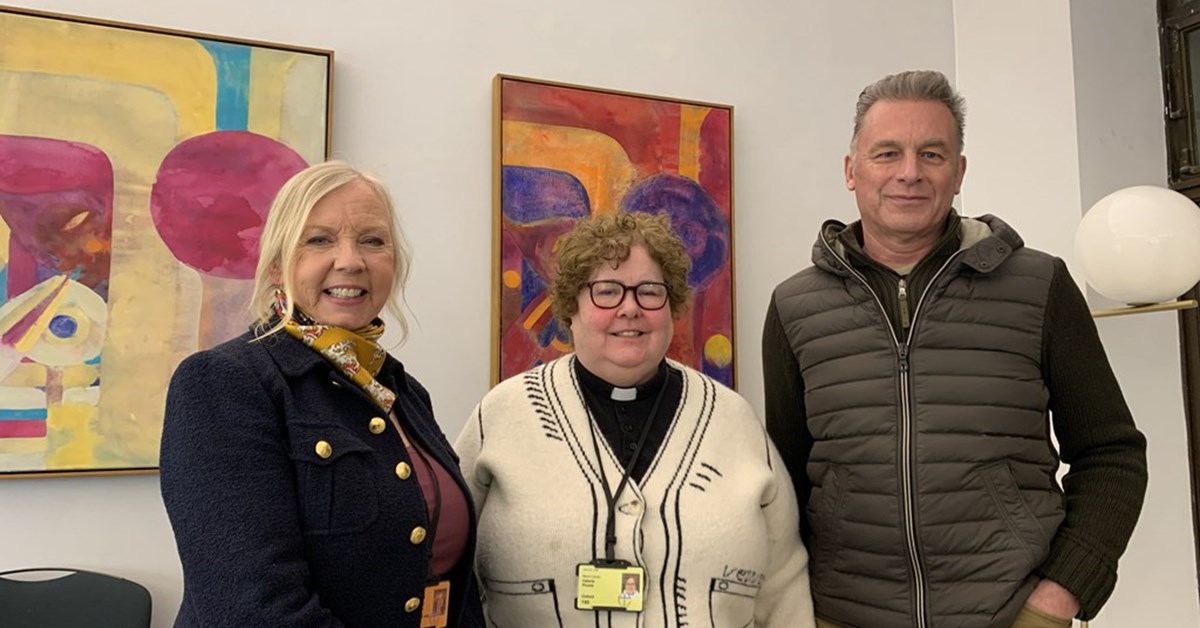
The report also says that protecting 30 per cent of Church-owned rural land for nature could create new financial opportunities, and warns that inaction carries reputational and financial risks. It quotes the businesswoman and Dragons’ Den star, Deborah Meaden, as saying that the Church risks “an ethical and financial own goal”.
The Commissioners’ assets, worth £11.1 billion, grew by £660 million in 2025. They have argued that their fiduciary duty — their legal obligation to act in the best interests of beneficiaries — constrains their ability to align with the Government’s commitment to protecting 30 per cent of land and sea for biodiversity by 2030.
Ms Meaden said: “Rewilding is a moral and spiritual duty, but it is also a major business opportunity. Across the country, landowners — from independent farmers to the vast Crown Estate — are taking advantage of the profitable returns nature restoration offers. This report by Wild Card calls for the Church Commissioners to fulfil their fiduciary duty as a charity and seize this potential new income stream with both hands. To fail to do so would be an ethical and financial own goal.”
The report has been endorsed by business and environmentalists, including Professor Ian Bateman, co-director of the Land, Environment, Economics and Policy Institute at the University of Exeter Business School, Sir Partha Dasgupta, the economist and author of the government-commissioned Dasgupta Review, and the conservationist and author Isabella Tree.
Professor Bateman said: “This paper presents a compelling case for the Church Commissioners to provide national leadership in sustainable land use. By taking this lead the Church can help show what is possible in delivering vital ecosystem services — carbon sequestration, wildlife habitat, clean water, and public recreation — while maintaining sustainable food production.”
A spokesperson for the Commissioners said that they would consider the conclusions of the report and were already working with nature-based organisations such as the RSPB and Natural England. “We support the integration of nature-friendly farming across our estate,” they said. “Data from our assessments of more than 40,000 acres of farmland shows that 90 per cent of holdings are already delivering identifiable biodiversity benefits. These include habitat creation, species management, soil improvement, and enhanced landscape features.”
On Wednesday, the Commissioners also published their estate-management plan, outlining how nature was being supported on their land and property portfolio. The Commissioners are part of the Government’s National Estate for Nature (NEN) group, a coalition of significant landowners supporting the delivery of the Environment Act targets and nature goals.
Paul Jaffe, the Church Commissioners’ sustainability lead for real assets, said: “We are proud to be a part of the NEN group. This plan demonstrates how long-term stewardship of land can deliver for nature, communities and future generations, while continuing to support the mission and ministry of the Church.”
The Wild Card report was published after the submission of a General Synod private member’s motion by Canon Valerie Plumb to call on the Commissioners to protect nature “in line with the scale and urgency of the climate and biodiversity crises”.
If the motion secures the support of more than 100 members, it could be debated at a future meeting. If carried, it would call on the Commissioners to protect 30 per cent of their land for nature by 2030.